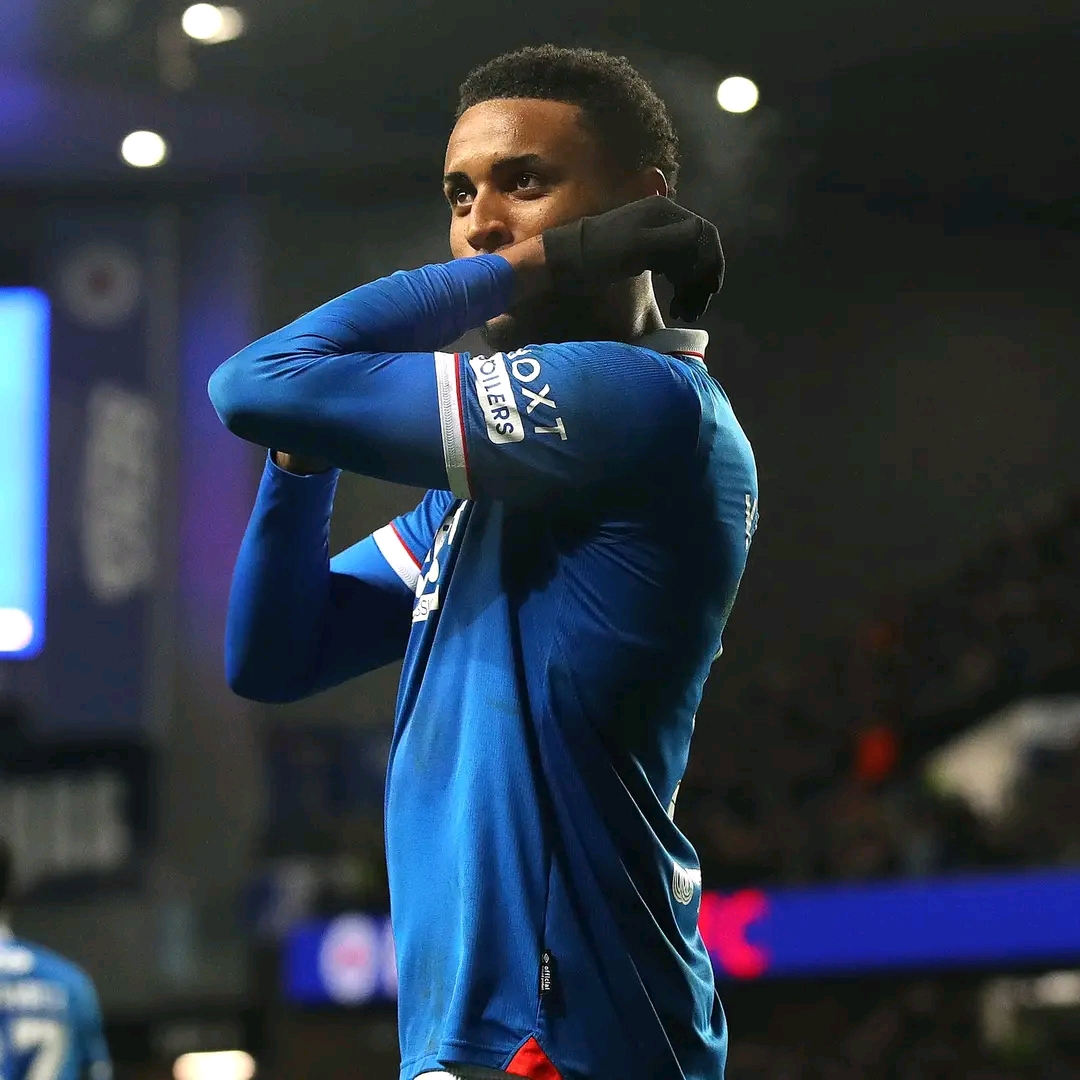
📰 Youssef Chermiti was the hero as his stunning hat-trick helped Rangers on their way to a dramatic and unforgettable 4-2 victory over league leaders Hearts on Armed Forces Day at Ibrox Stadium

The tension around Ibrox was heavy long before kick-off. The sky above Glasgow looked calm, but inside the stadium the feeling was different. Supporters of Rangers FC filled the stands with hope, nerves, and expectation. They had come to see a reaction. They had come to see a response. After the frustrating 1-1 draw against Motherwell in midweek, many fans felt their team had dropped two important points. The performance had not been terrible, but it had not been good enough either. And now, against Heart of Midlothian FC, there was no room for another mistake.
This match meant more than just three points. Rangers had already faced Hearts twice this season. In September, they lost 2-0. In December, they lost again, this time 2-1. Those results were still painful in the minds of the supporters. Hearts had become a difficult opponent. Every time the two teams met, there was intensity, physical battles, and small moments that decided everything. Rangers knew they could not afford a third defeat.
All eyes were on manager Danny Rohl. Since arriving at Ibrox, he has tried to build a team with energy, discipline, and bravery. He speaks about courage. He speaks about belief. But football is not about words. It is about results. After the draw at Fir Park, questions started to grow. Was the team too predictable? Were some players tired? Did Rangers need fresh ideas?
Before the match, Rohl made a big decision. He made five changes to his starting eleven. Five changes is not small. It sends a message. It tells the players that performance matters. It tells the fans that the manager is not afraid to act.
The confirmed starting XI was clear: Jack Butland in goal. A back line of Dujon Sterling, John Souttar, Emmanuel Fernandez, and Tuur Rommens. In midfield, Chukwuani and Nicolas Raskin were joined by Moore. In attack, Andreas Skov Olsen and Ryan Naderi supported Chermiti up front.
On the bench were Liam Kelly, Jayden Meghoma, Nasser Djiga, James Tavernier, Aasgaard, Antman, Djeidi Gassama, Mohamed Diomande, and Miovski.
Related Posts:





The changes were bold. James Tavernier, who has been a leader for years, dropped to the bench. Nasser Djiga also moved out of the starting team. Jayden Meghoma, Mohamed Diomande, and Djeidi Gassama were replaced too. In came Tuur Rommens, Dujon Sterling, Emmanuel Fernandez, Andreas Skov Olsen, and Ryan Naderi.
Some fans were surprised. Some were excited. Others were worried. But one thing was certain: Rohl was searching for something different.
Jack Butland remained in goal. The experienced goalkeeper has often been one of Rangers’ most reliable players. Against Motherwell, he made important saves. But he also knows that clean sheets win matches. His voice would be important against Hearts. He would need to organise his defence and stay alert.
In defence, the inclusion of Emmanuel Fernandez brought physical strength. Hearts are known for direct play and powerful attackers. Fernandez’s height and strength could help deal with crosses and long balls. Alongside him, John Souttar carried calmness and leadership. Dujon Sterling added pace on the right, while Tuur Rommens offered energy on the left.
In midfield, the balance was crucial. Nicolas Raskin has become an important figure in the centre of the pitch. He presses, he passes, and he fights. Chukwuani brings power and movement. Moore, playing slightly further forward, would try to connect midfield and attack.
But the biggest attention was on the front three. Andreas Skov Olsen is known for creativity and direct running. He can cut inside and shoot. Ryan Naderi is strong and aggressive, always ready to chase defenders. And Chermiti, leading the line, has been backed strongly by Rohl in recent weeks.
After the Motherwell game, Rohl had spoken about Chermiti. He said there was one thing the striker should have done better at Fir Park. But he also showed support. That public backing was important. Now Chermiti had another chance to prove himself.
The atmosphere at Ibrox was loud when the teams walked out. Blue scarves waved in the air. The fans sang with passion. They wanted to see intensity from the first whistle. They wanted to see hunger.
For Rangers, this game was about more than revenge. It was about momentum. The season is long, but every dropped point can cost something later. If Rangers wanted to challenge at the top, they had to win games like this at home.
Hearts arrived with confidence. They had beaten Rangers twice already this season. They knew they could do it again. Their players looked calm during the warm-up. They understood the pressure was on the home side.
From the first minutes, Rangers tried to show energy. The midfield pressed high. The full-backs pushed forward. Skov Olsen looked sharp, asking for the ball and trying to attack his defender. Naderi chased every long pass. Chermiti battled in the air.
Danny Rohl stood on the touchline, focused. He watched every movement. He gave instructions constantly. His body language showed determination. He was not relaxed. He knew how important this match was.
The five changes also showed competition inside the squad. Players on the bench would be desperate to return. Tavernier, sitting among the substitutes, remained professional. Leaders respond in moments like this. His reaction could shape the dressing room.
As the game developed, Rangers looked more direct than in midweek. There was less sideways passing, more forward intention. The crowd appreciated that. Every tackle was cheered. Every shot brought noise.
But football is never simple. Hearts defended strongly. They tried to slow the game. They looked for counter-attacks. Rangers needed patience as well as passion.
The midfield battle became intense. Raskin fought hard. Chukwuani covered ground. Moore tried to find spaces between the lines. Skov Olsen drifted inside, searching for shooting angles.
At times, the frustration of the previous defeats against Hearts could be felt. Rangers wanted to break that pattern. They wanted to show that Ibrox is not a place where visitors celebrate easily.
Danny Rohl’s decision to make five changes could define this moment in the season. If Rangers won, he would be praised for bravery. If they lost, questions would grow louder.
But that is football. Managers live with those risks. They make decisions based on what they see in training, in data, in conversations with players. Rohl believed this team could deliver.
The supporters also understood something important. The season is not won in one afternoon. But confidence can be built in one afternoon. A strong performance against Hearts could change the mood completely.
As the match continued, Rangers searched for control. They wanted to dictate the tempo. They wanted to turn possession into chances. Skov Olsen tried a shot from distance. Naderi attempted to force a mistake. Chermiti battled for every cross.
Behind them, Butland stayed alert. A single mistake at the back could undo all the attacking work.
On the bench, options were waiting. Tavernier’s experience. Diomande’s creativity. Gassama’s pace. Rohl knew he could change the game if needed.
This was the third meeting between Rangers and Hearts this season. The previous two had ended in disappointment for the Glasgow side. But football always gives another opportunity. Another ninety minutes to rewrite the story.
For Rangers, this was about pride as well as points. Losing twice to the same opponent hurts. Losing three times would be even harder to accept.
The fans believed that this lineup, fresh and hungry, could make the difference. Five changes meant fresh legs. Fresh ideas. A new rhythm.
Danny Rohl had made his decision. The team was confirmed. The challenge was clear.
Now, everything depended on what happened on the pitch.
Would Rangers finally defeat Hearts this season? Would the changes bring the spark that was missing at Motherwell? Would Chermiti reward his manager’s faith? Would Skov Olsen create the moment that lifts Ibrox to its feet?
Only the match itself could answer those questions.
But one thing was certain: Rangers stepped onto the pitch knowing this was a turning point. Not just another fixture. Not just another afternoon. statement was needed.
And at Ibrox, with the noise of the crowd behind them, the opportunity was there tomake it.