🗣️ “Get him OUT.” 🗣️ “He’s such a dummy.” 🗣️ “Garbage, he’s sold the entire game.” Man City fans have seen enough of Bernardo Silva after what he did in defeat vs Real Madrid

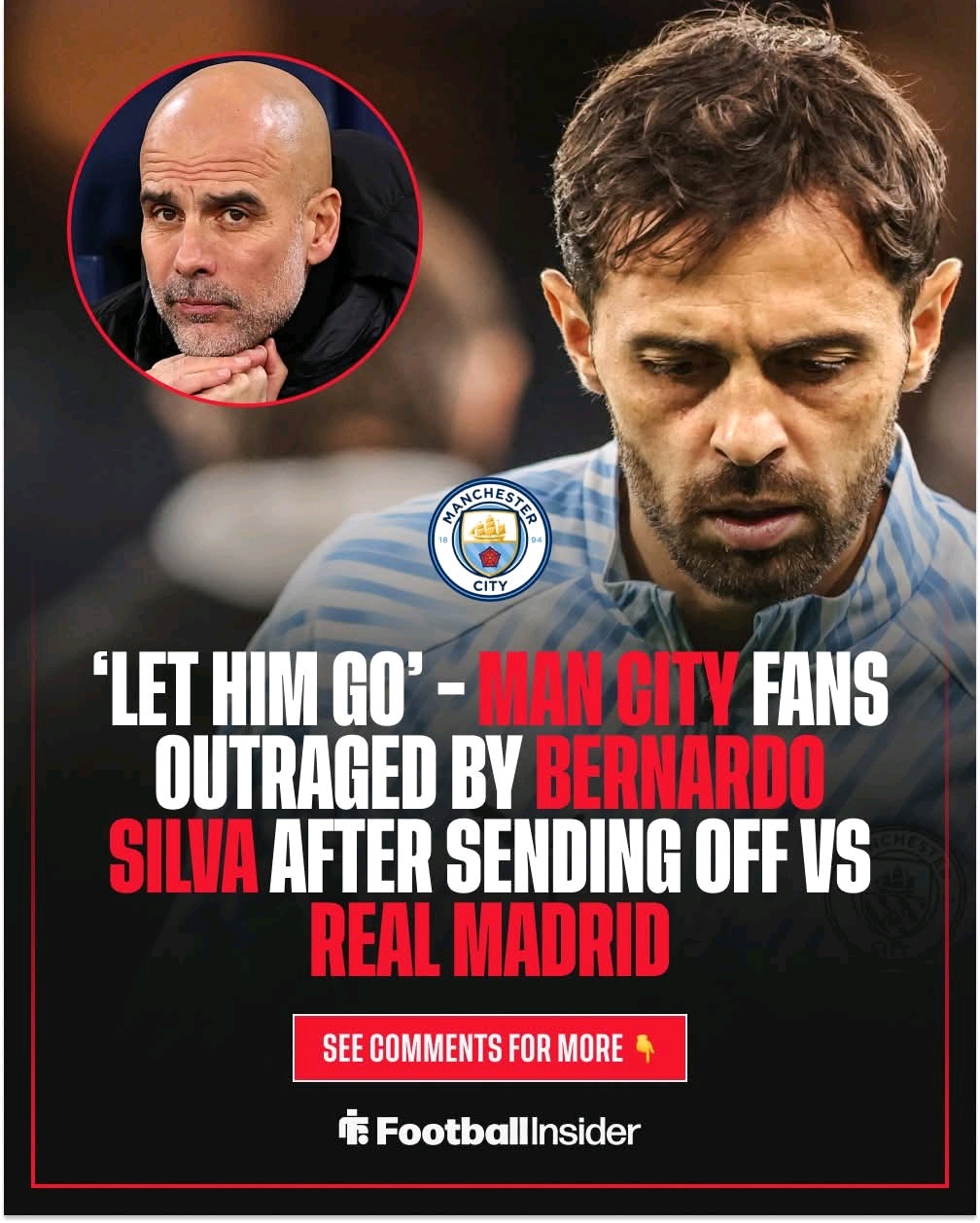
The night was supposed to be about belief, about a comeback, about one of those famous European stories that fans talk about for years. It was meant to be a night where Manchester City reminded the world of their power, their quality, and their ability to rise when everything seems lost. Instead, it turned into a night of anger, frustration, and painful questions, and at the center of it all stood one man, Bernardo Silva.
Before the match even started, the atmosphere around the stadium was electric. Despite the heavy 3-0 defeat in the first leg against Real Madrid, there was still a strange sense of hope among the fans. This is what football does. It gives you belief even when logic says otherwise. Under Pep Guardiola, City have built a reputation for doing incredible things. They have dominated England, controlled games like no other team, and shown time and time again that they can destroy opponents when everything clicks.
So even with a three-goal deficit, the fans came with hope. They believed something special could happen.
The players stepped onto the pitch for warm-up, focused, serious, ready for the challenge ahead. Among them was Bernardo Silva, one of the most trusted players in Guardiola’s system. For years, he has been a key part of everything City do. His energy, his intelligence, his ability to press, to pass, to move, all of it has made him a fan favorite and a manager’s dream.
But football can change quickly. Very quickly.
From the first whistle, the pressure was clear. City needed an early goal to ignite the comeback. The crowd pushed them forward, every pass cheered, every attack met with noise and belief. But Real Madrid were calm. They have seen it all before. Nights like this do not scare them. In fact, they seem to grow stronger in moments like these.
Then came the moment that changed everything.
A dangerous attack from Real Madrid. The ball found Vinícius Júnior, a player known for his speed, his skill, and his ability to create chaos. He moved quickly, finding space, and then he struck the ball toward goal. It looked dangerous. It looked like it could end the tie right there.
And then, in a split second, Bernardo Silva reacted.
The ball struck his arm inside the penalty box.
At first, it was confusion. Players appealed, but that is normal. The referee let play continue for a moment. But then came the signal that every player now fears. VAR.
Everything stopped.
The replay showed the contact clearly. The ball had hit Silva’s arm. But as always, the debate started immediately. Was it intentional? Was his arm in a natural position? Did he have time to react? These are the questions that make football so complicated in the modern era.
The referee, Clément Turpin, was called to the monitor. The stadium held its breath. City fans hoped for mercy. Madrid fans expected justice.
The decision came.
Penalty.
And then, the bigger blow.
Red card.
In that moment, everything collapsed for Manchester City. The comeback dream, already difficult, now felt impossible. Not only were they facing a penalty, but they were also down to ten men. And not just any player. One of their most experienced, most trusted players was gone.
Silva stood there in disbelief. He argued, he questioned, he tried to explain. But it did not matter. The decision was final.
He walked off the pitch, and with every step, the mood inside the stadium changed. What was once hope turned into frustration. What was once belief turned into anger.
Real Madrid scored the penalty, and from that point on, the game felt over. City tried to fight, tried to respond, but with ten men against a team like Madrid, it was always going to be difficult. The Spanish side took control, managed the game, and added to their lead. By the end of the night, the scoreline told the full story. A 5-1 aggregate victory. A dominant performance. Another painful exit for Manchester City.
But the story did not end with the final whistle.
If anything, that is where it truly began.
As soon as the match ended, the reaction from fans exploded. Social media became a battlefield of opinions, emotions, and anger. And the main target was Bernardo Silva.
Some fans could not hide their frustration. For them, that moment, that decision to block the ball with his arm, had cost the team everything. They saw it as a mistake, a moment of poor judgment in the biggest game of the season.
“Let him go,” one fan wrote, clearly fed up.
Others were even harsher. They questioned his performances throughout the season, suggesting that he is no longer the player he once was. For a player who has given so much to the club, it was a brutal reaction, but that is the reality of football at the highest level. When things go wrong, emotions take over.
Some fans even turned their attention to Guardiola. They questioned why Silva continues to start games, why he is still one of the first names on the team sheet. For them, the issue was not just one moment, but a pattern.
“Pep’s trust in him has cost us,” one supporter said.
Another simply asked, “What is the point of Bernardo Silva?”
These are not calm, measured opinions. These are emotional reactions, coming straight after a painful defeat. But they still reflect something deeper. A growing concern among fans that change may be needed.
There were also debates about the decision itself. Some fans argued that the red card was too harsh, that Silva did not mean to handle the ball, that it was a natural reaction. Others believed the referee got it right, that the handball stopped a clear chance and had to be punished.
But regardless of the debate, one thing was clear. The moment changed the game.
And in football, moments define everything.
For Silva, this is a difficult situation. He has been a loyal servant to Manchester City, making hundreds of appearances, playing in multiple positions, and contributing to some of the club’s greatest successes. He has been part of title-winning teams, historic performances, and unforgettable moments.
But time moves quickly in football.
At 31 years old, questions about his future are growing louder. His contract situation adds even more uncertainty. With the possibility of becoming a free agent, interest from clubs like FC Barcelona has been reported for a long time. A move away from City has always seemed possible, and now it feels more likely than ever.
There were also talks about Juventus FC, but financial issues could make that deal difficult. Still, the reality is simple. Silva may have played his final Champions League game for Manchester City.
And if that is the case, it is not the way anyone would have wanted it to end.
For Guardiola, this situation is another challenge. He must manage not just tactics, but emotions. He must protect his players while also making difficult decisions. Does he continue to trust Silva? Does he start planning for the future without him? These are questions that will define the next phase of City’s journey.
For the fans, it is about finding balance. It is easy to react in anger, to blame one player, to call for change. But football is never that simple. One moment does not define a career. One mistake does not erase years of success.
And yet, in the world of modern football, moments like this carry enormous weight.
As the season moves forward, Manchester City still have things to fight for. The Premier League, the FA Cup, other opportunities to win trophies and end the season on a high. But the Champions League exit will hurt. It will stay with them.
And for Bernardo Silva, this night will be remembered for a long time. Not for his skill, not for his effort, but for one moment. One decision. One red card.
That is the harsh reality of football.
One second can change everything.
One mistake can define the narrative.
And one night can turn a hero into a target.
But football also gives chances for redemption. Chances to respond, to prove people wrong, to write a new story.
The question now is simple.
What happens next?