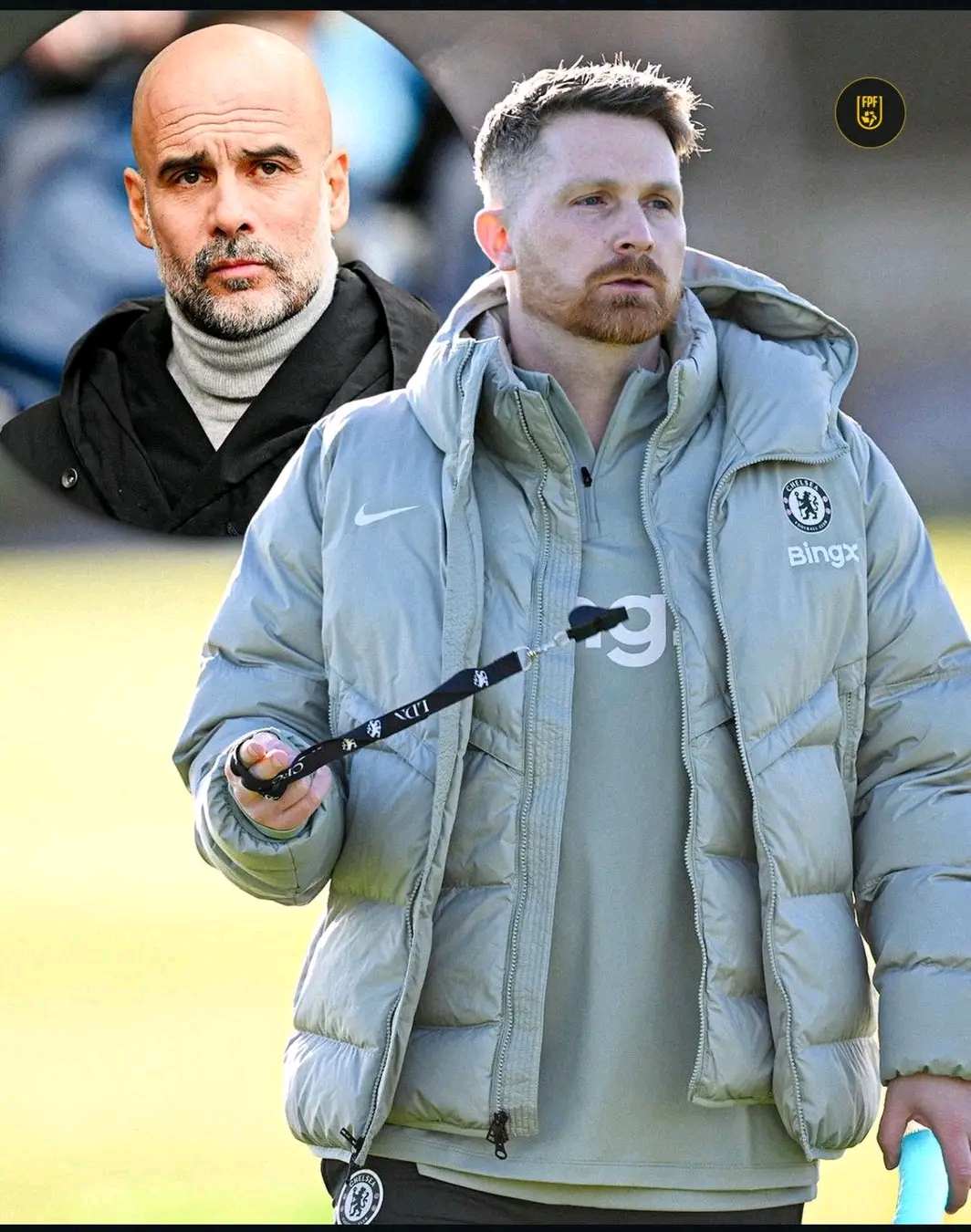
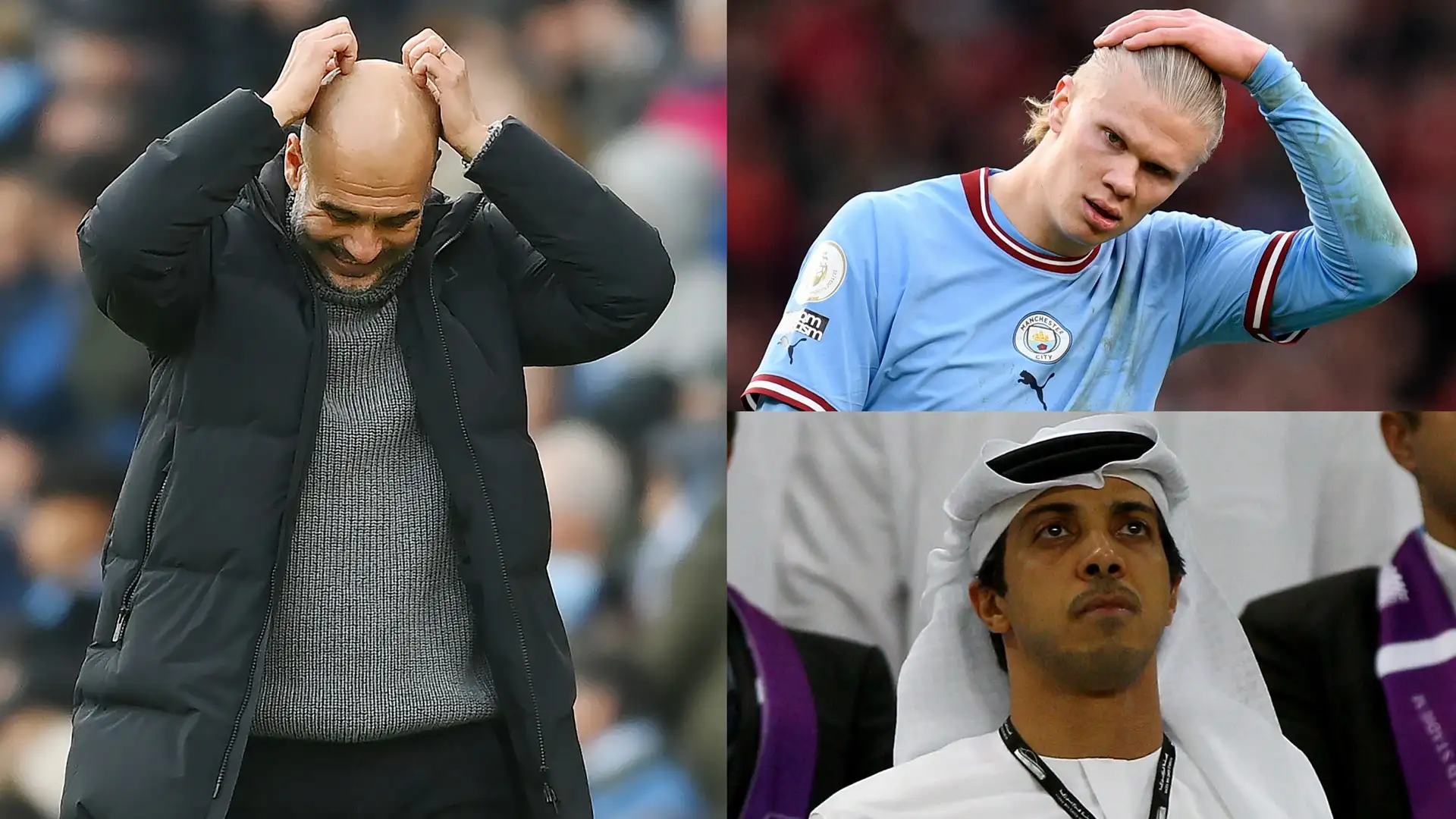
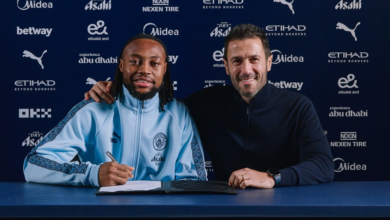
😱🔥 chelsea boss drops BOMBSHELL warning 👀⚠️ says pep will NEVER beat chelsea with this player 💔🤯 shocking comment now TRENDING everywhere ⏳🏟️ pressure on pep to change his team ⚽🔥 mind games before the next big clash
The football world was shaken when fresh reports emerged linking Enzo Maresca with a stunning return to Manchester City, not as a player or assistant, but as the man being quietly lined up to replace Pep Guardiola. It is the kind of story that feels unreal at first, yet the deeper you look into it, the more the pieces begin to fall into place. Guardiola is still under contract until 2027, but football rarely waits for contracts to expire before planning the future. Behind the scenes, discussions, evaluations, and contingency plans are always in motion, especially at a club like Manchester City, where long-term vision matters as much as immediate success.
Enzo Maresca’s name appearing in these conversations is no accident. His connection to Manchester City runs deep. He worked under Guardiola, learned from him, and absorbed the philosophy that has turned City into one of the most dominant teams in world football. Many inside the game believe Maresca represents a natural continuation of Guardiola’s ideas, someone who understands the positional play, the tactical discipline, and the obsession with control that defines City’s identity. This is why reports describing him as the “frontrunner” to succeed Guardiola have carried so much weight.
What makes the story even more explosive is Maresca’s situation at Chelsea. Only recently, he parted ways with the London club after a turbulent spell that mixed success with frustration. On paper, his time at Stamford Bridge was not a failure. He guided Chelsea to victory in the Club World Cup and the Europa Conference League, trophies that should never be dismissed lightly. He also helped the club secure qualification for the Champions League, a key objective given their recent struggles. Yet football is rarely judged on achievements alone. Consistency matters, and that is where things began to unravel.
Chelsea’s performances under Maresca fluctuated wildly. Moments of brilliance were followed by games where the team looked disjointed, uncertain, and fragile. A run of three Premier League matches without a win became the breaking point. Pressure from fans intensified, media criticism grew louder, and tension behind the scenes reached boiling point. Reports suggested that Maresca clashed with club executives, expressing frustration over what he saw as a lack of support and alignment. In modern football, when trust between manager and board disappears, the end often comes quickly.
His exit from Chelsea suddenly made him available, and almost immediately, speculation about his next move exploded. Manchester City’s name surfaced not as a rumor, but as a serious possibility. Guardiola’s future has been a topic of debate for months. While he remains one of the most successful managers in the club’s history, there has been growing talk that he could choose to step away at the end of the season, seeking a new challenge or simply needing a break after years of relentless pressure.
This is where the story takes an even more dramatic turn. According to reports from Spain, Maresca has not only been discussed internally at Manchester City, but he has already made his position clear to the club. He has reportedly informed City of a major condition for accepting the role if Guardiola does leave. That condition is bold, emotional, and deeply symbolic. Maresca wants Cole Palmer to be his first top signing.
Cole Palmer’s name carries enormous weight in this story. He is not just another talented footballer. He is a product of Manchester City’s academy, a player who grew up dreaming of shining at the Etihad Stadium. When he broke into the first team, he showed flashes of brilliance. His technique, composure, and intelligence stood out, even among City’s galaxy of stars. But opportunities were limited. Competition was fierce. Guardiola, always honest, believed Palmer would struggle to get the regular minutes he needed to develop fully.
That decision led to Palmer’s departure in 2023, when Chelsea signed him for around £40 million. At the time, many saw it as a sensible deal for all parties. City cashed in on a talented academy graduate, Chelsea acquired a promising attacker, and Palmer got the chance to play regularly. What followed, however, changed the entire narrative.
At Chelsea, Palmer did not just develop. He exploded. Match after match, he became the heartbeat of the team. Goals, assists, match-winning moments, and leadership well beyond his years turned him into one of the most feared attacking midfielders in the Premier League. In 109 appearances across all competitions, he delivered 47 goals and 29 assists, numbers that speak for themselves. He became the face of Chelsea’s attack, the player fans trusted when everything else felt uncertain.
Watching Palmer thrive elsewhere has been painful for many Manchester City supporters. There is a sense that the club let something special slip through their fingers. While City continued to win trophies, the idea of Palmer shining in sky blue never fully disappeared. Now, with Maresca potentially returning to the Etihad, that idea has come roaring back to life.
Reports claim Maresca has told Manchester City that Palmer is not just a target, but the central figure of his vision. In his mind, Palmer is the missing piece in the post-Guardiola era. He sees the young attacker as the player around whom a new system can be built, someone who understands City’s DNA but has grown into a star capable of carrying a team. For Maresca, this is not about sentiment. It is about structure, identity, and evolution.
Manchester City’s board are said to be fully aware of these demands. They understand what Palmer represents, not only on the pitch but emotionally. Bringing him back would send a powerful message to fans and rivals alike. It would signal continuity, confidence, and the ability to correct past decisions. At the same time, it would require a serious financial commitment. Chelsea have no reason to sell cheaply, especially given Palmer’s importance and long-term contract.
This is where the story becomes layered with complexity. City must first decide whether Guardiola is leaving. Then they must decide whether Maresca is truly the right successor. And finally, they must determine whether bringing Palmer back is realistic, necessary, or even possible. Each decision influences the others, creating a chain reaction that could shape the club’s future for years.
For Chelsea, the situation is equally delicate. Losing Maresca was already disruptive. Losing Palmer, the face of their resurgence, would be devastating. Fans would see it as another example of instability and poor long-term planning. Even the idea of Palmer returning to City feels like betrayal to some, despite his academy roots. Chelsea would likely demand a massive fee, both to protect their interests and to send a message that they are not a selling club.
From Palmer’s perspective, the dilemma would be enormous. Returning to Manchester City would mean coming home, reuniting with familiar faces, and playing for a club built to win everything. It would also mean intense competition, tactical demands, and pressure to justify the decision to leave Chelsea, where he has become a hero. Staying at Chelsea offers comfort, status, and freedom, but uncertainty around leadership and direction could make him think twice.
All of this unfolds against the backdrop of Guardiola’s uncertain future. The idea of Guardiola leaving feels almost unimaginable given what he has built. Yet football history shows that even the greatest eras end. Guardiola himself has spoken before about the need for rest, renewal, and change. If he does step aside, City will not panic. They will execute a plan, carefully and deliberately.
Maresca fits that plan in many ways. He understands the club, the philosophy, and the expectations. His time at Chelsea, despite its flaws, showed his ability to win trophies and develop players. The mistakes, the conflicts, and the inconsistencies are all part of his learning curve. Manchester City may see him not as a finished product, but as a manager shaped by experience and ready for the next level.
The idea of Maresca returning to City and bringing Cole Palmer with him feels like a story football was waiting to tell. It is full of emotion, irony, and ambition. It speaks to football’s cyclical nature, where players and managers cross paths again under different circumstances, older, wiser, and more tested.
For now, everything remains speculation. Guardiola is still in charge. Palmer is still at Chelsea. Maresca is still without a club. But football has a way of turning speculation into reality faster than anyone expects. Conversations are happening. Decisions are being weighed. And somewhere behind closed doors, Manchester City are planning for a future that may arrive sooner than many believe.