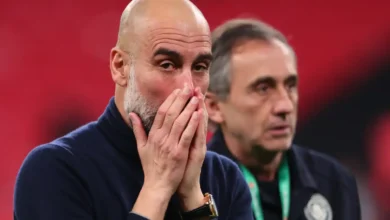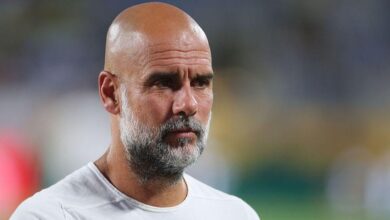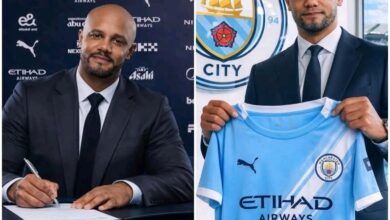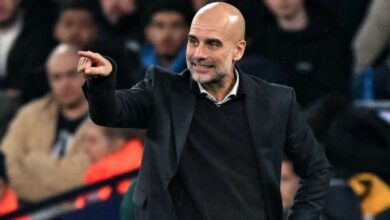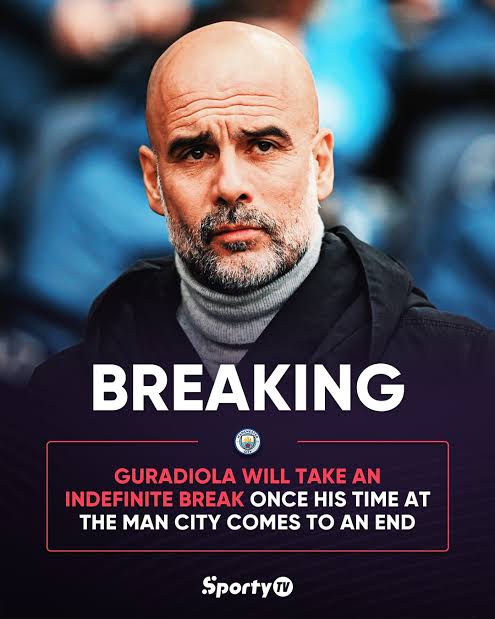
BREAKING news has sent shockwaves across the football world, and it is a moment that feels both distant and very close at the same time. Pep Guardiola, the man who has defined an era of dominance at Manchester City, has revealed that he plans to take a break from football when his time at the club comes to an end in 2027. Speaking openly, he made it clear that after years of intense pressure, constant competition, and historic achievements, he will step away from the game, at least for a while. And just like that, a question that many fans have avoided for years suddenly becomes real — what happens to Manchester City after Pep Guardiola?
This is not just another manager leaving a club. This is the possible end of one of the greatest football dynasties the game has ever seen. Guardiola is not simply a coach at Manchester City. He is the identity of the team, the brain behind the system, the man who turned a strong club into a global football machine. Since his arrival, everything has revolved around his philosophy, his ideas, and his obsession with perfection.
When Guardiola first walked into Manchester City, expectations were already high. The club had money, ambition, and a growing reputation. But what they did not yet have was a clear football identity that could dominate not just England, but Europe. Guardiola brought that identity. He brought a style of play that was both beautiful and ruthless. Possession-based football, quick passing, intelligent movement, and total control of the game became the foundation of Manchester City’s success.
Over the years, that philosophy delivered incredible results. Manchester City did not just win trophies — they redefined what it means to dominate English football. Season after season, they set new standards. Record-breaking points totals, incredible winning streaks, and a level of consistency that left rivals struggling to keep up. Under Guardiola, City became a team that expected to win every game, no matter the opponent.
But success at that level comes with a cost. Guardiola has always been known as one of the most intense managers in football. He demands everything from his players, but he also demands everything from himself. Every match is a mental battle. Every decision carries weight. Every small detail matters. Living at that level for years can be exhausting, even for someone as passionate as him.
That is why his decision to take a break in 2027 feels both understandable and emotional. It is not about losing love for the game. It is about needing space after giving so much for so long. Guardiola has done this before. After his time at Barcelona, where he built one of the greatest teams in football history, he stepped away from the game for a period. That break allowed him to recharge before returning to management with new ideas and fresh energy.
Now, history looks like it could repeat itself. But this time, the situation feels even bigger. Manchester City is not just a chapter in Guardiola’s career. It is arguably his longest and most defining project. It is where he has had the time and resources to fully build his vision without limits. It is where he has shaped generations of players and created a legacy that will be remembered for decades.
So what happens when that era comes to an end?
The first thing to understand is that replacing Guardiola is not just about finding another good coach. It is about finding someone who can handle the weight of expectations that he leaves behind. At Manchester City, winning is not enough anymore. Dominating is expected. Playing attractive football is expected. Competing for every trophy is expected. The next manager will walk into a situation where anything less than excellence will be seen as failure.
There are also tactical challenges. Guardiola’s system is unique. It requires players to understand space, positioning, and movement at a very high level. It is not a system that every coach can simply take over and continue without changes. The new manager will have to decide whether to keep Guardiola’s philosophy or bring a completely new style.
If they try to copy Guardiola, they risk being compared to him every single week. If they change the system, they risk disrupting a team that has been built specifically for his style. It is a difficult balance, and one that will define the next chapter of Manchester City’s history.
Another big factor is the players. Many of the current squad have been developed under Guardiola. They understand his ideas deeply. They trust his methods. When he leaves, there will naturally be a period of adjustment. Some players may struggle to adapt to a new manager. Others may even consider leaving, especially if they feel their role in the team could change.
This is how eras end in football. Not suddenly, but gradually. A key figure leaves, then changes begin, and slowly, a new identity is formed. The question is whether Manchester City can manage that transition smoothly or whether they will experience a decline before rebuilding again.
Fans are already debating what the future could look like. Some believe the club is strong enough to continue dominating even without Guardiola. After all, the structure behind the scenes is solid. The recruitment is smart. The financial power is still there. These are advantages that many other clubs do not have.
Others are more cautious. They believe Guardiola is the key difference, the factor that turns a good team into a great one. Without him, they fear that Manchester City could become just another top club rather than a dominant force.
Looking at football history, both outcomes are possible. Some clubs manage to continue their success after a legendary manager leaves. Others struggle for years trying to replace someone who cannot truly be replaced. What makes Guardiola’s situation special is how deeply his influence runs through every part of the club.
Even rivals will feel the impact of his departure. For years, teams like Liverpool FC and Arsenal have had to raise their level just to compete with Manchester City. Guardiola’s presence has pushed the entire league forward. His absence could change the balance of power in English football.
Managers like Jurgen Klopp, who have gone head-to-head with Guardiola in some of the most exciting title races in history, understand exactly what he brings to the game. These rivalries have defined an era, creating unforgettable moments for fans around the world.
But football never stands still. New managers emerge. New ideas develop. New rivalries are formed. The end of one era always leads to the beginning of another. For Manchester City, the challenge will be to make sure that the next era is just as successful, even if it looks different.
There is also the emotional side of this story. For many fans, Guardiola is more than just a manager. He represents a golden period in the club’s history. The trophies, the style of play, the unforgettable matches — all of it is connected to him. Saying goodbye will not be easy.
At the same time, there is a sense of appreciation. Fans know they have witnessed something special. They have seen their club reach levels that once felt impossible. They have experienced moments that will stay with them forever. And for that, Guardiola will always be remembered as one of the greatest figures in Manchester City’s history.
As 2027 approaches, the conversation will only grow louder. Who will replace him? What style will the team play? Can Manchester City continue to dominate? These questions will be discussed again and again, with different opinions and predictions.
For now, though, Guardiola is still here. There are still matches to win, trophies to chase, and history to write. His focus will remain on the present, even as the future begins to take shape.
And maybe that is the most important thing to remember. While the end of an era is coming, it has not arrived yet. There is still time for more success, more moments of brilliance, and more chapters in the Guardiola story at Manchester City.
But when that final day comes, when Guardiola steps away and takes his well-earned break, football will feel different. Not empty, but changed. Because managers like him do not come around often. They do not just win games — they transform the sport.
So when people ask, “How do you see Manchester City after Pep?” the honest answer is simple. No one truly knows. It could be the start of another great chapter. Or it could be the beginning of a difficult transition.
What is certain is this — it will be the end of an era. And not just for Manchester City, but for football as a whole.