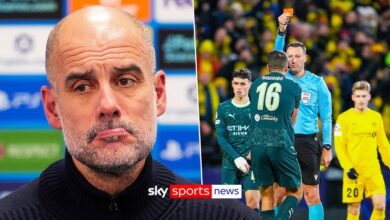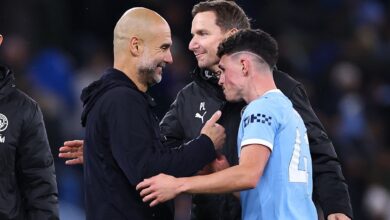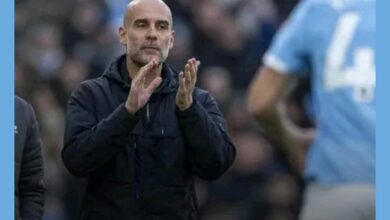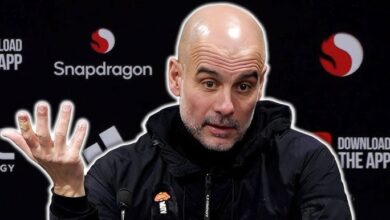
The Manchester City case that has come to define modern English football continues to hang like a dark cloud over the Premier League, with no end in sight and no clear answers for clubs, fans, players, or the wider football world. What began as a bombshell announcement in February 2023 has slowly turned into one of the longest, most uncomfortable sagas the league has ever faced, and as time drags on, the questions are becoming louder, sharper, and harder to ignore. At the heart of it all are the 115 financial charges levelled against Manchester City, accusations that the club strongly denies but which refuse to fade away because there has been no resolution, no verdict, and no final judgment. Instead, the case keeps stretching forward, month after month, season after season, while City continue to play, win trophies, and write new chapters in football history.
For many observers, this endless waiting has become almost more damaging than the charges themselves. One of the strongest voices now speaking out is Keith Wyness, a highly experienced football executive who has served as chief executive at clubs like Everton, Aston Villa, and Aberdeen. Wyness is not a man known for exaggeration or careless comments, and when he describes the current situation as unacceptable, people listen. Speaking openly, he has made it clear that this case is no longer just about Manchester City. In his view, the credibility of the entire Premier League is now on the line, because a competition that prides itself on being the most respected and watched league in the world cannot afford to have such a serious matter unresolved for so long.
The charges against Manchester City cover a nine-year period between 2009 and 2018, years in which the club rose from a mid-table side into a dominant force both in England and across Europe. The Premier League alleges that City breached financial fair play rules during that time, including issues related to sponsorship revenue, financial reporting, and cooperation with investigations. City, for their part, have consistently denied all wrongdoing, insisting that they have irrefutable evidence to clear their name. That confidence has not yet translated into a conclusion, and nearly three years after the charges were announced, the football world is still waiting.
What frustrates Wyness, and many others, is the sheer lack of clarity. There is no timetable, no public indication of how close the process is to finishing, and no explanation as to why such a high-profile case appears to be moving at a snail’s pace. Legal proceedings in football are often complex, but this case is unprecedented in both scale and significance. Wyness points out that the longer it continues, the more damage it does, not just to City, but to the league itself. Fans around the world look at the Premier League and see uncertainty, confusion, and a governing body unable to bring one of its biggest cases to a conclusion.
Another major concern raised by Wyness is the financial cost of this drawn-out process. Legal battles of this nature are not cheap, and with every passing month, the bills continue to rise. Tens of millions of pounds are being spent on lawyers, experts, and arbitration, money that ultimately comes from the game itself. For a league that often speaks about sustainability and financial responsibility, the optics are uncomfortable. Clubs lower down the pyramid struggle to survive, while enormous sums are burned behind closed doors on a case that seems stuck in limbo.
Beyond money, there is the issue of sporting integrity. Manchester City have continued to win trophies during this period, adding league titles and setting new records under Pep Guardiola. Each success, each celebration, and each historic achievement now carries an unspoken question. If the verdict, whenever it arrives, goes against City, what happens to all of this? Wyness raises the uncomfortable idea that titles may have to be revisited, rewritten, or reassessed. Football history is not meant to be fluid, but this case threatens to make it so.
Related Posts:



The idea that championships could be reviewed years after they were won is deeply unsettling for fans of all clubs. Supporters want certainty. They want to believe that what happens on the pitch is final and real. Instead, this ongoing case has introduced doubt into moments that should be joyful or decisive. Rival fans wonder if City’s success is legitimate. City fans feel their achievements are constantly questioned. Neutral observers see a league struggling to protect its own reputation.
Wyness also highlights another troubling aspect, which is the inevitability of appeals. Even when a verdict eventually arrives, it is almost guaranteed that the losing side will challenge it. That means more time, more money, and more uncertainty. The case could stretch on for years beyond the initial ruling, keeping the Premier League trapped in a cycle of legal conflict rather than football progress. For a competition that sells itself on drama, excitement, and clarity, this is the wrong kind of storyline.
While the legal process drags on, Manchester City continue to operate as a powerful, ambitious club. Their ownership has recently injected £60 million into their wider multi-club model, a clear signal that they are not slowing down or acting like a club under threat. This investment supports City’s long-term strategy, including the expansion of the Etihad Stadium, which is set to become a 60,000-seat venue. The expansion will boost matchday revenue and further strengthen City’s financial position, reinforcing their place at the top of the football pyramid.
To some observers, this continued investment feels defiant. To others, it feels logical. City believe in their innocence, and they are acting accordingly. From their perspective, there is no reason to pause growth or ambition while a case remains unresolved. However, this creates another layer of tension. Rival clubs look on and wonder how a team facing such serious charges can continue to build, spend, and expand without restriction. Again, the lack of a clear verdict feeds suspicion and frustration.
The Premier League itself is caught in an awkward position. On one hand, it must be seen to enforce its rules and protect competitive balance. On the other, it presides over a league whose global appeal is closely tied to clubs like Manchester City, their star players, and their success. Dragging one of its flagship clubs through a never-ending legal process risks undermining the very product the league works so hard to promote.
Keith Wyness’s comments strike at the heart of this dilemma. By calling the situation unacceptable, he is not attacking Manchester City directly. Instead, he is questioning the governance of the league. Why has it taken so long? Why is there no transparency? Why are fans and clubs left in the dark? These are questions that grow louder with every passing season.
The timing is also important. Football is changing rapidly, with new competitions, financial models, and ownership structures reshaping the game. The Premier League often positions itself as a leader in governance and regulation. Yet this case suggests a system struggling to keep pace with the realities of modern football finance. If the league cannot resolve its biggest case efficiently, what message does that send about its ability to handle future challenges?
For Manchester City, the psychological impact cannot be ignored. Living under constant suspicion and scrutiny is not easy, even for a club used to pressure. Players, managers, and staff must answer questions they cannot resolve. Pep Guardiola, a manager obsessed with focus and control, has repeatedly defended his club while insisting that the truth will come out. But even his calm confidence cannot erase the uncertainty that lingers.
Fans, too, are caught in the middle. City supporters feel unfairly judged, as though their joy is conditional and temporary. Opposing fans feel frustrated, believing that justice delayed is justice denied. The wider football audience feels uneasy, watching a league they love struggle with its own authority.
Wyness’s warning about revisiting titles is perhaps the most explosive part of his comments. Football history is sacred to many fans. Memories of title races, dramatic finishes, and iconic moments are woven into personal and collective identity. The suggestion that these memories could be altered by legal rulings years later is deeply uncomfortable. It challenges the idea that football is decided on the pitch alone.
At the same time, ignoring potential wrongdoing would be equally damaging. If rules were broken and titles were won unfairly, then failing to act would undermine the entire concept of fair competition. This is the balance the Premier League must strike, and so far, it has failed to do so convincingly.
As the case continues, every new Manchester City success adds weight to the eventual decision. The longer it takes, the more complicated the outcome becomes. A quick resolution might have limited damage. A delayed one risks chaos. Wyness’s frustration reflects a growing sense that the league has lost control of the narrative.
In the background, other clubs are watching closely. Some feel that the case represents a test of whether financial rules truly apply equally to everyone. Smaller clubs have faced points deductions and severe punishments for far less complex breaches. The contrast is impossible to ignore and fuels resentment within the game.
Manchester City’s continued investment, stadium expansion, and on-field dominance only sharpen this contrast. The image of a club growing stronger while under investigation is jarring for those who believe in strict regulation. For City, it is simply business as usual. For the league, it is a public relations nightmare.
Keith Wyness’s intervention may not change the speed of the process, but it adds pressure. Voices like his carry weight because they come from experience rather than emotion. When a former chief executive says the credibility of the league is at risk, it should serve as a warning.
Ultimately, this case has become bigger than any single club. It is about trust. Trust in governance. Trust in fairness. Trust that the game’s authorities can act decisively and transparently. Right now, that trust is fragile.
As seasons pass and trophies are lifted, the unresolved charges sit quietly in the background, waiting. They wait for judges to decide, for appeals to be launched, for history to be clarified or challenged. Until that moment arrives, the Premier League exists in a strange state of uncertainty, celebrated around the world yet shadowed by its own indecision.
Manchester City will continue to play football, win matches, and chase glory. Their fans will continue to sing, believe, and defend their club. Their rivals will continue to question, complain, and hope for accountability. And figures like Keith Wyness will continue to speak out, reminding everyone that time is not neutral, and delay has consequences.
In the end, football needs resolution. It needs clarity. It needs an answer, whatever that answer may be. Until then, the 115 charges will remain one of the most uncomfortable stories the Premier League has ever faced, a reminder that even the biggest, richest, and most admired league in the world is not immune to doubt, delay, and deep uncertainty.