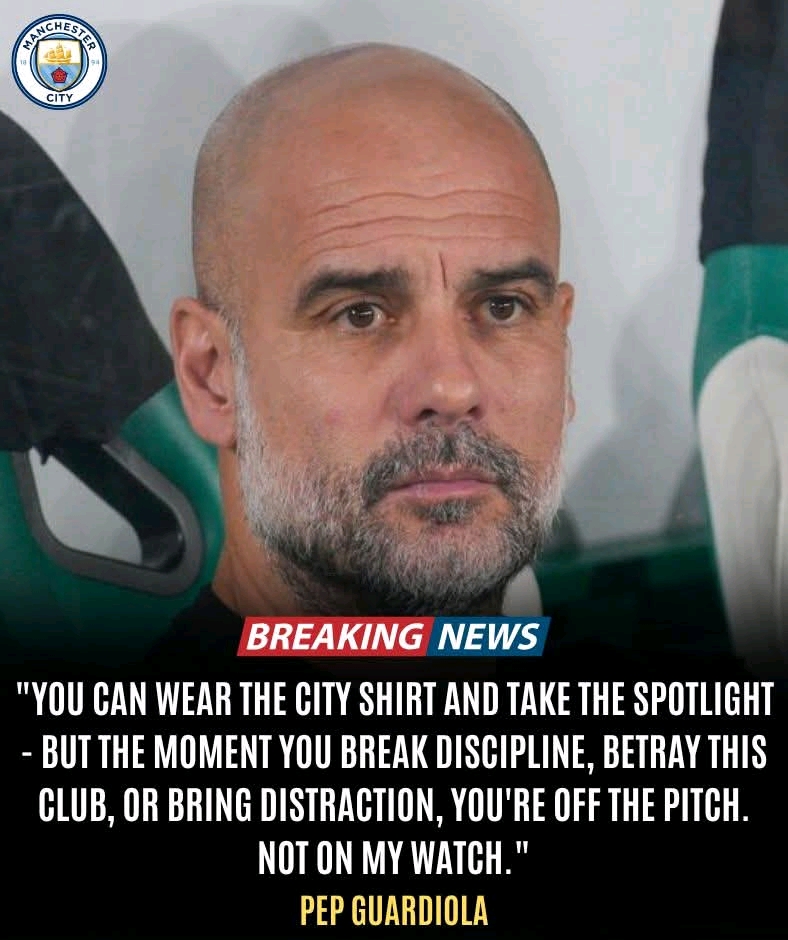
Manchester City have been thrown into sudden turmoil after explosive reports emerged of a late-night nightclub incident involving members of the first-team squad, an episode that has shaken the club and forced Pep Guardiola into taking what sources describe as ruthless and immediate action. What began as whispers on social media quickly escalated into a full-blown internal issue, prompting Guardiola to step in decisively to protect discipline, standards, and authority inside a dressing room already under pressure.
According to multiple sources close to the club, the incident occurred during a period when Guardiola had explicitly demanded total focus from his players, following a run of inconsistent performances and growing criticism from fans and pundits. The timing could not have been worse. Manchester City are in the middle of a demanding stretch of the season, battling injuries, chasing form, and trying to maintain their position at the top end of the Premier League table. Against that backdrop, any suggestion of off-field distraction was always going to be met with zero tolerance.
Details of the nightclub incident remain tightly guarded, with the club determined to avoid a media circus. However, insiders insist that Guardiola was informed swiftly and chose to act without hesitation. There was no attempt to downplay the situation, no effort to quietly sweep it under the carpet. Instead, Guardiola reportedly made it clear that standards apply to everyone, regardless of reputation, status, or importance to the team.
Those familiar with Guardiola’s methods say this reaction was entirely in character. The City manager has always believed that culture wins titles long before tactics do. For Guardiola, discipline off the pitch is inseparable from performance on it. When players lose focus away from football, he believes it inevitably shows during matches, in small lapses of concentration, missed runs, or poor decisions that cost points.
Sources claim Guardiola called an emergency meeting with senior staff as soon as the situation became clear. Phones were switched off. Doors were closed. The message was direct and uncompromising. Manchester City, Guardiola reportedly told them, is not a nightclub brand, not a lifestyle club, and not a place where players choose convenience over commitment. It is a football institution built on sacrifice, obsession, and total dedication.
The players involved were allegedly summoned individually and then collectively. There was no shouting, no theatrics, but the atmosphere was said to be ice-cold. Guardiola’s disappointment, according to those present, was far more powerful than anger. He reminded the squad of how fragile success is, how quickly standards slip, and how hard it is to rebuild trust once it is broken.
What has shocked many observers is the speed of Guardiola’s response. Within hours, consequences were reportedly put in place. Training roles were adjusted. Squad involvement was reconsidered. Privileges were withdrawn. Nothing dramatic was announced publicly, but inside the club, the message was loud and unmistakable. No one is untouchable.
Fans began to sense something was wrong when training images were released showing notable absences, and when Guardiola’s press conference tone appeared sharper than usual. While he avoided directly addressing the incident, his words hinted at deeper issues. He spoke about responsibility, commitment, and the importance of respecting the badge. To those paying attention, it sounded like more than just generic motivation.
The nightclub scandal has sparked fierce debate among City supporters worldwide. Some fans are furious, believing that players should know better than to risk distraction during a crucial phase of the season. Others argue that players are human, entitled to downtime, and unfairly judged for moments that may have been exaggerated. Yet even among those sympathetic voices, there is an understanding that Guardiola’s standards are non-negotiable.
Former players and pundits have weighed in, many backing Guardiola’s approach. They point out that Manchester City’s era of dominance was built not just on talent, but on an almost military level of focus. Training sessions were intense. Recovery routines were strict. Even personal schedules were monitored. In that environment, a nightclub appearance, regardless of intent, clashes directly with the culture Guardiola has spent years building.
There is also a wider context to this story. Manchester City’s dressing room has already been under strain this season. Injuries have disrupted rhythm. Results have dipped unexpectedly. Pressure from rivals has intensified. In such moments, unity becomes essential. Any behaviour that risks division or distraction can quickly spiral into something much larger.
Sources suggest Guardiola is acutely aware of this risk. That is why he acted so fast. In his mind, allowing even one incident to slide could open the door to more. Standards, once compromised, are difficult to restore. Guardiola has seen this before at other clubs, and he is determined not to let history repeat itself at City.
Behind the scenes, senior players are said to have backed the manager fully. Leaders within the squad reportedly echoed Guardiola’s message, reinforcing the idea that Manchester City’s success depends on collective sacrifice. Younger players, in particular, are believed to have been reminded that professionalism extends far beyond matchday.
The club hierarchy has remained silent publicly, a decision that appears deliberate. By not issuing statements or clarifications, City are allowing Guardiola to handle the matter internally, preserving authority within the dressing room rather than inviting external noise. This approach reflects deep trust in Guardiola’s leadership, even when decisions are uncomfortable.
For Guardiola himself, this episode adds another layer to an already demanding season. Managing elite footballers is as much about psychology as tactics, and moments like this test a manager’s ability to balance empathy with firmness. Those close to Guardiola say he takes these situations personally, not because he feels betrayed, but because he believes in his players and expects them to believe in the project as deeply as he does.
There is also concern about how this incident could affect performances in the short term. Discipline enforced too harshly can sometimes backfire, creating resentment or tension. However, Guardiola’s track record suggests he understands this balance better than most. His punishment is rarely about humiliation. It is about reminding players why standards exist in the first place.
As the story continues to unfold, rival fans have wasted no time mocking City’s situation, while opposition managers quietly take note. Any sign of instability at the Etihad is seen as opportunity elsewhere. Guardiola knows this, and that knowledge only sharpens his resolve to close ranks and restore focus.
Training sessions since the incident are described as intense but controlled. Guardiola has reportedly increased tactical work, shortened recovery windows, and demanded sharper concentration. The atmosphere, while serious, is said to be professional. Players understand that the situation, though uncomfortable, is manageable if lessons are learned quickly.
The players directly involved have remained silent, advised to keep a low profile and let football do the talking. Those close to them insist there was no malicious intent, no deliberate attempt to undermine the club. Yet intention matters less than perception at this level, and Guardiola’s stance is that perception alone can damage trust.
This episode has also reignited broader discussion about modern football culture. With players earning vast sums, enjoying celebrity lifestyles, and living under constant scrutiny, the line between personal freedom and professional responsibility is increasingly blurred. Guardiola, however, represents an old-school philosophy in this regard. For him, elite football demands elite discipline, full stop.
Supporters will be watching closely in the coming weeks, looking for signs of fallout or redemption. Team selection, body language, and on-pitch intensity will all be analysed through the lens of this scandal. A strong performance could quickly quiet the noise. A poor one would only amplify questions.
What is clear is that Guardiola has drawn a line. Whether this incident becomes a footnote or a turning point will depend on how the squad responds. Manchester City’s history under Guardiola suggests that adversity often brings clarity. The manager has a habit of using moments of tension to reset standards and refocus minds.
For now, the nightclub scandal stands as a reminder that success is fragile, and that even at one of the most successful clubs in world football, discipline remains the foundation of everything. Pep Guardiola has made his position clear. Talent alone is never enough. Commitment is non-negotiable.
As the season continues, Manchester City will aim to let results speak louder than rumours. Guardiola will hope that swift, ruthless action has contained the damage and reinforced unity rather than fractured it. In elite football, authority is tested constantly, and this time, Guardiola has chosen to respond with absolute clarity.
Whether fans agree with every decision or not, one thing is undeniable. Pep Guardiola has once again shown that no scandal, no distraction, and no player is bigger than the standards he believes define Manchester City. And in a season where focus could decide everything, that message may prove more important than any tactical tweak or transfer signing ever could.