Carragher said he’s never known a luckier team than Man City – then found out who they will be playing next

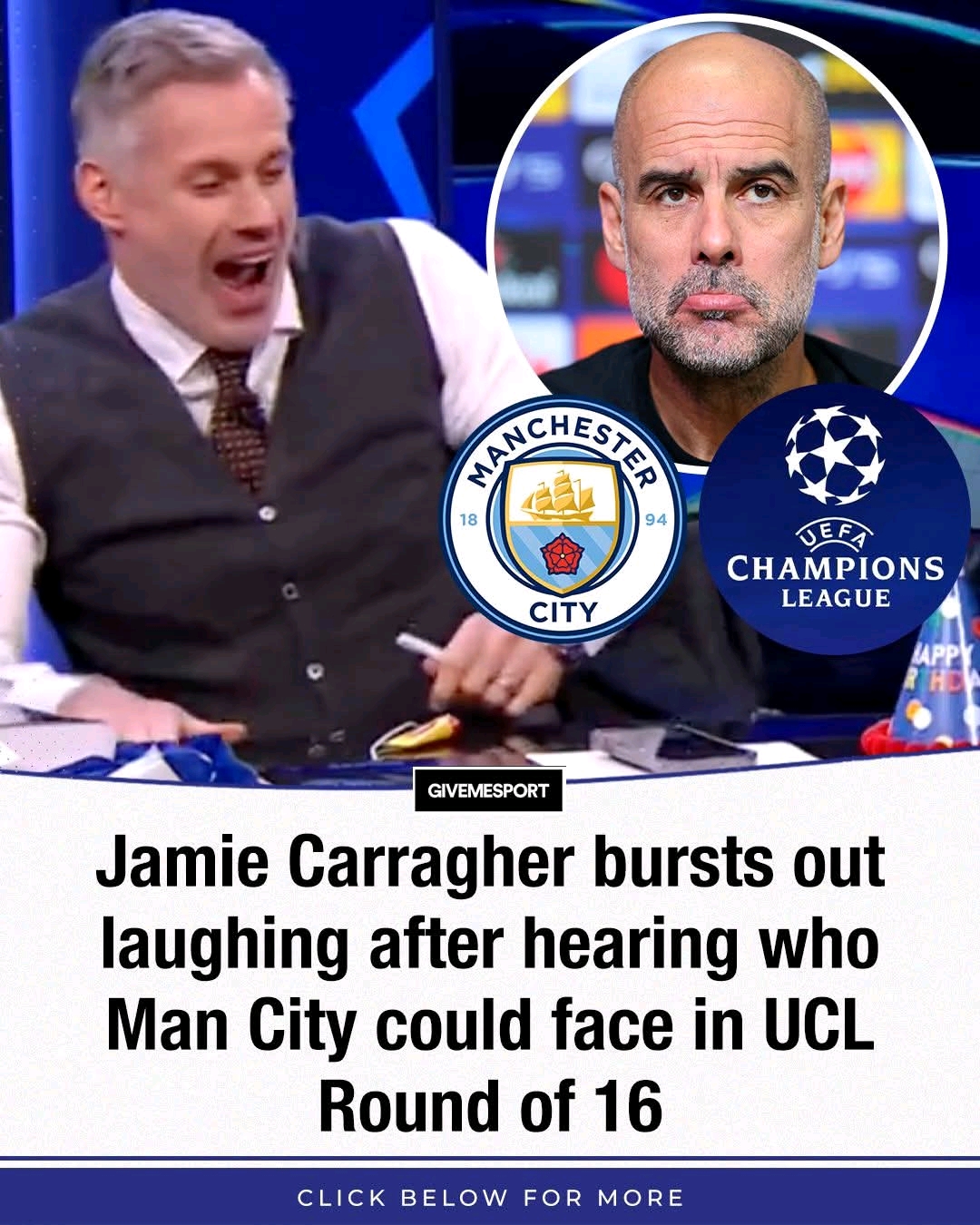
Jamie Carragher could not stop laughing, and for once, it was not because of a joke or a light moment in the studio. It was pure disbelief mixed with irony, frustration, and a deep sense of football history repeating itself. As the final gameweek of the Champions League league phase came to an end, the retired Liverpool defender was sitting in the CBS Sports Golazo studio alongside Micah Richards, reflecting on another dramatic European night. What started as a calm discussion about the new Champions League format quickly turned into a moment that summed up why many fans, pundits, and former players are still struggling to fully accept how this competition now works.
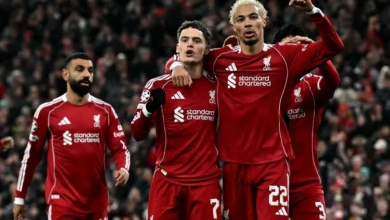
The night itself had everything that makes the Champions League special. Liverpool, Carragher’s former club, tore Qarabag apart with a ruthless 6-0 win, their biggest European scoreline in decades. Jose Mourinho, never far from chaos or drama, watched his Benfica side pull off a stunning 4-2 victory over Real Madrid, sealing a playoff place in the dying moments and sending shockwaves across Europe. Newcastle, still growing into their new European identity, went to Paris and held the reigning champions PSG to a 1-1 draw, a result that spoke volumes about their progress and belief. It was football at its best, full of emotion, tension, and unexpected twists.
But while the goals and results dominated the headlines, the real conversation quickly shifted to what comes next. With the league phase completed, attention turned to the knockout stage, specifically the Round of 16, and who the English clubs could face. This is where the new Champions League format once again raised eyebrows. The idea behind the format was meant to reward consistency and performance across more games, but as Carragher pointed out, the reality often feels very different.
Carragher’s main issue with the format is simple. It does not always feel like finishing higher actually gives you a clear advantage. Teams can work hard, dominate the league phase, and still end up with a brutal draw. Meanwhile, others can scrape through and face opponents just as tough, if not tougher. For a competition that prides itself on fairness and merit, this contradiction sits uncomfortably with many who understand football deeply.
To explain his point, Carragher used Liverpool as an example from the previous season. They finished top of the league phase, playing some of the best football in Europe, only to be rewarded with a Round of 16 tie against Paris Saint-Germain. PSG would go on to win the competition. From Carragher’s perspective, that felt wrong. What was the point of finishing first if the reward was arguably the hardest possible opponent?
This season, Arsenal provided another example. They navigated the league phase flawlessly, showing control, maturity, and consistency. Yet their possible opponents included Borussia Dortmund, Olympiacos, Atalanta, or Bayer Leverkusen. None of those teams are easy. All bring different challenges, styles, and levels of danger. Again, Carragher questioned whether the system truly protects teams who perform best early on.
Related Posts:






Then the conversation turned to Manchester City, and that is when the laughter began.
Carragher turned to Micah Richards and made a comment that many fans have joked about for years. He said he had never known a team more lucky with draws than Manchester City. He referenced their frequent FA Cup runs, joking that they seem to reach the final every year while playing lower-league opposition along the way. It was said half in jest, half in disbelief, reflecting a long-standing narrative that City often avoid the toughest paths.
But the tone changed instantly when Richards revealed who City could actually face in the Round of 16.
Inter Milan. Real Madrid. Benfica. Or Bodo/Glimt.
As those names were read out, Carragher burst into laughter. Not mocking laughter, but the kind that comes when expectations are smashed in seconds. He simply could not believe it. After finishing eighth in the league phase, City were staring at the possibility of facing two European giants or a team that had already beaten them convincingly in the Arctic Circle.
“I’ll take that, I’ll take that,” Carragher joked through laughter, sharing the moment with Richards as the studio reacted. The irony was clear. For once, City’s supposed luck had vanished. Instead of a gentle path, they were staring straight into danger.
The idea of City facing Real Madrid again immediately caught attention. Real Madrid are the competition’s kings, the ultimate Champions League team. They carry history, belief, and an almost unfair relationship with late goals and dramatic comebacks. For City, Madrid have been both a hurdle and a haunting presence in recent seasons. Facing them again so early would be a test not just of quality, but of mentality.
Inter Milan present a different challenge. Tactical, disciplined, and ruthless when given space, they are not a glamorous opponent, but they are brutally effective. Inter know how to suffer, how to defend, and how to strike at the right moment. Over two legs, they can drain the life out of even the most expressive teams.
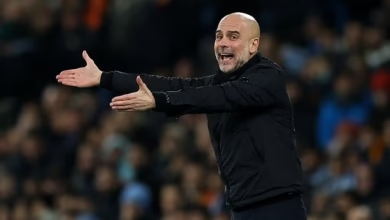
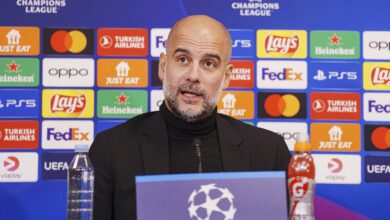
Then there is Benfica, led by Jose Mourinho. Playing against Mourinho in a knockout tie is never simple. He thrives on these moments. He feeds on pressure, controversy, and mind games. Guardiola and Mourinho share a long history, filled with respect, rivalry, and contrasting philosophies. A Champions League clash between their teams would be as much psychological as it is tactical.
And finally, Bodo/Glimt. The team that many still underestimate. The team that already shocked City with a 3-1 win in the Arctic Circle earlier in the competition. Cold conditions, fearless attacking, and total belief make them a nightmare for any favourite. City know better than anyone that Bodo/Glimt are not a joke.
Suddenly, Carragher’s laughter made perfect sense. Manchester City, the team so often accused of having easy routes, were facing one of the toughest possible scenarios.
Meanwhile, Liverpool’s path looked very different. After finishing third with six wins from eight matches, their potential opponents included Atletico Madrid, Club Brugge, Galatasaray, or Juventus. None of these are easy games, but Carragher’s focus was not on Liverpool’s draw. It was on the bigger picture. On the idea that the new format still feels unbalanced.
Beyond the humour and debate, the discussion also reopened a deeper conversation about Manchester City’s place in Europe. Domestically, their success under Pep Guardiola has been extraordinary. Since his arrival in 2016, City have dominated English football. Six Premier League titles. Multiple domestic cups. Record-breaking seasons. Tactical revolutions. A machine-like consistency that has left rivals chasing shadows.
Yet in Europe, the story feels less complete.
For a club with Guardiola, world-class players, and enormous resources, many expected City to dominate the Champions League in the same way they dominate England. But that has not happened. Before their historic triumph, they had only reached the semi-finals or beyond twice under Guardiola. Their 2022/23 treble-winning season was magical, the peak of their powers, the moment when everything clicked. That campaign felt like the fulfilment of a long journey.
Since then, however, progress has stalled. Quarter-final exits have followed. Dominance has slipped. Injuries, fatigue, and small margins have caught up with them. This season, City look more vulnerable than usual. Still dangerous, still capable of brilliance, but no longer untouchable.
That context makes the potential Round of 16 draw even more fascinating. Facing a giant early could either spark City back into life or expose their current weaknesses. Guardiola is at his best when challenged, but even he cannot ignore the physical and mental strain his squad is carrying.
Carragher’s laughter was not just about the draw. It was about the unpredictability of modern European football. About how reputations mean less when formats change. About how dominance in one competition does not guarantee comfort in another.
The Champions League remains football’s ultimate test. It strips teams of excuses. It exposes flaws. It demands adaptability. For Manchester City, the coming weeks could define their season. A favourable draw can build momentum. A brutal one can end dreams early.
For Carragher, sitting in the studio, the moment was almost poetic. The team so often accused of luck now facing the harshest reality. The format designed to reward performance instead creating chaos. The Champions League once again proving that it does not care about narratives.
As fans wait for the official draw, the debate will continue. Is the new format fair? Does it reward consistency? Or does it simply create more drama at the cost of logic? There are no easy answers. But one thing is certain. When Jamie Carragher laughs like that, it is usually because football has just reminded everyone that it will always be unpredictable, cruel, and endlessly entertaining.
And for Manchester City, the laughter may soon fade into focus, tension, and pressure, as Europe’s biggest names line up once again, ready to test whether Pep Guardiola’s side can truly reclaim their place at the top of the continent.