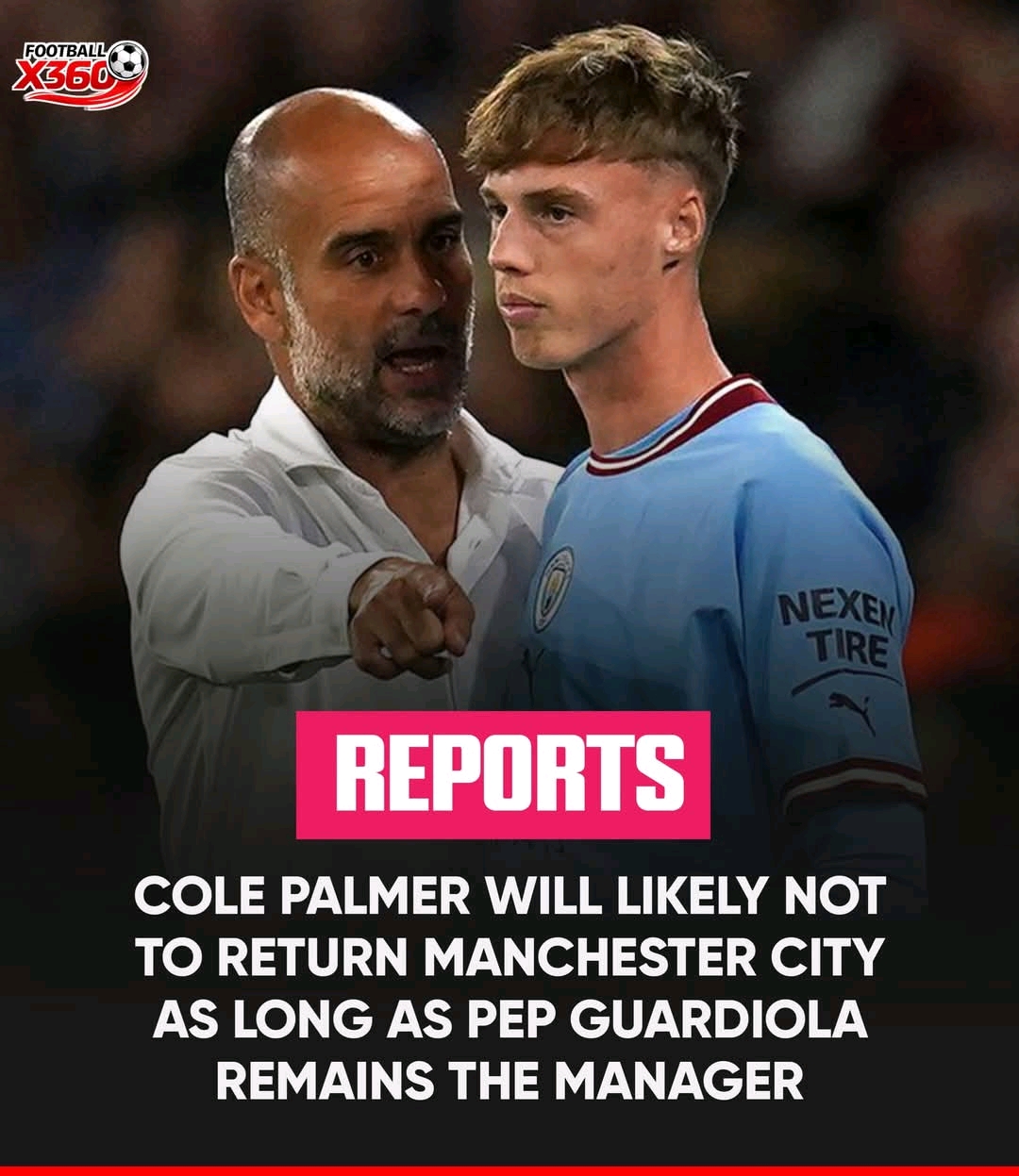
Cole Palmer’s name still carries weight at Manchester City, even though he now wears Chelsea blue and has become one of the most talked-about players in the Premier League. But a new report has sent shockwaves through English football, and it cuts deep for City fans who once believed Palmer would one day return to the Etihad as a matured star ready to lead the next generation. According to a report by Samuel Luckhurst, that dream is effectively dead for one simple reason. As long as Pep Guardiola remains Manchester City manager, Cole Palmer will not return to the club.
That single line has opened old wounds, sparked fresh debates, and raised uncomfortable questions about Guardiola’s management style, City’s handling of youth players, and Palmer’s own journey from academy prospect to Premier League star. This is not just a transfer rumour or a passing comment. It is a statement that speaks volumes about what happened behind the scenes, what Palmer felt during his time at City, and why some bridges, once burned, may never be rebuilt.
To understand why this report matters so much, you have to go back to the beginning. Cole Palmer was not just another academy kid at Manchester City. He was seen as special. From a young age, coaches spoke about his calmness on the ball, his intelligence in tight spaces, and his ability to decide games with a single moment of quality. He was the type of player City fans love to believe in, the local boy who could rise through the ranks and become a symbol of the club’s future.
When Palmer made his senior debut, there was genuine excitement. Every touch was analysed. Every appearance felt like a step toward something bigger. Fans imagined him becoming a regular starter, maybe not immediately, but eventually. After all, this was Manchester City, a club that spoke often about pathways, about developing talent alongside buying world-class stars. Palmer seemed like the perfect example of that vision.
But football at the elite level is rarely that simple, especially under Pep Guardiola. Guardiola is widely regarded as one of the greatest managers of all time. His teams dominate possession, control matches, and win trophies. At City, he built a machine that crushed domestic competition and conquered Europe. But Guardiola also has a reputation. He demands perfection. He trusts experience. And when it comes to young players, he is ruthless.
For Palmer, opportunities were limited. He featured in cup games, cameos, and occasional league appearances, but the consistent run never arrived. Each season, the competition grew stronger. Each summer, new stars arrived. The message, whether spoken or not, became clearer. Palmer was talented, but not trusted enough to be central to Guardiola’s plans.
Related Posts:






That kind of situation can slowly eat away at a player’s confidence. Training every day, watching others play your position, knowing you can make an impact but not being given the chance. For a young player, it becomes a mental battle. Do you stay and wait, hoping for a breakthrough that may never come, or do you leave to save your career
Palmer chose to leave, and that decision changed everything.
When Chelsea moved for him, many people questioned the deal. Some said Chelsea were overpaying. Others claimed Palmer was unproven, a squad player at best. But Palmer arrived with something to prove, and from his first games, it was clear this was a different player. He played with freedom, confidence, and hunger. He became central to Chelsea’s attack, took responsibility in big moments, and showed leadership far beyond his years.
Goals came. Assists followed. Performances improved. Suddenly, the same people who doubted him were praising him. Cole Palmer was no longer a City academy graduate trying to break through. He was a Premier League star in his own right.
And that is where the story turns painful for Manchester City.
Every time Palmer delivers a big performance for Chelsea, the question returns. Did City let him go too soon? Could he have played this role at the Etihad? Was Guardiola wrong?
For a long time, there was still a belief among some City fans that one day, Palmer might return. Football has a funny way of bringing players back home. If Palmer continued to grow, if circumstances changed, if Guardiola moved on, maybe City would come calling again. It felt possible. Until now.
The report from Samuel Luckhurst removes any doubt. It does not say Palmer will never return to Manchester City under any circumstances. It says something more specific and more telling. Cole Palmer will not return as long as Pep Guardiola is the manager.
That detail is everything.
It suggests that this is not just about tactics or playing time. It points to a deeper issue, a relationship that cannot be repaired while Guardiola remains in charge. Whether it is disappointment, frustration, or a feeling of being overlooked, Palmer has clearly drawn a line. His stance is firm. His future does not include a reunion with the man who once controlled his fate.
From Palmer’s point of view, this makes sense. At Chelsea, he is trusted. He is valued. He is given responsibility. He is allowed to make mistakes and learn from them. For many players, especially creative attackers, that freedom is priceless. It allows them to express themselves and reach their full potential.
At City, the environment is different. Guardiola’s system is precise. Roles are strict. Mistakes are punished, sometimes silently, through exclusion. For a young player like Palmer, that environment may have felt suffocating rather than inspiring. Leaving was not just a career move. It was a personal one.
For Manchester City, this report is uncomfortable. Guardiola’s success cannot be questioned, but it raises an old debate that never truly goes away. Does City’s system truly allow academy players to thrive, or does it push them out in favour of ready-made stars? Palmer’s story will be used as evidence by those who believe City does not do enough to integrate young talent into the first team.
City will argue that trophies matter, that standards must be high, and that not every talented youngster can make it. And they would be right. But Palmer’s rise at Chelsea complicates that argument. This is not a player who failed elsewhere. This is a player who left and immediately flourished.
The timing of this report also adds extra spice. Guardiola’s future at Manchester City has been a topic of discussion for months. There have been rumours, hints, and speculation about how long he will stay. Some believe he may eventually seek a new challenge, either with a national team or another club. Others think he could extend his stay and continue building his legacy.
If Guardiola were to leave one day, would that open the door for a Palmer return? In theory, yes. But football is not just about theory. It is about emotions, memories, and scars. Even if Guardiola leaves, the experiences Palmer had at City will not disappear. Chelsea is now his home. His identity is being shaped there. His bond with the club and its fans grows stronger with every game.
For Chelsea supporters, this report is a badge of pride. It confirms what they already feel. Palmer chose them, and he is happy. He is not looking back. He is not dreaming of returning to the club that let him go. He is focused on the present, on building something at Stamford Bridge, on becoming a leader in a young and ambitious squad.
It also sends a message to other young players watching closely. Careers can change quickly. Sometimes, leaving a giant club is not a failure but a necessary step forward. Palmer’s journey is a reminder that talent needs opportunity, and opportunity does not always come where you expect it.
For Pep Guardiola, the report may not change anything. He will continue to coach, to win, and to demand excellence. He has never claimed to be sentimental. He has always been clear about his priorities. If a player does not fit his vision, he moves on. From his perspective, that is football.
But even the greatest managers leave behind stories like this. Stories of players who might have thrived under different circumstances. Stories that spark debate long after trophies are lifted.
Cole Palmer will not return to Manchester City as long as Pep Guardiola remains manager. That sentence will be repeated, shared, argued over, and analysed. It is short, sharp, and powerful. It captures the reality of modern football, where success and sacrifice often walk hand in hand.
For now, Palmer looks forward, not back. He continues to grow, to shine, and to prove that his decision was the right one. Manchester City continue to win, to dominate, and to trust their manager. Both sides move on, but the connection between them remains a story of what could have been.And in football, those stories never truly fade.