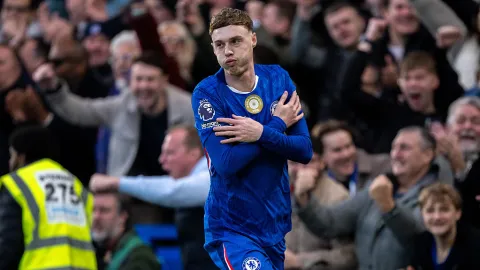
Chelsea’s season in 2026 has felt like a long emotional ride, full of hope, disappointment, questions, and constant noise from outside the club. At the start of the campaign, many fans believed this would finally be the year when Chelsea’s massive investment would come together. The squad was packed with talent, the ambition was clear, and the goal was simple: return to the top of English and European football. But football rarely follows a straight line, and Chelsea’s journey this season has been anything but smooth.
As things stand, Chelsea sit sixth in the Premier League with 34 points after 22 matches. On paper, that position still keeps them in the race for European qualification, and it means their season is far from a disaster. But inside the club, and among supporters, there is a strong feeling that this team should be doing much better. The performances have often been inconsistent, the results unpredictable, and the mood around Stamford Bridge has swung wildly from optimism to frustration.
One of the biggest turning points of the season came on New Year’s Day, when Chelsea made the bold decision to sack manager Enzo Maresca. The Italian coach arrived with a clear philosophy and backing from the club’s owners, but results and performances never truly matched expectations. Chelsea’s hierarchy decided they could not wait any longer, and they turned to a familiar structure within the BlueCo ownership group to find a replacement.
Liam Rosenior was brought in from Strasbourg, another club under the BlueCo umbrella. The idea was simple but risky: trust a coach who had been developed within the same ownership system, someone who understood the long-term project and could grow with the squad. Rosenior’s appointment was seen as a gamble, but also as a sign that Chelsea were thinking about stability rather than another short-term fix.
While managerial changes always dominate headlines, Chelsea’s struggles this season cannot be explained by coaching alone. Injuries have played a huge role, and no player’s situation has symbolised Chelsea’s difficulties more than Cole Palmer. The former Manchester City star arrived at Chelsea in 2023 with enormous expectations on his shoulders. He was seen as a statement signing, a creative leader, and a player who could define Chelsea’s future.
Instead, Palmer’s 2025/26 season has been one of frustration and disappointment. Injury problems have interrupted his rhythm, limited his minutes, and affected his confidence. When he has played, he has not looked like the same player who once dazzled fans with his calm finishing, sharp movement, and intelligence on the ball. In Premier League action this season, Palmer has scored just four goals and has not registered a single assist. Over the past 12 months, he has managed only five league goals in total, a shocking statistic for a player of his reputation and quality.
Related Posts:






For a footballer who thrives on confidence and rhythm, the constant stop-start nature of his season has been damaging. Each time Palmer seemed ready to build momentum, another knock or fitness issue would set him back. As Chelsea struggled collectively, Palmer became an easy target for criticism, even though many inside the club understood how difficult his situation had been.
As the weeks passed and Chelsea continued to search for consistency, rumours began to circulate around Palmer’s future. In modern football, form, fitness, and happiness are closely linked, and social media quickly filled with speculation that the midfielder was unhappy in London. Those rumours reached another level on January 22, when reports suggested Palmer could be considering a fresh start away from Stamford Bridge.
According to claims circulating at the time, Palmer was said to be struggling to enjoy life in the south of England. The reports suggested that he missed his friends, his family, and the familiarity of home. Palmer was born in Wythenshawe, in the south of Greater Manchester, and spent his early life in the area before moving to Chelsea. The idea that he might feel homesick did not seem unrealistic to many fans, especially given his injury troubles and dip in form.
When you combine personal discomfort with professional frustration, transfer rumours become inevitable. Palmer’s lack of goals, Chelsea’s inconsistent season, and the recent managerial upheaval all added fuel to the fire. Suddenly, whispers of a possible move to Manchester United began to grow louder, catching the attention of fans across England.
The link to Manchester United is not random. United are in need of creativity, goals, and technical quality in attacking areas, and Palmer fits that profile perfectly. He is a player capable of operating between the lines, unlocking defences, and delivering in big moments. Even though his recent numbers have been poor, many believe his underlying talent remains unquestionable.
There is also a strong emotional angle to the story. Palmer grew up in Greater Manchester, not far from Old Trafford. While his hometown is not exactly next door to United’s stadium, it is closer to United than to Manchester City. As a child, Palmer has openly admitted that his football idol was Wayne Rooney, Manchester United’s legendary captain and all-time leading goal scorer. Photos of a young Palmer wearing a United shirt have surfaced online, further adding to the narrative.
Despite these childhood connections, Palmer’s professional development took a different path. In 2010, at just eight years old, he joined Manchester City’s academy. From that moment on, City became his football home. He progressed through every youth level, learning the club’s philosophy and developing into one of the brightest talents in their system. His first-team debut came in September 2020, when he was just 18 years old, marking the beginning of his senior career.
Palmer’s time at City showed flashes of his quality, but opportunities were limited in a squad packed with world-class players. Eventually, the decision was made for him to seek regular football elsewhere, and Chelsea moved quickly to secure his signature in the summer of 2023. At the time, it looked like the perfect move for both player and club.
Now, just a few seasons later, questions are being asked once again. Could Palmer really leave Chelsea so soon? Would Chelsea even consider selling one of their most valuable assets? And is Manchester United a realistic destination, or just a story driven by nostalgia and speculation?
Chelsea’s new manager, Liam Rosenior, has been keen to shut down the rumours as quickly as possible. In multiple interviews, he has insisted that Palmer remains a central figure in the club’s long-term plans. Rosenior has described him as an outstanding player and made it clear that injuries, not attitude or happiness, are the main reasons behind his struggles this season.
Rosenior has also spoken directly about his conversations with Palmer, stating that the player is happy at Chelsea and committed to the project. He has emphasised that difficult periods are a normal part of any footballer’s career, especially one as young as Palmer. According to the Chelsea boss, these challenges do not change the club’s belief in the player’s quality or importance.
From a contractual point of view, Chelsea are in a very strong position. After joining the club in 2023, Palmer signed a new contract in August 2024 that tied him to Chelsea until June 30, 2033. A nine-year deal is extremely rare in modern football, but it fits perfectly with Chelsea’s recent strategy under BlueCo ownership. By offering long-term contracts, Chelsea aim to spread costs over many years and protect the value of their key players.
Palmer’s contract also places him among the club’s top earners. He reportedly earns around £130,000 per week, which works out to approximately £7.8 million per year in basic salary. On top of that, there are performance-related bonuses that could significantly increase his earnings if Chelsea achieve success and if Palmer performs at a high level individually.
There has been speculation about whether Palmer’s contract includes a release clause, especially one linked to Champions League qualification. Some early reports suggested that such a clause might exist, but these claims were later played down. Reliable sources have indicated that Chelsea’s incentive-based contracts do not usually include straightforward release clauses of that kind. While it is impossible to say with absolute certainty that no clause exists, the general belief is that Chelsea retain full control over Palmer’s future.
This makes a transfer to Manchester United extremely complicated. Chelsea would have no reason to sell unless they received an extraordinary offer, and even then, selling a young, talented English player to a direct rival would be a controversial move. From United’s perspective, the financial demands of such a deal would be massive, especially considering Palmer’s long contract and high wages.
For Palmer himself, the situation is equally complex. On one hand, a return to the north of England, closer to family and familiar surroundings, could appeal to him emotionally. On the other hand, he is still early in his Chelsea journey, and leaving now could feel like unfinished business. Many players experience difficult seasons before finding their rhythm and reaching their true level.
As the season progresses, much will depend on Palmer’s fitness and form. If he can stay healthy and rediscover his confidence, the narrative around him could change very quickly. Football has a short memory, and a few strong performances can silence months of criticism and speculation.
Chelsea, meanwhile, will continue to push for a top-four or top-six finish, hoping to secure European football and restore belief in their project. Rosenior’s task is not just to improve results, but to rebuild confidence in players like Palmer, who have the talent to transform games but need stability and support to do so.
For now, the links between Cole Palmer and Manchester United remain just that: links. They are fuelled by geography, childhood memories, poor form, and a difficult season at Chelsea. Whether they ever become something more concrete is another question entirely.
What is clear is that Palmer’s story is far from over. At 23 years old, he still has many years ahead of him at the highest level. Whether those years are spent at Chelsea, or one day back in Manchester, will depend on how he responds to this challenging chapter of his career. In football, moments of doubt often come before moments of greatness, and Cole Palmer will be hoping that this season, frustrating as it has been, is only a temporary setback on a much bigger journey