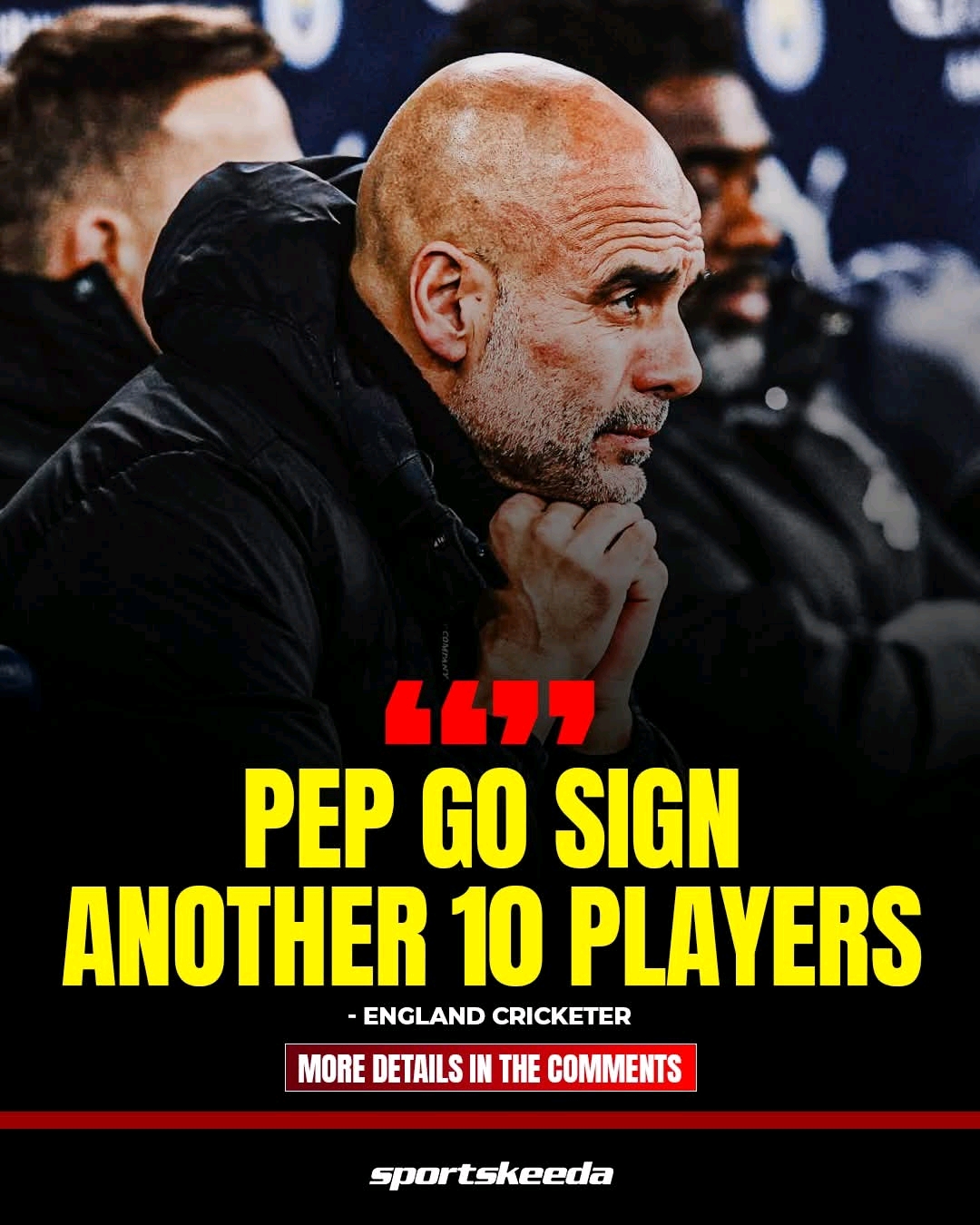
England cricketer mocks Guardiola after Man City lose the derby to Manchester

The atmosphere around Manchester City has been tense ever since their frustrating 1‑1 draw with West Ham United at the London Stadium. But amid the disappointment on the pitch, another storm has erupted off it — one that threatens to shake the very foundations of the club. At the center of it all is Bernardo Silva, the Portuguese midfielder whose brilliance and creativity have been a cornerstone of Manchester City’s success over the past several years. Silva’s post-match interview has set social media alight and left fans, pundits, and even teammates in a state of shock.
From the moment the camera caught him in the mixed zone after the draw, Silva’s expression told a story: frustration, disappointment, and perhaps even a sense of betrayal. The midfielder did not mince words. His “salty” demeanor, a term fans immediately seized on, perfectly reflected the simmering tension that has been building within the squad. Silva’s words were candid, raw, and unfiltered — a glimpse into the mind of a player who feels that his time at City may be coming to an end.
Silva confirmed something that had been circulating in whispers for weeks: he is leaving Manchester City. The news was delivered with the kind of blunt honesty that left journalists scrambling to record every word. “Yes, I’m leaving,” he said, voice steady but edged with frustration. “It’s been an incredible journey, but it’s time for me to move on. I have given my all here, but I feel the moment has come for a new challenge.”
The reaction among fans was immediate and intense. Manchester City supporters flooded social media with mixed emotions: heartbreak for the loss of a player who has contributed so much to the club’s success, anger at the timing of the announcement, and anxiety about the potential destination of Silva’s next move. Many expressed concern that leaving the Etihad Stadium for a rival would be a bitter pill to swallow.
Speculation over his next club quickly followed. Silva dropped a hint that immediately sent shockwaves through football circles. He revealed that he had already decided on his next destination — a club abroad that has shown strong interest in his services. While he did not name the club outright, his statement was enough to ignite a frenzy of analysis and rumor-mongering. “I know where I want to go, and I believe it’s the right step for my career,” Silva said. “It’s not about leaving Manchester City because of problems here. It’s about seeking something different, a new challenge, a new environment, a place where I can continue to grow as a player.”
For a player who has spent the last seven years weaving magic in midfield, linking defense to attack, and dictating the tempo of games, this decision is monumental. Silva has been one of Guardiola’s most reliable lieutenants — a player who can execute complex tactical instructions while also providing flashes of brilliance that change games in an instant. To hear him speak with frustration about the club, the fans, and even himself was a rare glimpse behind the curtain of professional football.
During the interview, Silva did not shy away from criticism, either of himself, his teammates, or the situation around the club. His frustration was palpable. He admitted that the recent draw with West Ham, and the string of dropped points that followed, had left him disheartened. “We gave away a lead again,” he said, shaking his head. “We controlled parts of the game, but in the moments that mattered, we didn’t finish it. It’s frustrating for everyone — for the fans, for the club, for me.”
Fans immediately took to social media to debate Silva’s remarks. While many empathized with his desire for a fresh challenge, others argued that the timing was unfortunate and that leaving for a rival, or a club of similar stature, would be disrespectful to City’s history and supporters. “I get that Bernardo wants something new,” one fan tweeted. “But joining a top rival? That’s a no from me. Loyalty matters.” Another wrote, “He’s a genius on the pitch, but his post-match attitude today? Not great. We get frustrated, yes, but respect the club.”
Silva’s honesty, however, also earned him praise. Analysts pointed out that in an era when players often speak in carefully curated soundbites, his willingness to voice frustration openly was refreshing. He did not deflect, he did not pretend everything was fine, and he did not shy away from the truth. “It’s rare to see a player speak so openly,” said one football pundit. “Bernardo Silva is showing courage — he’s telling the fans exactly what he feels. That takes character.”
Inside the club, reactions are said to be mixed. Guardiola reportedly remains supportive of Silva’s career decisions but is also said to be concerned about the timing and the impact it could have on team morale. City’s senior players, who have long relied on Silva’s experience and leadership on the pitch, are said to be weighing in privately, attempting to balance understanding his need for change with maintaining focus during a crucial part of the season.
Silva himself acknowledged the delicate nature of the announcement. “I know people will react strongly,” he said. “I understand that. I respect the fans, the club, and my teammates. But I have to make the decision that is right for me. Football is my career, my life, and sometimes you need to make difficult choices.”
The timing of Silva’s revelation is critical. Manchester City is in the midst of a punishing schedule, with crucial fixtures in the Premier League, UEFA Champions League, and domestic cups looming. Losing a player of Silva’s quality, even mentally, could have an impact on performance. Guardiola will need to navigate this period carefully, ensuring that the squad remains focused while also respecting Silva’s wishes.
Beyond the immediate impact on City, Silva’s potential transfer has sparked speculation across Europe. Clubs from La Liga, Serie A, and Ligue 1 have been linked with interest. Some pundits argue that a move to Spain could suit Silva’s style, offering technical freedom and tactical responsibility in a league known for creativity and flair. Others suggest that a challenge in Italy could test his defensive and transitional abilities, while France might provide a familiar linguistic and cultural environment for the Portuguese midfielder.
Social media reactions continue to pour in, with hashtags dedicated to Silva trending in multiple countries. Fans are sharing clips of his finest moments: his late runs into the box, his exquisite first touch, his ability to pick out teammates with incisive passes. Tributes to his contribution at Manchester City are flooding platforms, with many emphasizing that regardless of his next destination, Silva has left an indelible mark on the club.
Silva’s candidness in the interview also raises questions about the broader culture at Manchester City. While the club has been synonymous with success, dominating domestic competitions and challenging in Europe, the pressures on players are immense. Silva’s remarks shed light on the human side of elite football — the emotional and psychological toll of competing at the highest level, the frustration when expectations are not met, and the drive to seek new challenges when one feels a plateau has been reached.
Interestingly, Silva’s comments suggest that he does not see his departure as a failure or a negative reflection on City. Rather, it is a personal decision aimed at growth and new experiences. “This isn’t about leaving because things are bad here,” he emphasized. “It’s about taking the next step. I want to continue learning, continue competing, and challenge myself in a different environment.”
The story also has wider implications for Guardiola and Manchester City. How the club manages Silva’s remaining time, integrates his absence into tactical plans, and communicates with supporters will be crucial. Guardiola has historically demonstrated exceptional skill in squad management, maintaining focus and morale even amid disruptions. Yet, losing a creative midfielder mid-season is never simple. The manager may have to adjust formations, playing style, or transfer strategies to compensate for Silva’s impending departure.
Silva’s departure may also inspire other players to consider their futures. Elite clubs often see a ripple effect when a key player announces a move, with teammates evaluating their own career paths and potential opportunities elsewhere. Guardiola and his management team will need to maintain a sense of stability, ensuring that ambition does not disrupt cohesion and team chemistry.
While fans debate the morality of Silva joining a rival or pursuing a top European club, one thing is clear: the midfielder’s legacy at City is secure. He has been a key figure in one of the club’s most successful eras, contributing goals, assists, and leadership. His creative influence, work ethic, and football intelligence have earned him the respect of teammates, managers, and opposition players alike.
The interview also revealed a more personal side of Silva. He spoke of emotional attachment to Manchester City, to the city of Manchester itself, and to the fans who have supported him over the years. His words conveyed a mix of sadness and excitement — sadness at leaving a place that has been central to his professional life, and excitement at the opportunity to embark on a new adventure.
Some pundits predict that Silva’s next club will offer him a leadership role, a chance to be the centerpiece of the team rather than part of a collective unit. Others suggest that the move will allow him to refine his skills, adapt to a new league, and potentially extend his career at the top level. Either way, the football world will be watching closely.
The timing of the interview — immediately following the West Ham draw — magnifies its impact. Fans were already frustrated with the result, and Silva’s candid revelation added fuel to the fire. Yet, for Silva, speaking honestly was a necessary step. It allowed him to take control of the narrative, assert his intentions, and prepare for the next chapter in his career.
Even in his frustration, Silva’s professionalism shines through. He has emphasized respect for Manchester City, the supporters, and the club hierarchy. Despite announcing his departure, he remains committed to contributing on the pitch until his final game. “I will give everything until my last minute at City,” he assured. “I owe that to my teammates and the fans.”
Social media has erupted with reactions that span admiration, anger, concern, and speculation. Fans debate whether leaving City now is wise, where Silva might go next, and how Guardiola and the club will respond. The discussions highlight the global reach of football, the emotional investment of supporters, and the intensity of modern media scrutiny.
For Manchester City, the next few weeks will be critical. Silva’s departure, combined with the pressures of the title race and European competition, creates a challenging environment. Guardiola’s leadership, tactical acumen, and man-management skills will be tested as he navigates these uncertainties while striving to maintain the team’s competitive edge.
In conclusion, Bernardo Silva’s post-match interview was more than just a statement about a player leaving a club. It was a window into the pressures, ambitions, and emotions that define professional football at the highest level. Silva’s honesty, frustration, and vision for his next move illuminate the human side of the sport — the dreams, the sacrifices, and the courage required to pursue greatness.
Manchester City fans, while saddened, will remember Silva’s contributions fondly. His creativity, intelligence, and flair have been defining elements of the club’s modern identity. And while his next destination remains speculative, one certainty remains: wherever Bernardo Silva goes, he will bring talent, vision, and determination that few can match.
The football world now waits with bated breath for Silva’s next chapter — a move that could reshape his career, impact multiple leagues, and leave a lasting mark on the global game.