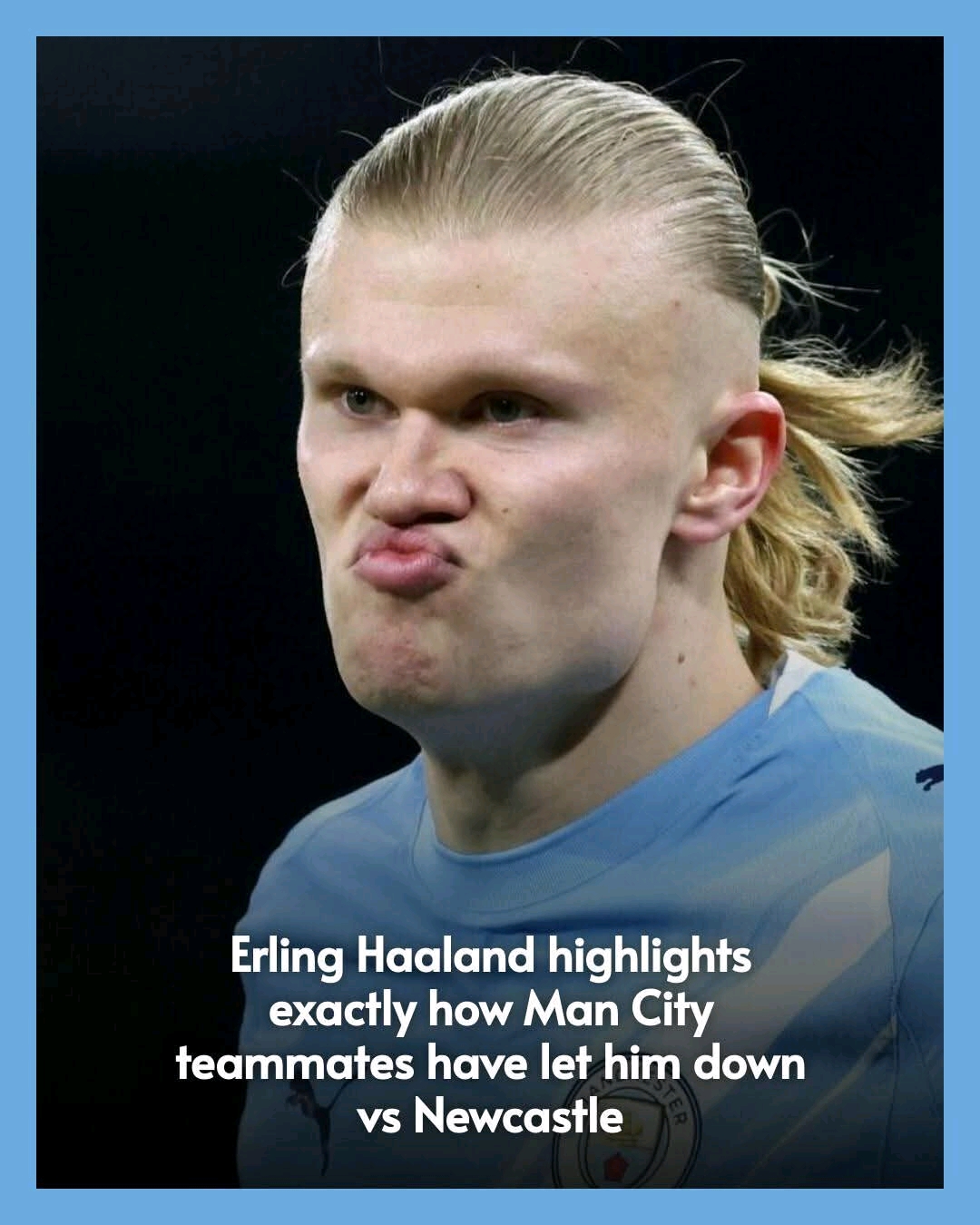
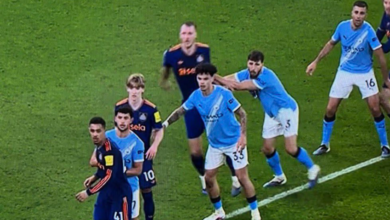
Erling Haaland has been at the center of attention once again, and this time it is not just for the goals he scores or the headlines he dominates, but for the way his teammates at Manchester City have, unintentionally or not, let him down in moments that matter. The Norwegian striker has been a revelation in many ways, a record-breaking goal machine, a force of nature in the Premier League, and yet even the greatest players have their moments of frustration, and Haaland is no different. The story of his latest battles on the pitch, particularly against Newcastle United on Saturday, 21 February 2026, is a story of patience, persistence, and the complexities of a football team where one star player can shine but still be limited by the team around him.
Haaland entered the Newcastle match carrying the weight of both expectation and doubt. His record this season has been phenomenal on paper, with 29 goals and six assists across all competitions before this particular game, yet there had been murmurs, whispers in the football world, questioning whether he was still as deadly as the early days suggested. Fans and pundits alike pointed to his recent blanks, games where his finishing power seemed to disappear into thin air. Chelsea, Manchester United, Bodo/Glimt, and even Newcastle in the Carabao Cup were all fixtures where Haaland could not find the back of the net, leaving fans scratching their heads and rival supporters feeling smug at the idea that the Norwegian superstar might be faltering.
The narrative, however, was never that simple. Haaland’s brilliance has always been as much about movement, timing, and creating chances as it is about actually putting the ball in the net. Anyone who watches Manchester City regularly knows that Haaland is rarely static. He makes clever runs in behind defenders, often disappearing between lines, dragging opposition players out of position, and creating spaces that others can exploit. The problem, at least in recent weeks, has been that his teammates have not always been on the same wavelength. Passes are sometimes off-target, timing is misjudged, or the final touch is missing. When a player like Haaland does not get the service he needs, even he cannot manufacture perfection from nothing. It is a harsh truth, but one that the Newcastle match illuminated perfectly.
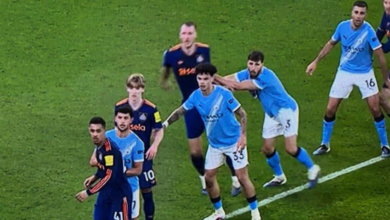
When Manchester City faced Newcastle United, the game carried extra weight. Both clubs were in a tense fight at the top of the Premier League, with every point crucial and the margin for error minimal. Haaland had something to prove, not just to rival fans but to himself and perhaps to his teammates. Despite the criticism, he was ready to make a statement, and it was an assist rather than a goal that provided that moment of clarity. In the first half, a move developed down the wings, quick and precise, and Haaland showed that his vision was just as deadly as his shooting. He lifted a cross into the penalty area, perfectly timed, soaring into the path of young Nico O’Reilly, the academy graduate who has been emerging as a bright talent in City’s squad. O’Reilly met it with a header that thundered past the Newcastle goalkeeper, and suddenly Haaland had delivered what only he could: the perfect service, the exact pass that a striker of his caliber needs. Moments later, O’Reilly scored again, putting City ahead early and showing that Haaland’s influence was not always about personal glory. Even when he does not score, he is capable of creating game-changing opportunities, and this was a prime example.
The significance of this moment cannot be understated. It highlighted a recurring theme in Haaland’s season: when given the right conditions, when teammates complement his strengths, the goals come naturally. He is a striker built for precision, for timing, for moments where everything aligns. When the ball is delivered perfectly into his path or when he can orchestrate play for others, he is unstoppable. But football is never a solo act, no matter how talented a player might be. City’s struggle to maximize Haaland’s abilities in recent fixtures has often been tied to the nuances of passing, timing, and awareness from his teammates. Against Newcastle, for once, everything clicked, and Haaland’s contribution was a reminder of why he is considered one of the most formidable forwards in the world.
It is important to note that Haaland’s perceived “slumps” are often magnified by the attention he receives. When a striker scores consistently, expectations rise, and the world watches every touch, every miss, every decision. Haaland is only 25, yet he carries the weight of a generation of fans, analysts, and critics on his shoulders. When he does not score in a game, even if he makes critical runs that unsettle defenses, the headlines focus on the lack of goals. But the truth is more nuanced. In games where Haaland does not score, it is often because the connection with his teammates is slightly off, the delivery imperfect, or the timing miscalculated. He is a predator in the box, but a predator needs prey to hunt, and the prey, in this metaphor, is the perfect service from teammates, the ball arriving at the right place, at the right time, with the precision that allows him to do what he does best.
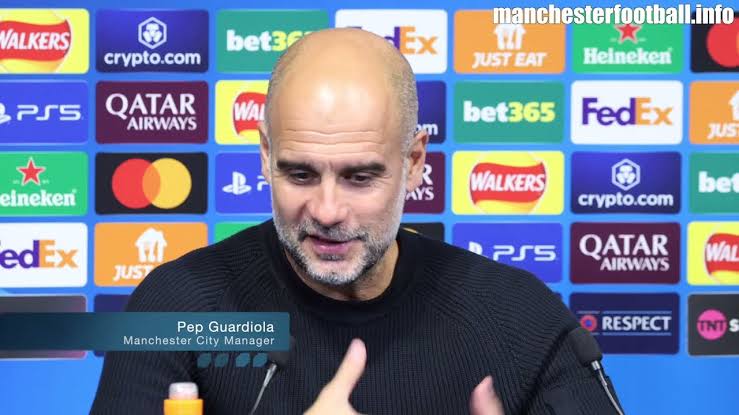
Pep Guardiola, as always, has been a steadfast supporter. The City manager has never once doubted Haaland’s quality, and his belief is crucial to the striker’s confidence. In football, the manager’s backing can often make the difference between a player thriving or faltering under pressure. Guardiola has consistently emphasized that Haaland is a unique talent, a special player capable of defining matches single-handedly. This endorsement is more than words; it reflects a trust in Haaland’s ability to influence outcomes, even on days when his scoring touch seems absent. Guardiola’s confidence has never wavered, and it is this unwavering support that gives Haaland the mental space to continue making runs, creating chances, and waiting for the moments when everything clicks.
Examining Haaland’s recent performances in detail paints a picture of consistency mixed with flashes of brilliance and occasional frustration. In his last five starts before the Newcastle game, he scored against Galatasaray, provided an assist against Tottenham, both scored and assisted against Liverpool, netted against Fulham, and provided an assist against Newcastle. This stat line is impressive, yet it also emphasizes the duality of Haaland’s season: scoring is essential, but his influence extends beyond personal tallies. Assists, smart runs, and creating space are equally critical. When City’s forwards and midfielders align with his movements, the team thrives, and Haaland’s contributions often become the difference between winning and drawing, between dominating and being contained. The Newcastle match was a perfect encapsulation of this dynamic. Haaland’s cross for O’Reilly was textbook, a demonstration of how lethal he can be when the team plays to his strengths.
Fans often debate about Haaland’s “goal droughts,” but these periods are rarely a result of lack of effort or ability. They are more a reflection of the interconnected nature of football. A striker is only as good as the support around him, and the finer details of timing and delivery can make all the difference. Haaland’s blank matches against Chelsea, Manchester United, Bodo/Glimt, and Newcastle in the Carabao Cup were not failures of talent but rather moments where the service was not perfect, where defensive organization or miscommunication prevented him from turning chances into goals. His runs, intelligent and incisive, often went unnoticed by the camera and even by the naked eye. It is in these subtleties that Haaland’s genius is both highlighted and, at times, underappreciated.
The psychological aspect of these moments cannot be overlooked. A striker like Haaland, surrounded by expectation and constant scrutiny, must manage not only physical challenges but mental pressures. Each missed opportunity, each blank game, is a test of resilience. Haaland’s reaction is professional, composed, and focused. Instead of succumbing to frustration, he continues to make intelligent runs, remains available for passes, and positions himself to influence the game in other ways. Against Newcastle, his reward was immediate, a cross that resulted in a goal for O’Reilly, and a moment of quiet vindication against the doubters. For fans, it was a reminder that Haaland’s value is multifaceted. Goals are tangible, celebrated, and scrutinized, but the underlying intelligence, movement, and creation are equally critical, even if they do not always make the front page.
Haaland’s relationship with his teammates is also central to this narrative. Football is a game of chemistry, intuition, and timing. A striker like Haaland depends on midfielders who can see the runs he is making, on wingers who can deliver the ball at the exact height and pace required, on fellow forwards who can draw defenders away to open spaces. When these elements align, Haaland’s efficiency skyrockets, as seen against Newcastle. The cross to O’Reilly was perfect in height, pace, and timing, demonstrating what is possible when players work in harmony. The young academy graduate’s finishing only amplified Haaland’s brilliance, but the setup was entirely the work of the Norwegian’s awareness and precision. It is a lesson in both patience and teamwork: talent alone does not win games, collaboration does, and Haaland’s season has been a testament to this truth.
Critics, of course, will always focus on the negatives, highlighting games where Haaland’s goals have dried up or where he has failed to convert a chance. Yet a more careful analysis reveals the broader context. The missed opportunities are often a reflection of the team’s rhythm rather than a lack of skill on Haaland’s part. Even on his worst days, the potential for moments of brilliance remains. A perfectly timed cross, a quick combination, or a lapse in defensive concentration can turn any game. The Newcastle match reminded everyone of this. Haaland may not have scored himself, but his contribution was undeniable, a subtle yet decisive influence that shifted the game in City’s favor.
It is also worth noting the role of emerging talents like Nico O’Reilly. Haaland’s ability to connect with younger players demonstrates his football intelligence and adaptability. The Norwegian does not seek the limelight exclusively; he creates opportunities for others, understanding that football is a collective sport. His cross for O’Reilly was not just a statistical contribution; it was a statement, a demonstration of how experience, vision, and execution can empower emerging talent while reinforcing his own value. In many ways, these moments are more telling than goals themselves. They highlight leadership, awareness, and the capacity to influence outcomes in ways that transcend mere scoring.
As Manchester City continue to chase the Premier League title, the Haaland story will remain intertwined with the team’s success. Arsenal’s pursuit adds pressure, but it also provides motivation. In a title race where every point matters, Haaland’s ability to adapt, assist, and score will be pivotal. The Newcastle match was a microcosm of this broader struggle and triumph: a team with incredible talent, moments of misalignment, and flashes of genius that can tip the balance. Haaland embodies both the potential and the challenges of being a top striker in one of the most competitive leagues in the world.
Looking ahead, the lesson from the Newcastle encounter is clear. Haaland thrives when teammates play to his strengths, when passes meet him precisely, and when the collective focus aligns with his movements. He is a remarkable player, but even the best need support. Guardiola’s faith, combined with a team willing to adapt and recognize Haaland’s unique abilities, ensures that his impact remains transformative. As the season progresses, moments like the cross for O’Reilly will be remembered not just as isolated instances but as examples of what happens when talent, vision, and teamwork converge perfectly.
Erling Haaland’s journey at Manchester City is far from over. Each game, each assist, each goal contributes to a narrative of resilience, intelligence, and football artistry. The story of a player criticized, doubted, yet endlessly capable, continues to unfold with every match. Against Newcastle, he reminded everyone that brilliance is not always about the ball hitting the net. Sometimes, it is about creating possibilities, shaping the flow of the game, and elevating those around you. Haaland may not always score, but he will always influence, and that influence, as the Newcastle game demonstrated, is nothing short of extraordinary.