The atmosphere at Falkirk Stadium on that cold April afternoon was already boiling before a single whistle had been blown. Falkirk fans filled every corner of the ground, singing loudly, waving scarves, and believing their team could shock one of Scotland’s biggest sides. Rangers arrived under pressure, chasing points in a tight title race, knowing that any slip could cost them everything in the final weeks of the season.
Nobody expected what would follow to become one of the most controversial matches in Scottish football in recent memory.
From the first minute, Falkirk played with fearlessness and energy. They pressed high, attacked quickly, and looked like a team with nothing to lose. Rangers, on the other hand, looked shaky at the back, struggling to deal with the intensity. The home crowd sensed it early, and the noise grew louder with every attack.
Then came the breakthrough.
In just the 6th minute, Falkirk stunned the visitors. A quick move down the left opened space, and Ben Broggio reacted first inside the box. His finish was calm, precise, and unstoppable. The stadium exploded. Falkirk 1-0 Rangers. It was not just a goal; it was a statement.
Rangers tried to respond, pushing forward, but they were second best in almost every area. Falkirk’s midfield controlled the game, winning tackles, intercepting passes, and breaking up Rangers’ rhythm. The pressure continued to build.
By the 26th minute, Falkirk struck again.
A loose ball in midfield was punished instantly. Finn Yeats picked it up, drove forward without hesitation, and unleashed a powerful strike that flew past the goalkeeper. It was 2-0, and at that moment, Rangers looked in serious trouble. The home fans were in disbelief. Some were already talking about a historic win.
On the touchline, Falkirk manager John McGlynn was animated but composed, urging his players to stay focused. He knew Rangers had quality, but at that moment, his team looked in full control of the match.
Rangers, however, are not a team that panics easily. Slowly, they began to push higher up the pitch, trying to find gaps. Their passing improved, their movement became sharper, and they started to ask questions of Falkirk’s defence. Still, clear chances were rare.
Then came the moment that changed everything.
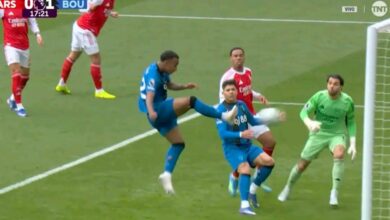
In the 42nd minute, Nico Raskin delivered a dangerous ball into the Falkirk penalty area. It floated high, drifting towards the far side of the box. What happened next would later divide opinion across the country.
From almost every angle inside the stadium, it looked like the ball had gone out of play. The trajectory appeared to take it clearly behind the goal-line before it was recovered. Falkirk players reacted immediately. Several stopped running. One defender raised his hand, expecting the referee to stop play. Even the goalkeeper hesitated, convinced the ball was dead.
For a split second, everything paused.
That pause was enough.
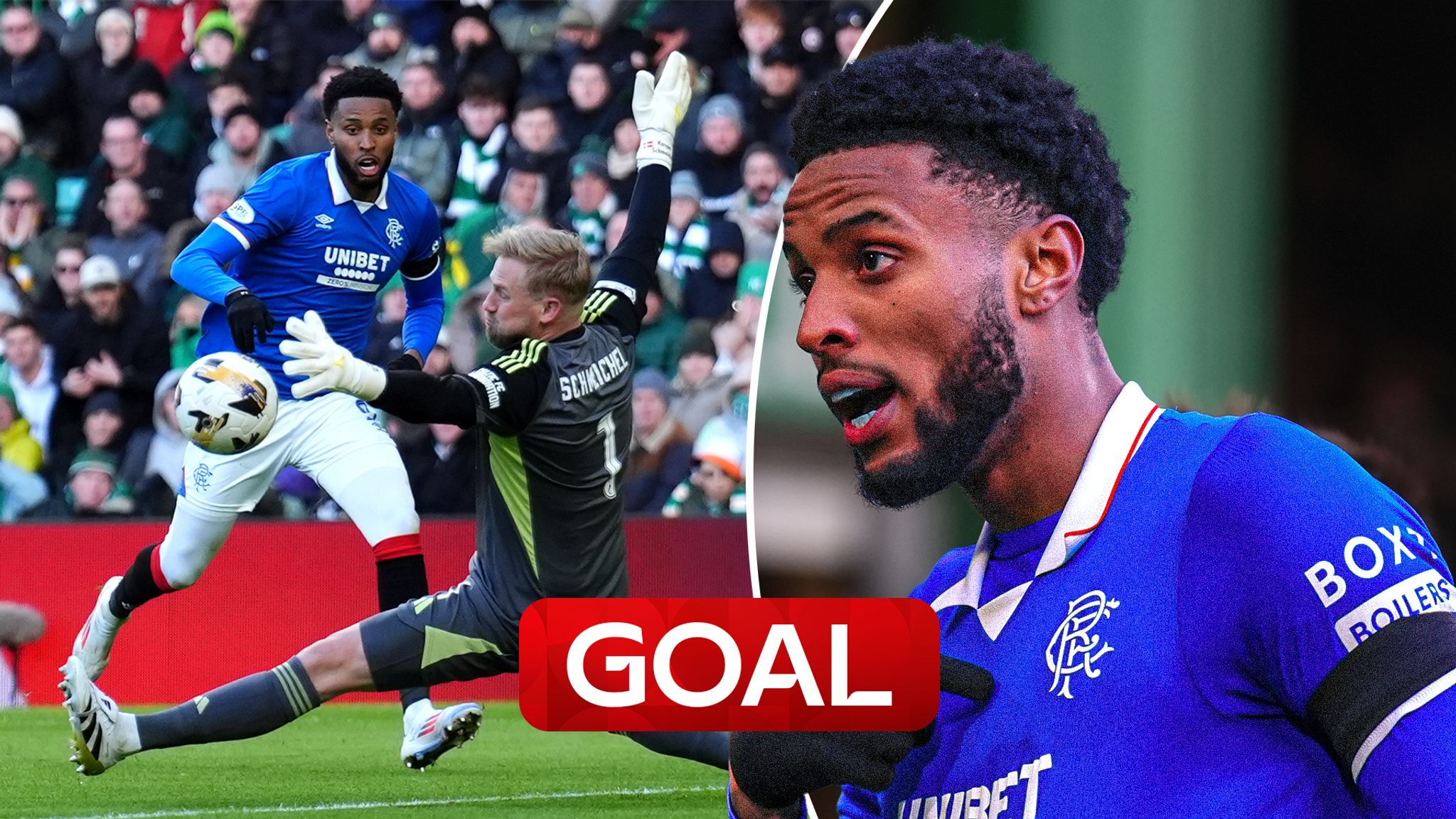
Djeidi Gassama, still moving, refused to stop. He reached the ball and somehow managed to head it back across goal. The effort came off the woodwork, bouncing awkwardly in front of the net. Before Falkirk could react, Tochi Phil Chukwuani arrived and smashed the rebound into the net.
For Rangers, it was a lifeline. For Falkirk, it was confusion, anger, and disbelief.
The referee signalled the goal would stand and VAR immediately checked the incident. The stadium waited. Players stood still. Fans shouted. The replay screens showed unclear angles. Some believed the ball was out. Others were unsure. After a long review, VAR ruled the goal valid.
Rangers 2, Falkirk 1.
The entire momentum of the match shifted in that moment.
Falkirk players were furious. They surrounded the referee, pointing towards the replay screens, arguing that play should have been stopped. The home crowd roared in protest, whistles echoing around the stadium. Rangers, on the other hand, celebrated with relief. They knew how important that goal could be.
From that point onwards, the game completely changed.
Rangers went into half-time with renewed belief. The psychological impact of scoring just before the break was massive. Falkirk, who had been in control for 40 minutes, now looked unsettled and frustrated.
When the second half began, Rangers played with confidence and aggression. Their passing was quicker, their movement sharper, and their finishing ruthless.
Within minutes, they equalised. Then they took the lead. Falkirk, despite their effort, could not recover their first-half dominance. Every Rangers attack seemed to carry danger now.
Youssef Chermiti became a constant threat, using his strength and movement to trouble the defence. He scored twice, both clinical finishes that punished Falkirk’s tired back line. Bojan Miovski also added two goals, showing sharp instincts inside the box.
Falkirk did manage to respond once more. A penalty was awarded after a clumsy challenge inside the area, and Calvin Miller stepped up to convert it. The stadium erupted again, briefly hoping for a comeback.
But it was not enough.
Rangers kept pushing, and eventually the match ended 6-3 in their favour. It was a thrilling scoreline, filled with goals, drama, and momentum swings. But when the final whistle came, nobody was talking about the nine goals.
They were talking about one moment in the first half.
After the match, Falkirk manager John McGlynn walked into the press room visibly angry. Normally calm and respectful, he could not hide his frustration. His voice carried emotion, disbelief, and disappointment.
He began with a strong statement.
“WE WERE ROBBED BLIND! The ball was miles behind the line. My players stopped because they thought it was out. Any team would stop. That is normal football. But VAR gave Rangers a ghost goal.”
He paused, shaking his head before continuing.
“Everyone saw it. The fans saw it. My players saw it. Even the Rangers players hesitated. If you freeze that moment, you can clearly see the ball is out. So how can VAR look at that and say it is a goal? That is what I do not understand.”
McGlynn explained how the moment affected his team.
“At 2-0 we were in control. We were playing our football. We were confident. Then that decision happens and everything changes. It gives Rangers hope right before half-time. Football is momentum. That decision destroyed ours.”
His frustration grew as he spoke about the VAR system in Scotland.
“We are told VAR is there to correct mistakes. Fine. But only when there is clear evidence. Today there was no clear evidence. No angle that proves it was on the line. Yet they still give it. That is not acceptable.”
He then questioned the fairness of the system itself.
“How are players meant to trust the system if decisions like this stand? We tell them to play to the whistle, yes, but they are human. If they see the ball out, they stop. That is natural. You cannot punish them for being human.”
McGlynn also made sure to credit his players for their effort.
“I am proud of them. Even after that moment, they kept fighting. They scored again. They did not give up. But the damage was done.”
His final words were the strongest.
“Scottish football deserves better than this. We cannot have big decisions decided on unclear images. It ruins games. It ruins belief. And today, it ruined our chance.”
The reaction outside the stadium was immediate. Social media exploded within minutes. Fans posted slowed-down clips, zoomed images, and frame-by-frame analysis of the incident. Falkirk supporters insisted the ball was clearly out. Rangers fans argued that without definitive proof, the goal had to stand.
Pundits were equally divided. Some former referees said the lack of goal-line technology in Scotland continues to cause problems. Others insisted that players must always continue until the whistle, no matter what they believe they saw.
Even neutral fans described the incident as one of the most confusing VAR moments of the season.
In sports studios later that evening, discussions continued for hours. Analysts replayed the footage repeatedly, pointing out that no angle clearly confirmed the ball’s position at the exact moment it crossed the line. That uncertainty became the centre of the debate.
Some argued that VAR made the correct decision based on available evidence. Others said the lack of certainty itself should have led to no goal being given.
Meanwhile, Rangers camp remained focused on the result. Their manager praised the team’s resilience, especially coming back from two goals down away from home. Players highlighted the importance of staying calm and continuing to play until the referee stops the game.
But even within Rangers circles, there was acknowledgment that the incident looked strange. Some admitted privately that it “looked out” but stressed that football is decided by officials, not assumptions.
For Falkirk, the defeat was painful not just because of the scoreline, but because of how the match unfolded. They had controlled large parts of the game, played with confidence, and looked like the better side for long periods.
Yet they left with nothing.
In the dressing room afterwards, reports suggested a quiet but emotional atmosphere. Players replayed the moment in their minds, struggling to accept how quickly everything had changed. Coaches tried to lift spirits, reminding them of the positives and the fight they showed.
Looking ahead, McGlynn made it clear that his team would move forward. There were still important matches to come, including a cup semi-final that could define their season. He insisted that one controversial decision would not break their spirit.
But the anger would not disappear quickly.
In the wider context of Scottish football, the incident reignited debates about technology, consistency, and fairness. Many called for improved camera systems or even goal-line technology to prevent similar situations in the future.
As for this match, it will be remembered for two completely different stories.
On one side, Rangers produced a stunning comeback and scored six goals in a thrilling away victory. On the other side, Falkirk believe they were denied a fair contest by a “ghost goal” that changed everything.
And at the centre of it all remains one question that continues to divide opinion across football fans everywhere.
Was it a goal… or was it a mistake that should never have been allowed to stand?