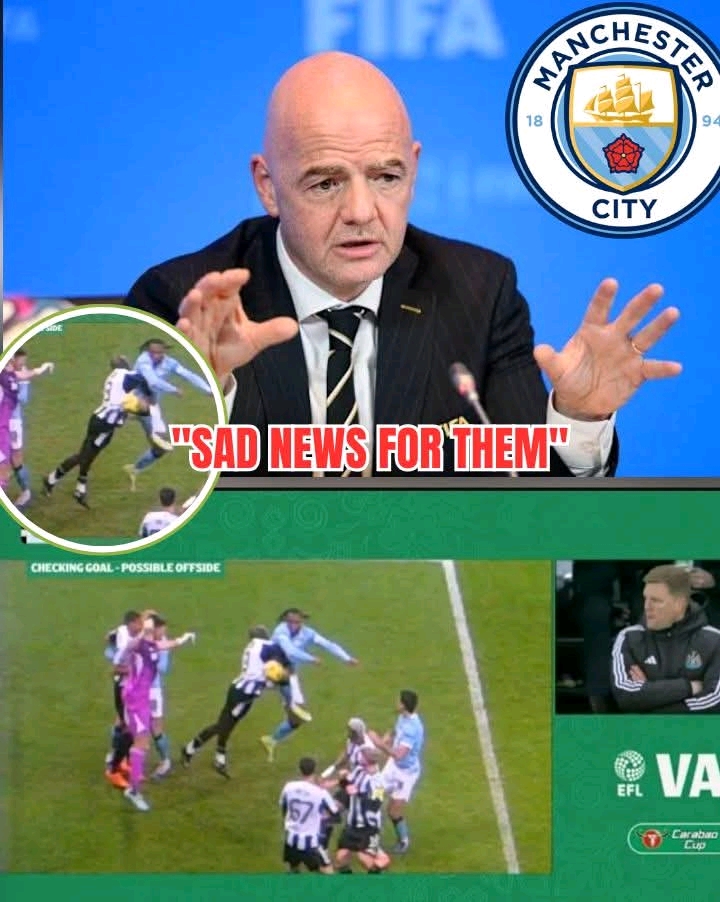
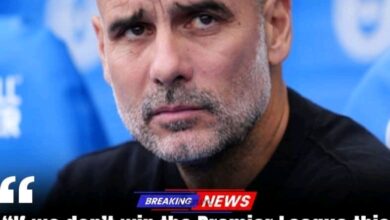
FIFA has officially announced the dismissal of the officials and referees from the recent Manchester City vs Newscastle United match. This decision comes after the referee declared Antoine Semenyo Goal Offside after VAR Check. Justice has been served for Manchester City, and this sets a strong example for other referees to maintain fairness and integrity in the game.
SHOCKING news has exploded across English football, and this time it is coming from the most powerful and symbolic place of all, Old Trafford. Sir Alex Ferguson, the legendary former Manchester United manager, has finally broken his silence, and his words have added even more fuel to a controversy that is already threatening to tear trust in football officiating apart. What started as a disputed VAR decision in a Manchester City versus Newcastle United match has now grown into a full-blown crisis involving referees, FIFA, PGMOL, Pep Guardiola, and the wider future of the game itself.
FIFA has officially confirmed that the match officials and referees involved in the recent Manchester City versus Newcastle United clash have been dismissed. This stunning decision followed the uproar caused by the disallowed Antoine Semenyo goal, which was ruled offside after an extremely long and chaotic VAR review. The announcement sent shockwaves through the football world. Rarely does FIFA step in so directly, and when they do, it usually means something has gone seriously wrong.
The match itself was supposed to be a tense but straightforward League Cup semi-final first leg at St James’ Park. Manchester City came into the game under pressure, needing a strong result to calm nerves after recent struggles. Newcastle, backed by a loud home crowd, were ready to make it difficult. But nobody expected the night to be dominated not by football, but by VAR confusion, technical failures, and anger that would spill far beyond the pitch.
Early in the game, City showed intent. They moved the ball well, pressed aggressively, and looked sharper than in recent outings. Their reward came when Antoine Semenyo found the back of the net from a corner. It was a well-worked moment, a striker’s instinctive finish, and City players celebrated as if a weight had been lifted. But that joy did not last.
Almost immediately, the dreaded VAR check began. At first, nobody was worried. These checks usually take a few seconds. Then one minute passed. Then two. Then three. Players stood around confused. Fans began to whistle. Pep Guardiola looked toward the fourth official, shaking his head. By the time six minutes had passed, frustration had turned into disbelief.
Eventually, VAR official Stuart Attwell asked on-field referee Chris Kavanagh to go to the pitchside monitor. That alone signaled trouble. After reviewing the footage, Kavanagh ruled that Erling Haaland was offside and interfering with play, even though Semenyo was the one who scored. The goal was disallowed. The stadium erupted, half in relief, half in anger.
Later revelations made the situation even worse. It emerged that the semi-automated offside technology at St James’ Park had failed. Because of this technical problem, Attwell was forced to manually draw the offside lines. In a game decided by millimeters and interpretations, officials were essentially guessing under pressure. That admission alone raised serious questions about fairness and competence.
Pep Guardiola was furious. Anyone watching could see it. He paced the technical area, argued with officials, and at one point became involved in heated exchanges with Newcastle staff. Even substitute goalkeeper Gianluigi Donnarumma was drawn into the chaos, gesturing angrily toward the officials. It was a scene that felt completely out of control.
After the match, Guardiola did not hold back. He delivered one of his most scathing attacks on VAR and refereeing standards since arriving in England. He made it clear that this was not just about one decision. For him, this was about a pattern, a history of controversial calls going against Manchester City, especially at St James’ Park.
He referenced the November defeat at Newcastle, where he felt Phil Foden and Jérémy Doku were denied clear penalties. He questioned why Fabian Schär’s challenge on Foden was not even reviewed, and why Doku being brought down after a shot was ignored. He also brought up last season’s FA Cup final, where City believed Dean Henderson should have been sent off for handling the ball outside the box. To Guardiola, these incidents were not isolated mistakes, but part of a bigger problem.
What angered him most was the inconsistency. He pointed out how four officials struggled for six minutes to decide whether Haaland was interfering with play, drawing tight offside lines by hand, while in a previous match at the same ground, Newcastle’s goal was checked quickly with “perfect” technology. The irony was impossible to ignore.
Guardiola stressed that he had stayed silent for nearly ten years at Manchester City, even when decisions went against his team. But this time, he said enough was enough. He openly demanded answers from PGMOL head Howard Webb and said a public explanation was the least that was owed to clubs, players, and fans.
Despite the controversy, City responded strongly on the pitch. Semenyo, who had his goal unfairly taken away in his eyes, remained sharp and focused. Rayan Cherki later added a second goal to give City a 2-0 win and a comfortable advantage heading into the second leg on February 4. On paper, it was a good result. Emotionally, it felt hollow.
The debate over Haaland’s involvement became central to the argument. As the corner came in, Haaland was grappling with Malick Thiaw near goalkeeper Nick Pope. Because Pope had stepped forward, Haaland was technically in an offside position. The officials decided he was impeding Thiaw’s ability to defend, even though the ball fell to Semenyo and Haaland never touched it.
It was a judgment call, not a clear-cut decision. That is what made the six-minute delay so damaging. Players even began warming up again during the wait, unsure whether play would restart soon. Fans lost focus. The flow of the game was completely destroyed.
Bernardo Silva later admitted the team felt exasperated but said the anger actually united them. He spoke about how City often experience controversial moments at this stadium and how they used that frustration as motivation. Semenyo himself told television cameras after full-time that his goal should have stood. He did not hide his disappointment.
Guardiola echoed that feeling, saying the squad’s anger was visible and that it fueled their intensity in the second half. He even praised Rayan Aït-Nouri, who had returned from the Africa Cup of Nations just the day before, for immediately buying into the fighting spirit. To Guardiola, the team showed character, even if the system failed them.
Newcastle manager Eddie Howe took a calmer tone. He admitted the delay was excessive, especially on such a cold night, and said he did not understand why it took so long. Even from the opposing bench, there was confusion and discomfort.
Sky Sports co-commentator Chris Sutton summed up the mood bluntly. He called the decision “a sheer guess from the referee” and added the now-famous line that many fans repeat whenever VAR controversy erupts, “the game’s gone.”
Then came the moment that truly stunned everyone. Sir Alex Ferguson, a man who rarely speaks publicly about modern football controversies, broke his silence. From Old Trafford, the heart of English football history, his words carried enormous weight.
Ferguson reportedly expressed deep concern about the direction football is heading. He did not attack Guardiola or Manchester City. Instead, he focused on the officials and the system. He warned that when referees no longer trust technology, and technology no longer works, the game loses its soul. He questioned how players and managers are supposed to respect decisions that even officials struggle to explain.
Coming from a man who lived through football without VAR, who relied on human judgment and accepted mistakes as part of the game, his comments felt especially powerful. He was not asking for perfection. He was asking for clarity, consistency, and honesty.
FIFA’s decision to dismiss the officials confirmed that something had gone badly wrong. It was an admission that the process failed. For referees, it was devastating. For fans, it was proof that complaints were justified. For managers like Guardiola, it was validation of years of frustration.
This incident has now reopened the entire debate about VAR. Is it helping football, or hurting it? Is it making the game fairer, or simply more confusing? Are referees relying too much on technology, or are they being left exposed when that technology fails?
For Manchester City, the victory over Newcastle keeps their trophy hopes alive. But the emotional cost remains. Guardiola is exhausted. Players are frustrated. Trust has been shaken.
For English football, the damage may be even deeper. When FIFA steps in, when Sir Alex Ferguson speaks out, and when fans across rival clubs agree something is wrong, it signals a crisis that cannot be ignored.
This was supposed to be a football match. Instead, it became a symbol of everything that feels broken. Long delays. Inconsistent decisions. Human judgment hidden behind screens. And now, careers affected, reputations damaged, and confidence eroded.
Football will move on, as it always does. Another match will be played. Another goal will be scored. Another VAR check will happen. But this night at St James’ Park, and the reaction it triggered from Guardiola, FIFA, and Sir Alex Ferguson, will not be forgotten easily.
It may well be remembered as the moment when the football world finally admitted that something has to change.