Foden on Richards: ‘He was one of my idols. One of the best right-backs in the world’ View Keane’s brilliant reaction

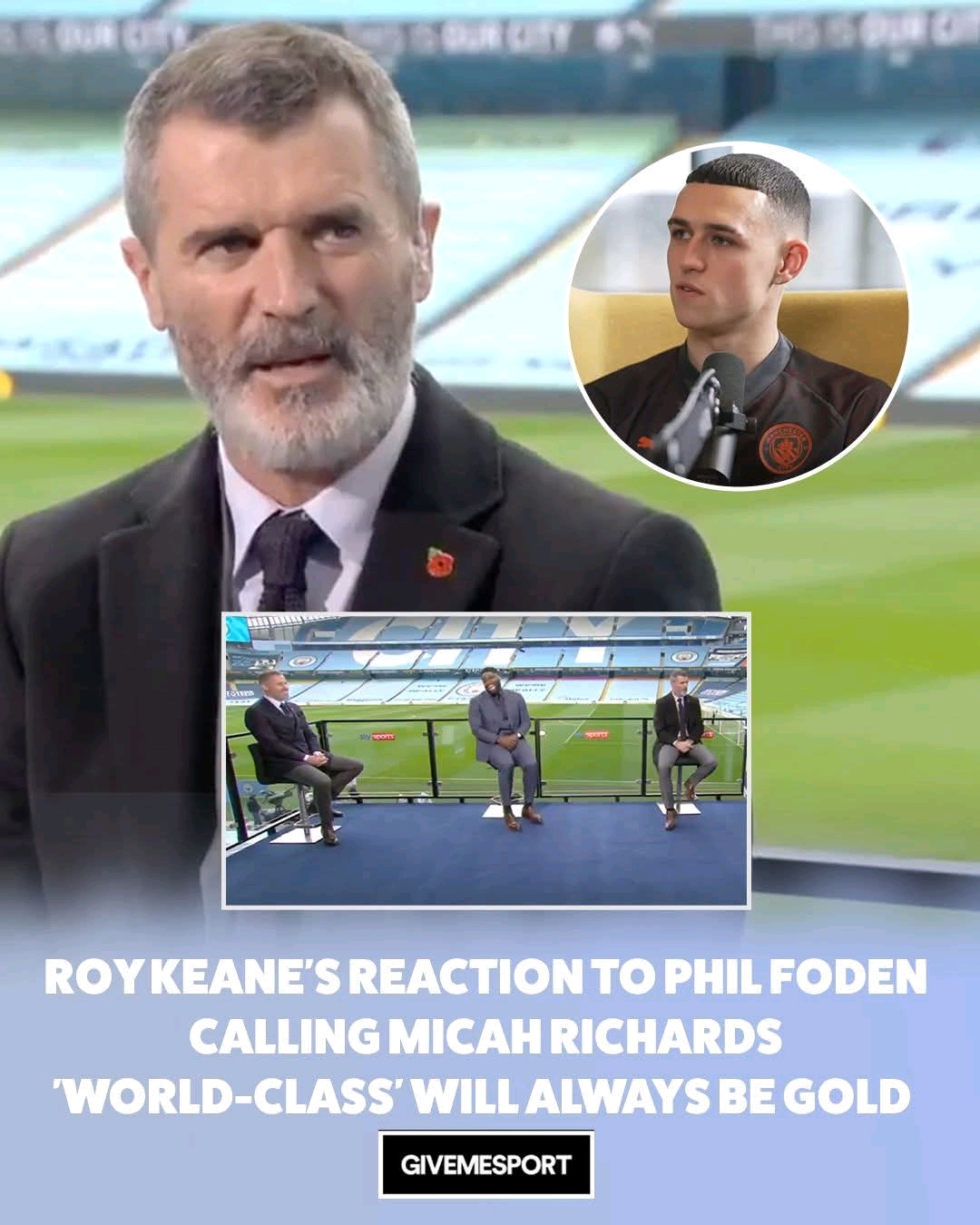
Phil Foden recently made headlines when he described former Micah Richards as ‘world-class’ during an interview ahead of a Premier League clash between Manchester City and Liverpool FC at the Etihad Stadium. Foden, speaking in a pre-recorded feature aired by Sky Sports, recalled watching Richards as a child and how he had looked up to him, explaining that Richards was one of his idols and one of the best right-backs in the world at the time, although injuries had limited his career somewhat. The praise was heartfelt from Foden, who at just 20 years old was beginning to establish himself as one of City’s brightest talents and someone who had already made a significant impact in the Premier League despite his youth. Foden’s admiration for Richards reflected the respect he held for players who had paved the way at City, and it was a reminder of how the next generation of stars looks up to those who came before them in their own club’s history.
The reaction to Foden’s comments was immediate, and among the loudest voices was that of Roy Keane, the former Manchester United captain and current football pundit. Keane has always been known for his sharp tongue, no-nonsense style, and willingness to speak his mind, and he did not hold back when responding to Foden’s description of Richards. Despite being on air alongside Richards himself, Keane couldn’t help but deliver a tongue-in-cheek remark, joking that Foden “probably needs to be drug tested for that,” in reference to calling Richards ‘world-class.’ His delivery was precise, his timing impeccable, and it immediately drew laughter from Richards, whose infectious personality and good humor made the moment even more memorable. This interaction between the two pundits highlighted not only Keane’s sharp wit but also the chemistry he shares with Richards, which has made their collaborations on Sky Sports widely popular among football fans.
Micah Richards’ own career, however, tells a story of promise, early success, and the challenges of injuries in modern football. Richards made his debut for Manchester City in 2005 at the tender age of 17, quickly establishing himself as a first-team regular and demonstrating a level of maturity and ability beyond his years. Within a year, he earned a call-up to the England national team, which was a testament to his talent and potential. Throughout his career at City, he was considered one of the brightest prospects in English football, capable of defending with strength and composure while also contributing in attack with pace and technical ability. Over ten years at the club, Richards made 245 appearances and scored nine goals, helping City to domestic success and laying the foundations for what would become a dominant era under subsequent managers.
Despite the early promise, Richards’ career was plagued by injuries, particularly knee problems, which limited his appearances in crucial seasons. In 2015, he moved to Aston Villa, where he was quickly made captain, but his time there was far from ideal. Aston Villa struggled in the Premier League and were relegated in his first campaign, and Richards played just 28 times during that season. Injuries continued to hamper him, and over the following three years he made very few appearances, eventually announcing his retirement in 2019 at the age of just 31. While his playing career may not have reached the heights that many expected, Richards successfully transitioned into a punditry career, where he is now regarded as one of the most engaging and insightful football commentators in the UK.
Roy Keane’s reaction to Foden praising Richards was typical of his personality. Known for his forthright opinions and often critical view of footballers, Keane has made a career out of speaking without filter, whether as a player or in the media. His remark about Foden needing drug testing was delivered in his signature sarcastic style, but it also contained a subtle acknowledgment of Foden’s youth and inexperience, hinting that while admiration is admirable, footballing assessments should always be measured by achievements on the pitch over time. Keane has often juxtaposed praise with challenge, pushing players and viewers alike to question whether talent is being fully realized, and his on-air chemistry with Richards demonstrates that even playful critiques can be entertaining and insightful.
Foden himself, for all his accomplishments at City, was demonstrating maturity and humility in his comments about Richards. He recognized that players like Richards, who may not have had careers entirely free from setbacks, still represented an important part of the club’s history and had influenced the next generation. Foden’s acknowledgment of injuries and setbacks in Richards’ career reflected an understanding that football is as much about resilience as it is about natural talent, and his tribute emphasized that legacy in football is often measured not just by trophies but by inspiration for younger players.
Related Posts:






The Foden-Richards-Keane exchange also serves as a broader illustration of footballing culture in England, where respect for predecessors, humor, and sharp critique all coexist. The Premier League is filled with stories of young stars looking up to their idols, and many pundits like Keane ensure that these moments are contextualized, questioned, and sometimes playfully mocked. The interplay between reverence and critique is part of what makes football commentary engaging, allowing audiences to reflect on history while appreciating current talent.
In terms of footballing legacy, Richards’ journey is one of complexity. He had the skill, physicality, and mental fortitude to succeed at the highest level, but injuries curtailed his career trajectory. Nevertheless, his influence continues through commentary and mentorship, shaping how players like Foden perceive the game and understand what it means to be ‘world-class.’ Being called ‘world-class’ by a rising star like Foden is recognition that goes beyond statistics and appearances; it is a nod to impact, presence, and the inspiration a player leaves behind.
Roy Keane’s role in this narrative is also crucial. As a former player who demanded excellence and had high standards, his commentary often challenges narratives that may seem exaggerated. His sarcastic interjections are both entertaining and reflective, reminding viewers that football is a blend of performance, perception, and critical analysis. The dynamic between Keane and Richards, particularly during live broadcasts, showcases the balance between respect for past players and honest appraisal of footballing achievements.
Richards’ punditry career has allowed him to remain in the spotlight and contribute meaningfully to discussions about the modern game. His insights are valued because they come from experience and understanding of professional football’s demands. Unlike some commentators who rely solely on statistics, Richards brings a player’s perspective to tactical discussions, game management, and player mentality. Foden’s comments, therefore, can be seen as bridging the generations, with a young talent acknowledging a predecessor who has transitioned successfully from the field to the studio.
Phil Foden’s comments also highlight the cyclical nature of football influence. Just as Richards inspired a generation of young players at City, Foden is now positioned to become a figure that younger players look up to. In that sense, the conversation about ‘world-class’ status extends beyond individual careers and into the broader culture of mentorship, legacy, and the passing of knowledge in football. Foden’s admiration is a reflection of how footballers learn not only from coaches but from their peers and role models, which shapes the evolution of talent at clubs.
The interplay between admiration and critique is a cornerstone of football discussion in media, and the Foden-Keane-Richards moment encapsulates this perfectly. It shows how young players navigate public expression of respect, how former stars respond with humor and wisdom, and how punditry can make football more relatable to fans. It also underscores that in football, respect is not given lightly; it is earned through performance, dedication, and impact both on and off the pitch.
In summary, the incident involving Phil Foden’s praise for Micah Richards and Roy Keane’s witty reaction is a snapshot of the ongoing dialogue within football culture. It demonstrates the connections between generations of players, the role of injuries in shaping careers, the importance of media in framing opinions, and the entertainment value of insightful and humorous commentary. While Richards may not have achieved the heights expected during his playing days, his legacy continues to influence current stars like Foden, and his transition to punditry allows him to remain relevant and respected in football discussions. Roy Keane’s response, though humorous and sarcastic, adds depth to the conversation, emphasizing performance, consistency, and critical thinking as essential components of any footballing evaluation, making this moment memorable for fans, players, and pundits alike.
This narrative illustrates how football is not just a game of goals and trophies but a complex tapestry of influence, legacy, and media interaction, where past stars shape present talents, and commentary can both entertain and educate audiences, ensuring that moments like Foden praising Richards remain part of footballing history for years to come.