Football’s lawmakers could reportedly introduce a new rule to combat sneaky ‘tactical timeout

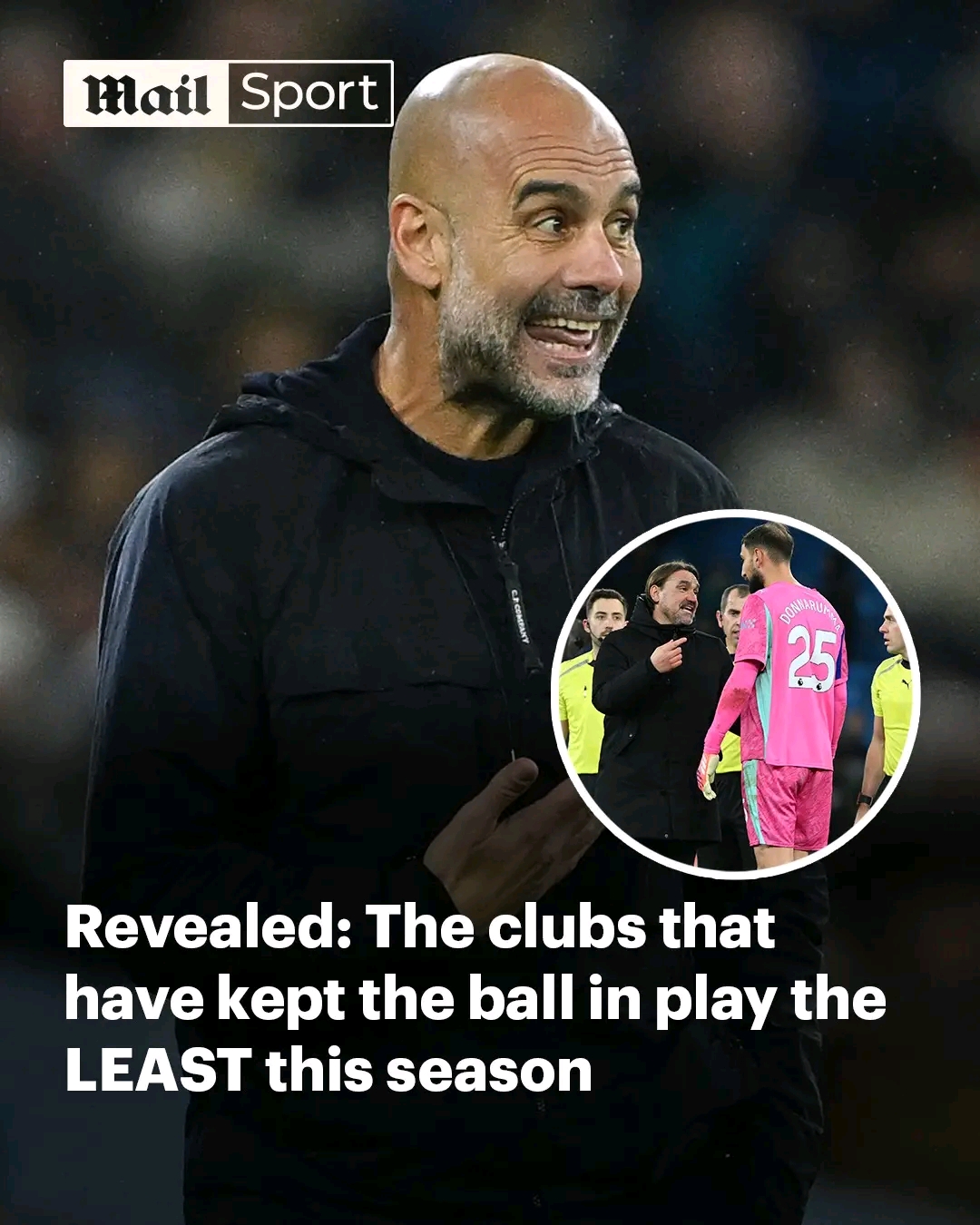
There are some moments in football that do not fade with the final whistle, some moments that shake the ground of the sport and crawl into every podcast, every pub conversation, every fan argument online, and that is exactly what happened the moment Daniel Farke opened his mouth after the match. Nobody expected him to be the one to light a fire under the Premier League, nobody expected the calm, polite German to turn into the most explosive character in English football overnight, yet that is exactly what he did when he stood in front of the microphones and told the whole world that Manchester City were cheating and that the cheating had gone too far. Football has seen drama, football has seen controversies, but the look on his face and the tone of his voice told a different kind of story, a story of frustration that had been building for months and maybe years, a story of watching the same pattern again and again until something inside him snapped. And the moment he mentioned Gianluigi Donnarumma going down with a fake injury to waste time and protect a lead, a storm that had been waiting behind the scenes finally broke loose.
It did not matter that it was Arsenal who were fighting City that day, it did not matter that Leeds had lost their own match, Farke felt he had watched enough football to understand what was really happening, and he did not hesitate to say it out loud. He described it as cheating, pure and simple. He said that the Premier League must end this kind of behavior because the competition was slowly becoming a playground for the richest clubs to bend the rules however they wanted. And the words were like fire to petrol, because suddenly fans, pundits, managers, former players, and referees started talking. It was like everyone had been keeping their opinions locked in until someone brave enough opened the door. Farke did it, and English football has not been silent since.
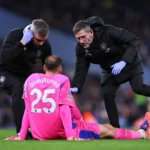
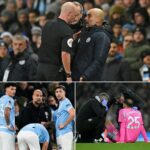
People kept replaying the clip of Donnarumma lying on the ground, rolling, clutching his leg, calling for treatment, wasting four minutes at a moment when Arsenal were preparing their final push. Cameras zoomed to City’s bench and some viewers believed they saw the medical staff smirking. The moment the ball went dead and the pressure was reduced, Donnarumma suddenly stood up as if nothing had ever happened, ready to kick again and take his time. Nobody could ignore how perfectly the moment had worked in City’s tactical favor. And while City fans said that their goalkeeper was simply protecting himself and there had been contact, millions of rival fans were pointing at their screens and shouting that it was all part of the script. Many people suddenly felt like Farke was simply saying what everyone had been too afraid to say.
Then came the deeper numbers, the kind of numbers that made the whole situation heavier than just opinions and angry rants. Analysts revealed that Manchester City had been involved in 11 of the 15 longest injury delays in the Premier League this season. Opponents were losing points in matches where long pauses broke their momentum. And when those statistics reached the public, it felt like the story had reached a boiling point. Fans of every club who had lost late against City started reliving matches, wondering if time-wasting and tactical fouls were a bigger part of the problem than anyone wanted to admit.
Managers who refused to attach their names to the story began speaking anonymously to reporters. One of them said Pep Guardiola’s team had turned time-wasting into an art form. Another one claimed that referees were terrified of booking City players because of how much influence the club had. And even though some of these comments might have been exaggerated, each one added more fuel to the controversy. People wanted someone to take responsibility, someone to control the situation before the competition turned into something that did not resemble fair sport anymore.
The Daily Mail investigation came exactly at the peak of the chaos, and it brought numbers that shocked many people even more. They revealed which Premier League clubs had the ball in play the least, and though Tottenham topped the list with just over 52 minutes per match, Manchester City were actually on the opposite end of the table with the ball in play for more than 57 minutes per match. But even that statistic did not protect them, because critics argued that high ball-in-play time did not erase targeted tactical pauses that appeared only at the most dangerous moments. It was not about the total time, it was about the timing and its effect.
Related Posts:



And suddenly the conversation expanded. Now the topic was not just Donnarumma or Guardiola or City or Arsenal or Leeds. Now it was about the modern Premier League, the power of the top clubs, the manipulation of gray zones in the rules, and the question of whether football’s lawmakers were brave enough to close loopholes that had been exploited without real consequences. People talked about tactical fouls where players stopped counterattacks with small holds and shirt pulls and never received yellow cards. People talked about players who fell to the floor to disrupt rhythm, who stretched every free kick and throw-in, who laughed with teammates as they wasted seconds that turned into minutes. And fans felt like they were watching football change in front of their eyes.
Social media started burning. City fans defended their team, saying everyone wastes time and everyone takes tactical fouls. Rival fans attacked and called their success artificial. Some neutral fans said football had always had this kind of strategy and that outrage was pointless. But others were angry that rules had not evolved with modern tactics. Time-wasting had become weaponized, and when a team could win titles by mastering psychological pressure instead of football alone, many felt something was wrong.
And then came the conversation about the referees. The fourth official told Farke during the match that his hands were tied, that he could not take any action if a goalkeeper claimed injury. It did not matter if everyone suspected it was fake, because the rules did not allow punishment without medical authority. Even if the referee believed the goalkeeper was acting, he could not prove it. So football’s biggest loophole sat in the middle of the pitch for everyone to see, and teams at the highest level used it openly because nothing stopped them.
Some suggested that if a goalkeeper receives treatment, he should be forced to leave the pitch for 30 seconds like outfield players. Some suggested that an outfield player goes off instead. Some suggested that the opposing team receives the ball instantly. Some said additional time should be reduced if foul play was detected. But none of these ideas had been implemented, not because they would not help the game but because football’s lawmakers rarely make fast changes.
But now there was pressure. Pressure from fans. Pressure from pundits. Pressure from coaches who were tired of watching the same ending to big matches. Pressure from broadcasters who wanted football to move faster and maintain entertainment value. Pressure from analysts who wanted technology to ensure fairness and integrity. And pressure from a single angry German manager who might have been tired of pretending that this was just part of the game.
When Gary Neville publicly called City’s actions the most blatant abuse of the spirit of the game he had seen, many realized this discussion would not disappear quietly. Jamie Carragher called for strict punishments. Micah Richards defended City but also admitted the rules were unclear. Rio Ferdinand suggested that teams wasting time should receive automatic yellow cards or suspensions. And even referees who were normally silent began to talk in private, saying they wanted help from football’s lawmakers because they did not want to walk into stadiums and feel controlled by the reputation of clubs.
The International Football Association Board began preparing to meet again in January to discuss rule changes, and suddenly something that started with one goalkeeper lying on the pitch became something that could reshape football forever. Fans started creating videos comparing matches where City appeared to slow time when leading. Others argued City were unfairly targeted by jealous rivals. The debate turned into chaos and emotion because football is emotion and every club has something to lose or gain.
Even when Guardiola tried to avoid responding to Farke’s comments directly, the silence became part of the story. Some fans said Guardiola was ignoring it because he knew the accusations were ridiculous. Others said he ignored it because he did not want to give life to something that might expose more conversations. People debated everything, even facial expressions, even reactions, because that is how football controversies grow.
Through all this, Daniel Farke became the unexpected central character of the scandal. He did not plan it, he did not expect it, but the moment the words left his mouth, the football world exploded around him. Some fans called him a hero. Some called him a sore loser. Some said he spoke for every club outside the super rich. Some said he destroyed professionalism. But nobody ignored him. He became the spark that revealed pressure that had been building for years.
And now the Premier League, whether it wants to or not, has to face the question that Farke asked the world: is football still fair? Or are some teams simply too powerful to punish?