Former Man City manager Roberto Mancini silently criticizes the club: “From the roots” 👉 Read the full article to discover Mancini’s blunt criticisms.

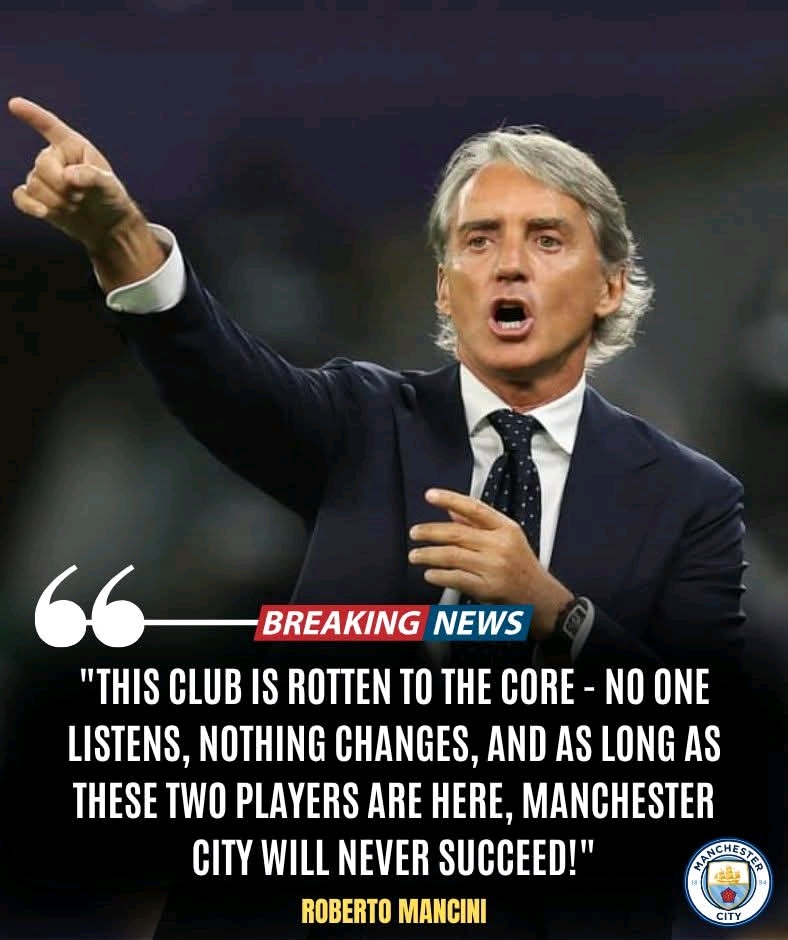
Former Manchester City manager Roberto Mancini has never been a man who speaks carelessly. When he talks, people who truly understand football know they should listen carefully, not just to the words, but to what sits behind them. That is why his recent comments about Manchester City have caused such deep discussion, confusion, and even quiet fear among fans and insiders of the club. Mancini did not shout. He did not attack directly. He did not name names in an aggressive way. Instead, he did something far more powerful. He spoke calmly. He spoke slowly. And he spoke from experience. His message was simple but heavy: the real problem at Manchester City does not start on the pitch. It starts from the roots.
For many City fans, Mancini will always be remembered as the man who helped change the club’s history forever. Before the trophies became normal, before the dominance, before the global respect, there was Mancini. He arrived at a club that was rich in ambition but poor in belief. City had money, yes, but they lacked identity. They lacked discipline. They lacked winners. Mancini brought order, steel, and a clear idea of what it meant to be a champion. Under him, City did not just win matches. They learned how to suffer, how to fight, and how to believe until the final second. The famous title win, sealed in the dying moments of the season, did not happen by luck. It happened because Mancini had planted something deep inside the club.
That is why his words today hurt more than criticism from outsiders. Mancini is not a jealous rival. He is not a bitter former employee. He is part of City’s story. He knows the building from the inside. He knows how decisions are made. He knows how egos grow. And most importantly, he knows what happens when people at the top stop listening.
When Mancini said that “nobody really listens inside the club,” it sounded like a quiet sentence, but it landed like a bomb. A club that does not listen is a club that slowly loses its way. Listening is not just about hearing players or staff complain. It is about understanding warnings before problems explode. It is about respecting voices that do not always agree with you. Mancini’s words suggest that at Manchester City, power has become too concentrated, and feedback has become too controlled. Success has created a wall around decision-makers, and that wall is getting thicker every season.
What shocked many fans even more was Mancini’s claim that Manchester City cannot achieve lasting success, even with two players from his era still in the squad. He did not mention names, but everyone understands what that means. He is saying that individuals, no matter how talented, cannot save a system that is broken at its core. You can have leaders on the pitch, warriors in the dressing room, and stars loved by the fans, but if the structure above them is weak, cracks will always appear.
This is where the idea of “the roots” becomes so important. Roots are not visible from the outside. When you look at a strong tree, you see the leaves, the branches, and the fruit. You see trophies, records, and celebrations. But if the roots are unhealthy, the tree will collapse when the storm comes. Mancini is warning that Manchester City may still look strong, but beneath the surface, something is not right.
Related Posts:
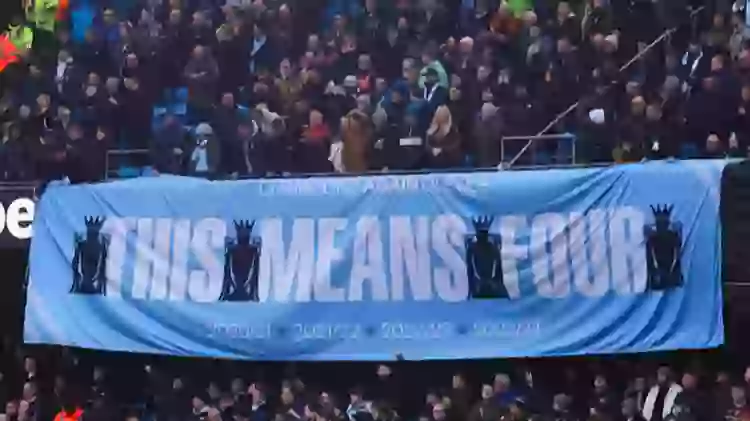





For years, City have been the standard in English football. They have dominated the league, controlled matches, and broken records. Many people believe this success is permanent. Mancini does not agree. He believes success can become dangerous when it makes people arrogant. When winning becomes routine, humility disappears. When humility disappears, mistakes are ignored. And when mistakes are ignored for too long, decline becomes unavoidable.
Another important part of Mancini’s message is about culture. Culture is not tactics. Culture is not formations or pressing systems. Culture is how players are treated, how staff are respected, and how criticism is handled. Mancini built a culture where players feared losing more than they loved winning. He demanded discipline. He demanded focus. He demanded honesty. His City team was not perfect, but it was united. Today, he is suggesting that unity no longer exists in the same way.
There have been growing signs of tension inside Manchester City in recent seasons. Players leaving quietly. Squad members looking unhappy on the bench. Public comments that feel rehearsed rather than real. Mancini’s words connect all these dots. He is saying that when voices inside a club are ignored, frustration builds. Players stop fighting for the badge and start thinking about their future. Staff stop speaking honestly and start protecting their jobs. Slowly, the soul of the club fades.
The phrase “the arrival of the new king” has also caught attention. Mancini did not explain this directly, but many believe he is talking about power structures rather than individuals. A “new king” does not have to be a manager or a player. It can be an idea. It can be an attitude. It can be the belief that one person or one philosophy is untouchable. When a club starts believing that only one voice matters, history shows that collapse is only a matter of time.
Football is full of examples. Great dynasties fall not because of lack of talent, but because of arrogance and silence. Managers stop being questioned. Executives stop being challenged. Players stop being trusted. Mancini has seen this before in Italy, in Europe, and now he sees it again in Manchester. His warning is not emotional. It is logical.
Some fans have reacted angrily to Mancini’s comments. They believe he is disrespecting the club or trying to stay relevant. But others understand that this is not about attention. Mancini does not need Manchester City to remember him. History already has. His words feel more like regret than anger. Regret that a club he helped build may be forgetting the lessons that made it great.
There is also a deeper emotional layer to Mancini’s criticism. He is a man who values loyalty. When he talks about people not listening, he is talking about trust being broken. Trust between management and players. Trust between coaches and executives. Trust between the club and its identity. When trust disappears, fear replaces it. And fearful clubs make poor decisions.
Mancini is also indirectly questioning leadership. Leadership is not about control. It is about guidance. A leader who does not listen is not strong. He is insecure. Mancini’s words suggest that inside Manchester City, decisions are being made without enough debate, without enough opposition, and without enough reflection. That is dangerous for any organisation, especially one operating at the highest level of football.
The most worrying part of Mancini’s warning is that he does not believe the problem can be fixed quickly. When roots are damaged, healing takes time. It requires humility. It requires change. It requires people in power to accept that they might be wrong. Football history tells us that this is the hardest step. Successful clubs rarely admit mistakes until results force them to.
Mancini’s legacy at Manchester City was built on honesty, conflict, and growth. He argued with players. He challenged owners. He demanded respect. But through that tension, something strong was created. Today, he sees comfort replacing tension. Silence replacing honesty. And comfort is the enemy of greatness.
This is why his comments feel like a warning rather than an attack. He is not celebrating City’s problems. He is predicting them. He is saying that unless the club reconnects with its roots, unless it remembers what made it hungry, humble, and united, the fall will be painful. Not immediate, but inevitable.
In football, decline often comes quietly. It does not arrive with one bad season. It arrives through small decisions, ignored warnings, and internal decay. Mancini believes Manchester City are standing at that dangerous point. Still winning. Still powerful. But slowly losing touch with themselves.
Whether City listen or not will define their future. Mancini has spoken. The message is out there. It is no longer silent. The question now is simple. Will Manchester City look at their roots, or will they keep admiring the leaves until the tree finally falls?