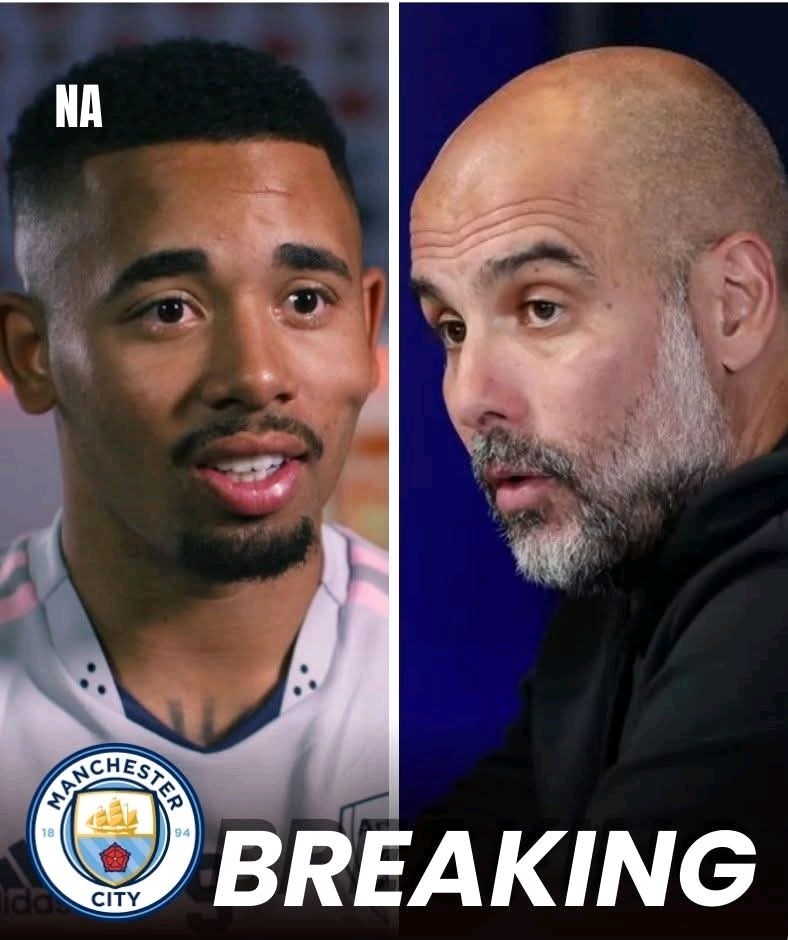
Gabriel Jesus has caused a major shockwave on social media after claiming that Manchester City’s Champions League and Premier League victories throughout history have come solely from luck and favoritism by UEFA and refereeing officials. Pep Guardiola responded immediately with just eight words, sparking a fierce controversy, and it is highly likely that Guardiola could face disciplinary action from the English Football Association
Football has seen many shocking moments over the years, but every once in a while, a story appears that shakes the game far beyond the pitch. This time, the storm did not come from a goal, a red card, or a last-minute winner. It came from words. Words spoken by a former insider. Words that questioned the very foundation of Manchester City’s success. Words that many fans have whispered for years but few players have dared to say out loud. Gabriel Jesus has now said them, and the football world may never see Manchester City the same way again.
On a quiet January day, social media exploded. Timelines refreshed at lightning speed. Group chats went wild. Fans from every corner of the world stopped whatever they were doing to read one headline over and over again. Gabriel Jesus, former Manchester City forward and current Arsenal striker, had accused Manchester City of winning their biggest trophies through luck and favoritism. Not just once. Not in one competition. But throughout their history of dominance. According to him, the Premier League titles and the Champions League triumph were not built on football brilliance alone. They were helped, pushed, and protected by referees and UEFA. The reaction was instant and brutal.
Gabriel Jesus was not some outsider throwing stones from a distance. He was part of the machine. He wore the sky-blue shirt. He lifted trophies. He celebrated goals. He trained under Pep Guardiola. He knows what happened inside those walls. That is why his words hit harder than any fan chant ever could.
In a wide-ranging interview with a major Brazilian sports outlet, Jesus spoke calmly, confidently, and without fear. There was no hesitation in his voice. No attempt to soften the message. He began by acknowledging his time at Manchester City, reminding everyone that he loved the club, the fans, and the memories. He spoke about the goals he scored, the medals he won, and the success he shared with teammates. But then he turned the conversation in a direction nobody expected. He said it was time to be honest.
According to Jesus, many of Manchester City’s biggest successes came down to luck and favoritism. He claimed that in key moments, when games were tight and pressure was high, decisions almost always went City’s way. Penalties awarded when they should not have been. Penalties not awarded against them when they should have been. VAR decisions that arrived at perfect moments. Referees who, consciously or unconsciously, leaned in City’s direction. UEFA officials who allowed things to slide.
Jesus made it clear he was not talking about conspiracy theories whispered by angry fans. He said this was something many people inside football see but are afraid to say publicly. He claimed the system itself tilted in City’s favor, making it extremely difficult for them to lose when it mattered most.
He did not name specific matches, but he did not need to. Fans immediately brought up Champions League nights, Premier League title races decided by fine margins, and controversial decisions that changed seasons. Clips began circulating. Old debates were reopened. Every call that ever went City’s way was dragged back into the spotlight.
Jesus questioned the idea that Manchester City’s dominance should be viewed as purely football greatness. He acknowledged their talent and financial power but insisted that these alone do not explain everything. According to him, when you combine money, squad depth, and a system that protects you in crucial moments, success becomes almost guaranteed.
For rival fans, it felt like validation. For Manchester City supporters, it felt like betrayal.
The timing made the situations even more explosive. Manchester City are still under investigation for 115 alleged breaches of Premier League financial rules. While the case remains unresolved, the cloud has never disappeared. Jesus’ comments poured fuel on an already burning fire. Suddenly, the narrative was no longer just about finances. It was about legitimacy. About fairness. About whether football’s biggest prizes were earned or assisted. Pep Guardiola did not stay silent for long.
Just hours after the interview went viral, Guardiola was approached by reporters outside Manchester City’s training ground. The cameras were rolling. Microphones were raised. Everyone expected a long, defensive response or a refusal to comment. Instead, Guardiola delivered eight words. Just eight. But those eight words travelled faster than any press conference ever could.
“I wish him luck finding that same favoritism at Arsenal.” The message was sharp. Cold. Sarcastic. It landed like a slap.
Social media erupted again. Some fans praised Guardiola for his composure and wit. Others accused him of arrogance and deflection. Memes flooded timelines. Hashtags trended worldwide. The football world split into sides almost instantly.
Inside Manchester City, sources suggested Guardiola was furious. Not just angry, but hurt. He had trusted Jesus. Developed him. Defended him. Turned him into a top-level forward. To hear these accusations from someone he once described as special felt personal.
The club released a brief statement saying they would not comment on individual opinions from former players. But the silence only made the noise louder.
Attention then turned to the Football Association. Jesus’ comments were not just criticism. They were accusations that questioned the integrity of referees and governing bodies. Under FA rules, such statements can be considered bringing the game into disrepute. Reports quickly emerged that the FA was reviewing the interview.
Punishment was not guaranteed, but the possibility was real. Fines. Warnings. Even suspension. While experts believed a heavy sanction was unlikely, the situation was serious enough to demand attention. Arsenal, for their part, stayed quiet publicly but were said to be supporting their player behind the scenes.
Fans did not wait for official reactions.
Liverpool supporters revived chants about City’s charges. Arsenal fans praised Jesus for courage, calling him brave for speaking the truth. Manchester United fans laughed and shared old clips. Chelsea fans joined the pile-on. Manchester City fans fought back fiercely, accusing Jesus of bitterness and jealousy. They pointed out that he benefited from the same system he now criticizes. That he lifted trophies with pride. That he never complained when medals were placed around his neck.
Pundits were split down the middle.
Former referees defended the officials, saying mistakes happen to everyone and no team wins purely because of decisions. Others admitted that perception matters, and Manchester City’s reputation has been damaged by years of controversy. Gary Neville offered a balanced view, saying Jesus was not the first to suggest this and would not be the last. Whether true or not, the belief exists, and beliefs shape narratives.
Micah Richards, a former City defender, defended the club passionately. He spoke about the intensity of Guardiola’s training sessions, the obsession with details, and the work ethic required to win at that level. He said reducing City’s success to luck and referees was unfair to players who sacrificed everything.
But once a seed is planted, it grows.
Manchester City’s rise since 2008 has always carried controversy. Massive investment transformed the club from underachievers into serial winners. New stadiums, elite facilities, world-class players. Success followed quickly. But so did suspicion. Rival fans questioned the finances. Investigations followed. And on the pitch, every close call added to the narrative.
Jesus’ comments arrived at a moment when City could least afford distraction. They are chasing Arsenal in the league. Preparing for Champions League knockout matches. Fighting on multiple fronts. Questions about legitimacy do not help morale.
For Gabriel Jesus, the risk is enormous. He has rebuilt his career at Arsenal. He is loved by fans. Trusted by managers. But by speaking out so forcefully, he may have closed doors forever. Manchester City is not just any club. It is one of the most powerful institutions in modern football. Burning that bridge publicly has consequences.
Yet Jesus seemed unbothered by the backlash. Those close to him say he feels relieved. That he said what he believes. That carrying silence was heavier than carrying criticism.
For Pep Guardiola, the episode challenges his legacy. He has always insisted success comes from work, intelligence, and collective effort. To hear a former player question that cuts deep. Guardiola’s Manchester City era may be remembered not only for trophies, but also for endless debates about how those trophies were won.
And for football itself, the story highlights a deeper problem. Trust. When players question referees. When fans question competitions. When every decision is analysed for bias. The game suffers.
As the FA reviews the comments and the season continues, one thing is certain. Gabriel Jesus has opened a door that cannot be closed. Whether he is right or wrong may never be proven. But the doubt now lives louder than ever.
Manchester City’s golden era will continue to be examined, questioned, and debated. Every penalty. Every VAR decision. Every tight title race. All of it will now be viewed through the lens Jesus has cracked open. In football, results fade. Narratives remain. And this one is far from finished.