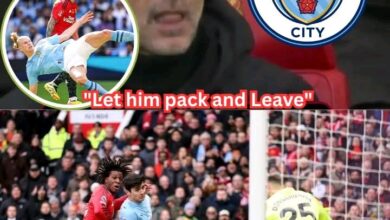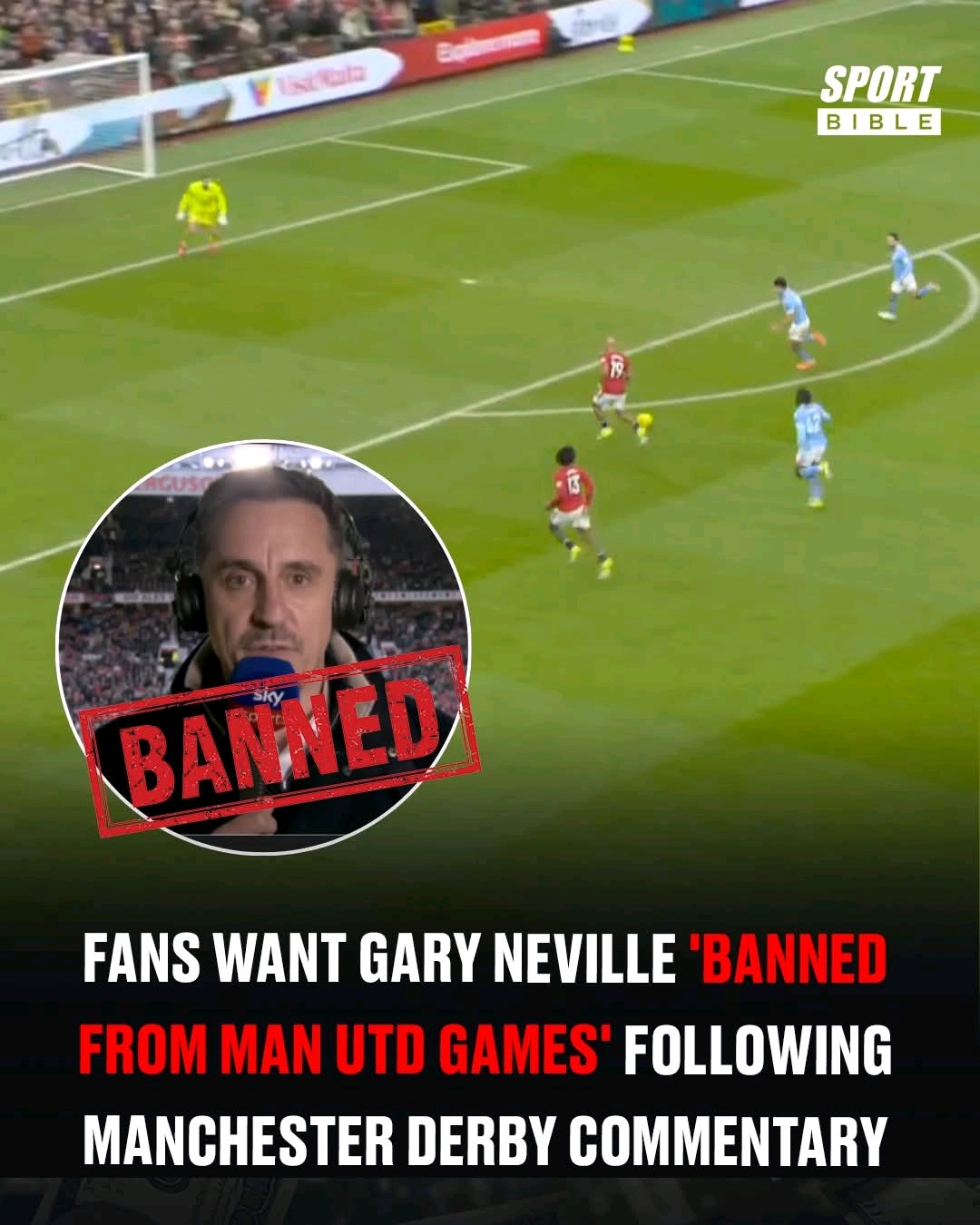
The Manchester derby at Old Trafford was supposed to be about football, tactics, goals, and a famous rivalry renewed under a new manager. It was meant to be remembered for Michael Carrick’s impressive first game in charge, for Manchester United’s unexpected 2-0 victory over Manchester City, and for the electric atmosphere that returned to the Theatre of Dreams. Instead, for many fans watching at home, the conversation after the final whistle quickly shifted away from the pitch and towards the television commentary booth, where Gary Neville found himself at the centre of a growing storm.
From the moment the match kicked off, emotions were already high. This was not just another Premier League fixture. It was Carrick’s first game since stepping in to replace Ruben Amorim, and it came against United’s fiercest rivals. Few gave United much of a chance. City arrived as strong favourites, especially after the early promise shown by new signing Antoine Semenyo. Most expected Guardiola’s side to dominate possession, control the tempo, and expose a United team still searching for stability. What followed instead shocked almost everyone.
United played with intensity, bravery, and organisation. They pressed City aggressively, disrupted their passing rhythm, and looked sharper in every department. When Bryan Mbeumo opened the scoring, Old Trafford exploded. When Patrick Dorgu added the second, belief turned into certainty. By full time, United had secured a 2-0 victory that many fans described as their best performance in a long time. But while those inside the stadium celebrated, a very different reaction was brewing online.
Gary Neville, a Manchester United legend and long-time Sky Sports pundit, was on commentary alongside Peter Drury. This is nothing new. Neville often covers United’s biggest games, especially derbies and high-profile clashes. However, during this particular match, many viewers felt his reactions crossed a line. The moment that triggered the backlash came during the build-up to United’s first goal. As Fernandes surged forward and slipped the ball through to Mbeumo, Neville was heard audibly urging the striker on. Seconds later, when the ball hit the back of the net, Neville celebrated in a way that fans described as emotional and unprofessional.
For some viewers, this was simply a former player reacting instinctively to a big moment involving his old club. For others, it was proof of long-standing concerns about bias in football commentary. Social media platforms quickly filled with clips of Neville’s reaction, slowed down, replayed, and analysed. Fans from both sides of Manchester, and even neutral supporters, weighed in with strong opinions.
One fan wrote that Neville seemed unsure whether he was there as a commentator or as a supporter. They pointed out that although he leaned away from his microphone while celebrating, his reaction was still clearly audible to the audience. To them, this attempt to hide his excitement only made the moment worse. They described it as embarrassing and argued that it undermined the idea of impartial commentary.
Related Posts:


City supporters were especially angry. For them, listening to Neville celebrate a United goal during a derby felt like salt in the wound. One City fan described the commentary as pathetic, accusing Neville of screeching and abandoning all sense of neutrality. They argued that during a match of such importance, especially one broadcast to millions, commentators should remain professional regardless of personal history.
Others went even further. Calls began to appear demanding that Neville be banned from commentating on Manchester United matches altogether. Some fans argued that his emotional connection to the club made it impossible for him to remain unbiased. According to them, allowing Neville to commentate on United games was no different from switching to MUTV, the club’s official channel. They felt that every moment, every talking point, and every narrative was framed from a United perspective.
This criticism was not limited to Neville alone. Some fans used the moment to highlight what they believe is a wider problem with modern football commentary. They claimed that former players often struggle to separate their past loyalties from their professional roles. Gary Neville with United and Jamie Carragher with Liverpool were mentioned as examples. According to these fans, when Carragher covers Liverpool matches, the focus leans heavily towards his former club, just as Neville does with United. They argued that this creates an unbalanced viewing experience, especially for neutral fans or supporters of the opposing team.
As the debate grew, others came to Neville’s defence. Some pointed out that passion is part of what makes commentary engaging. They argued that former players bring emotion, insight, and authenticity that cannot be replicated by neutral presenters alone. To them, Neville’s reaction was human, understandable, and even refreshing in a sport that sometimes feels over-polished. They asked why it was acceptable for fans in the stadium to scream and celebrate, but not for a former United captain watching a dramatic moment unfold.
Still, the criticism did not die down. The calls for Sky Sports to reconsider Neville’s role in United matches continued throughout the evening. Some fans suggested rotating commentators more often to avoid perceived bias. Others proposed that Neville should only appear in studio analysis rather than live commentary, where emotions are harder to control.
The timing of the controversy made it even more intense. This was not just any United win. It came at a moment when the club was trying to rediscover its identity under new leadership. Michael Carrick’s first match in charge carried huge symbolic weight. For many United fans, the victory felt like a fresh start, a return to values they believed had been missing. Neville, as a former captain and symbol of United’s past success, embodied those emotions. His reaction, therefore, felt deeply personal.
For City, the defeat raised uncomfortable questions. The loss meant Guardiola’s side failed to win any of their first four Premier League games of 2026. They now sit six points behind Arsenal, who still had a game to play against Nottingham Forest. For a team used to dominance, this run of form felt alarming. Yet even as City fans tried to process their team’s struggles, the focus remained on Neville’s commentary rather than tactical failures or missed chances.
United’s league position only added fuel to the discussion. The win lifted them to fourth place, level on points with Liverpool. Suddenly, conversations about top-four finishes, momentum, and belief returned. Carrick’s calm presence on the touchline and his tactical decisions earned widespread praise. In contrast, Neville’s animated reaction in the commentary box became a symbol of how emotionally charged the derby had become for everyone connected to the club.
This was not the first time Neville has faced criticism for his commentary, and it likely will not be the last. Over the years, he has built a reputation as one of the game’s most outspoken pundits. His honesty, willingness to criticise United when they struggle, and deep understanding of football have earned him respect. But moments like this reignite the question of whether complete neutrality is realistic or even desirable in football broadcasting.
The role of the commentator has changed. Fans now analyse every word, every tone change, every pause. Clips are shared instantly, opinions spread rapidly, and narratives form within minutes. In this environment, even a split-second reaction can spark outrage. Neville’s celebration, whether intentional or instinctive, became a lightning rod for frustration about bias, professionalism, and fairness in sports media.
At the same time, football remains an emotional game. Derby matches are built on history, rivalry, and identity. Asking former players to completely detach from those emotions may be unrealistic. Neville spent his career fighting for United, lifting trophies, and captaining the club through its most successful era. Expecting him to react like a neutral observer in a moment of triumph may ignore the human side of the sport.
Yet fans also have a point. Television commentary shapes how matches are experienced. For supporters of the losing side, especially in a derby, perceived bias can feel unbearable. When emotions are already raw, even small moments can feel exaggerated. In that context, Neville’s reaction was never going to pass unnoticed.
As the dust settled, the debate showed no signs of slowing. Some fans doubled down on their calls for action, while others dismissed the outrage as overblown. Sky Sports remained silent, offering no immediate response to the criticism. Neville himself did not publicly address the issue, at least not straight away.
What remains clear is that the Manchester derby delivered drama far beyond the pitch. United’s victory, Carrick’s promising start, City’s unexpected slump, and Neville’s controversial commentary all combined to create a weekend that will be talked about for a long time. Whether Neville should be banned from United matches or not is a question that may never have a clear answer. But the reaction to his commentary highlights how deeply football is felt, not just by players and fans, but by those tasked with telling the story as it unfolds.
In the end, the match will be remembered differently depending on who you ask. United fans will remember the goals, the intensity, and the sense of renewal. City fans may remember frustration, missed chances, and an unwanted voice celebrating their pain. Neutral fans may remember the chaos, the noise, and the endless debates that followed. And somewhere in the middle sits Gary Neville, once again reminding everyone that in football, emotion is impossible to separate from the game itself.