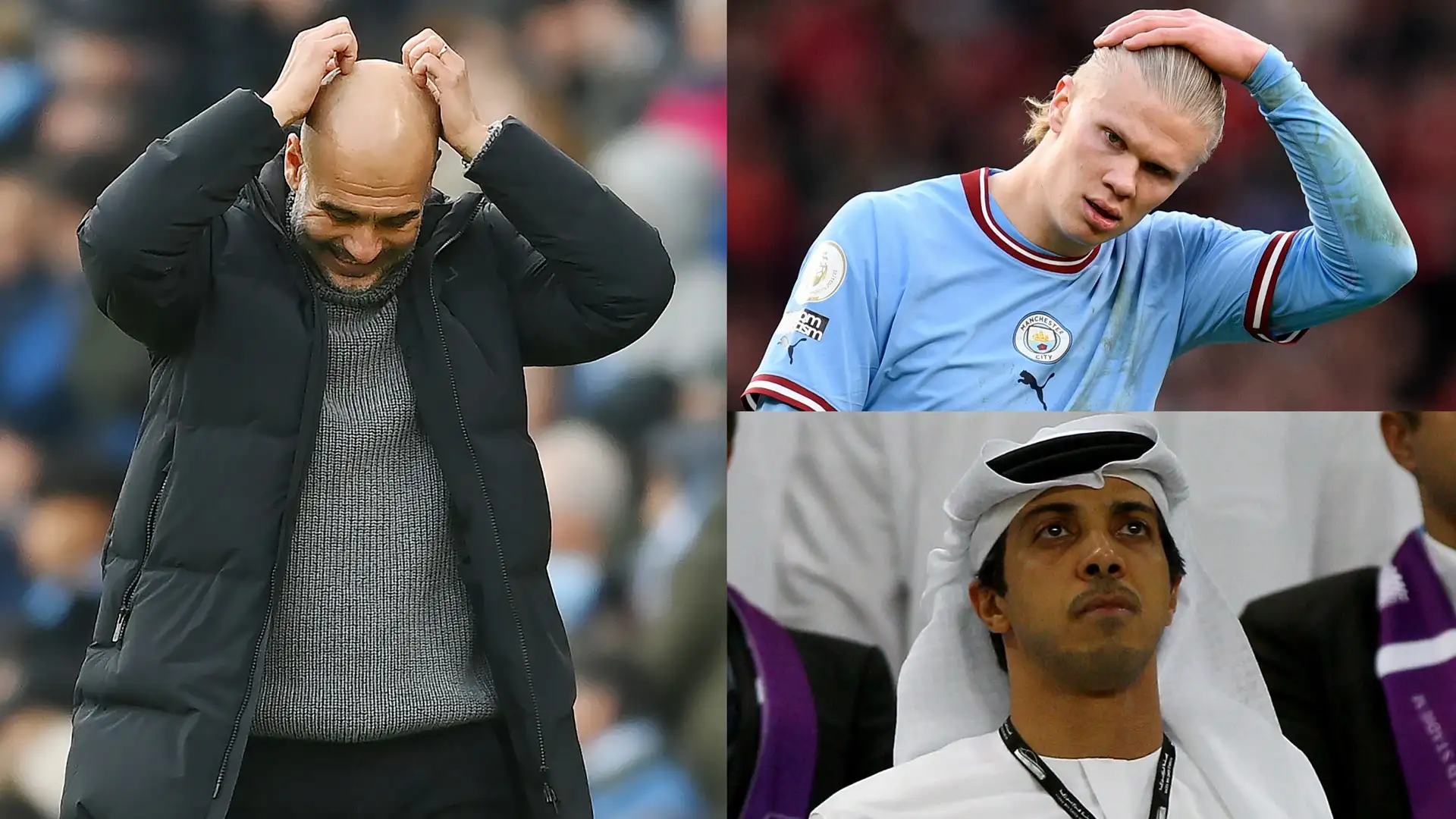
Manchester City keep finding themselves asking the same uncomfortable question again and again this season. Why do things fall apart after half-time? Why does control slip away? Why do matches that look safe suddenly become tense, chaotic, and sometimes damaging? These are not small issues anymore. They are patterns. And patterns, especially at this level, always have reasons behind them.
For years, Manchester City under Pep Guardiola have been known as a second-half monster. They would suffocate opponents, wear them down, and then finish them off with ruthless precision. Teams used to fear the moment City returned from the dressing room. Now, that fear has shifted. Opponents believe. They sense weakness. They know that if they survive the first half, the second half might bring opportunities.
This season, Manchester City have struggled to maintain dominance after the break, and it is costing them dearly. Points have been dropped. Leads have evaporated. Comfortable matches have turned into battles. And for a manager as obsessive and detail-focused as Pep Guardiola, this trend is deeply worrying.
The problems are not simple. They are layered. They involve squad balance, physical condition, mental habits, and tactical discipline. And while Guardiola is already working on solutions, the cracks are clearly visible.
One of the biggest issues is control. City are no longer controlling games for 90 minutes the way they used to. They often start well, move the ball sharply, dominate possession, and pin opponents back. But after half-time, the tempo drops. Passes become looser. Distances between players grow. The structure that once felt unbreakable begins to bend.
This is not always about fitness, but fatigue plays a role. Manchester City have played an unforgiving schedule. Extra matches in cup competitions. Intense league fixtures. High-pressure European nights. The physical load is heavy, especially on players who Guardiola trusts most.
The problem is that fatigue shows itself first in bad habits. Pressing becomes half-hearted. Recovery runs slow down. Players take shortcuts without realising it. And once one player drops intensity, the entire system suffers.
City’s pressing has been one of their biggest strengths for years. It is not just about winning the ball back. It is about preventing opponents from breathing. This season, that press has often faded after the break. Opponents are finding more space. They are playing through City’s lines with greater ease. And once that happens, City’s defence is exposed.
Another issue is concentration. Guardiola’s teams are built on constant attention to detail. Positioning. Timing. Decision-making. When concentration drops even slightly, the system stops working perfectly. And City are paying the price for those small lapses.
Defensively, City no longer look as secure late in games. Centre-backs are being pulled out of position. Full-backs are caught high. Midfielders are not always tracking runners with the same intensity. This is not about individual mistakes alone. It is about collective sharpness.
In previous seasons, City could rotate without losing quality. That depth no longer feels as strong. Injuries have played a major role. Key defenders have missed time. Midfield options have been limited. Guardiola has been forced to use players out of their ideal roles, especially late in games when legs are tired.
The squad balance is also different. City still have technical excellence, but some players lack the relentless physical edge that once defined Guardiola’s side. There is less running power in certain areas. Less natural aggression when defending transitions. That becomes obvious in second halves when opponents push higher and take more risks.
Another major factor is mentality. Manchester City are no longer the hunters in every match. They are the hunted. Every opponent raises their level against them. Teams save energy in the first half, stay compact, and then attack with belief after the break. City have not always responded well to that shift.
Some players, used to dominating without resistance, struggle when momentum turns. Instead of slowing the game down, they speed it up unnecessarily. Instead of keeping the ball, they force passes. Instead of controlling space, they chase shadows.
Guardiola has noticed this. He has spoken privately about game management. About knowing when to kill a match. About being calmer under pressure. These are habits, not tactics. And bad habits are hard to break once they settle in.
There is also the issue of leadership on the pitch. In the past, City had multiple voices guiding the team through difficult moments. Players who would shout, organise, and demand focus. This season, that leadership has not always been visible, especially after half-time when games become messy.
When things start to go wrong, City sometimes look unsure of who should take control. Who should slow the tempo. Who should take responsibility. That hesitation gives opponents confidence.
Another flaw is predictability. Opponents have studied City closely. They know where the danger comes from. They know how City build attacks. After half-time, managers make adjustments, close passing lanes, and force City wide. When City fail to adapt quickly, frustration grows.
Guardiola has always prided himself on solutions. He is already planning changes. Training sessions have become more intense after the break. Focus has shifted to game management scenarios. Players are being drilled on what to do when under pressure late in matches.
One idea Guardiola is considering is earlier substitutions. Instead of waiting for problems to appear, he wants to act before intensity drops. Fresh legs can restore pressing, close gaps, and reassert control. But this depends on trust, and Guardiola does not trust everyone equally.
He is also looking at tactical tweaks. Slightly deeper positioning late in games. More emphasis on ball retention rather than penetration. Encouraging players to rest with the ball, not without it. These are small changes, but they matter.
Another part of Guardiola’s plan is mental. He wants players to understand that domination is not always about attacking. Sometimes it is about patience. About control. About denying the opponent hope. City have allowed too much hope after half-time this season.
The manager has also challenged individuals. Some players have been warned privately about switching off. About body language. About effort levels. Guardiola is demanding accountability. He knows that systems only work if players fully commit for the entire match.
Fans have noticed the change too. The Etihad no longer feels as calm late in games. There is nervous energy. Murmurs in the stands. Anxiety spreading. Players feel that. Guardiola feels that. It becomes a cycle that feeds itself.
Statistics back up the concern. City have conceded a higher percentage of goals in second halves this season compared to previous years. They have dropped points from winning positions more often. They have allowed more shots after the break. These are not accidents.
Opponents are also smarter. They know City are vulnerable late on. They press higher. They bring on pace. They target tired defenders. And City have not always responded well.
Despite all this, Guardiola remains confident. He believes problems can be fixed. He believes the squad still has the quality to dominate. But he also knows time is not unlimited. At this level, repeated flaws become fatal.
Manchester City are still competing on multiple fronts. They are still capable of brilliance. But brilliance alone is not enough anymore. Control must return. Discipline must improve. Habits must change.
The second half has become City’s danger zone. Until that changes, every lead will feel fragile. Every match will carry tension. And every opponent will believe they have a chance.
Pep Guardiola knows exactly what is wrong. The challenge now is fixing it before the season slips away.