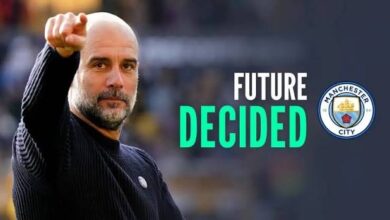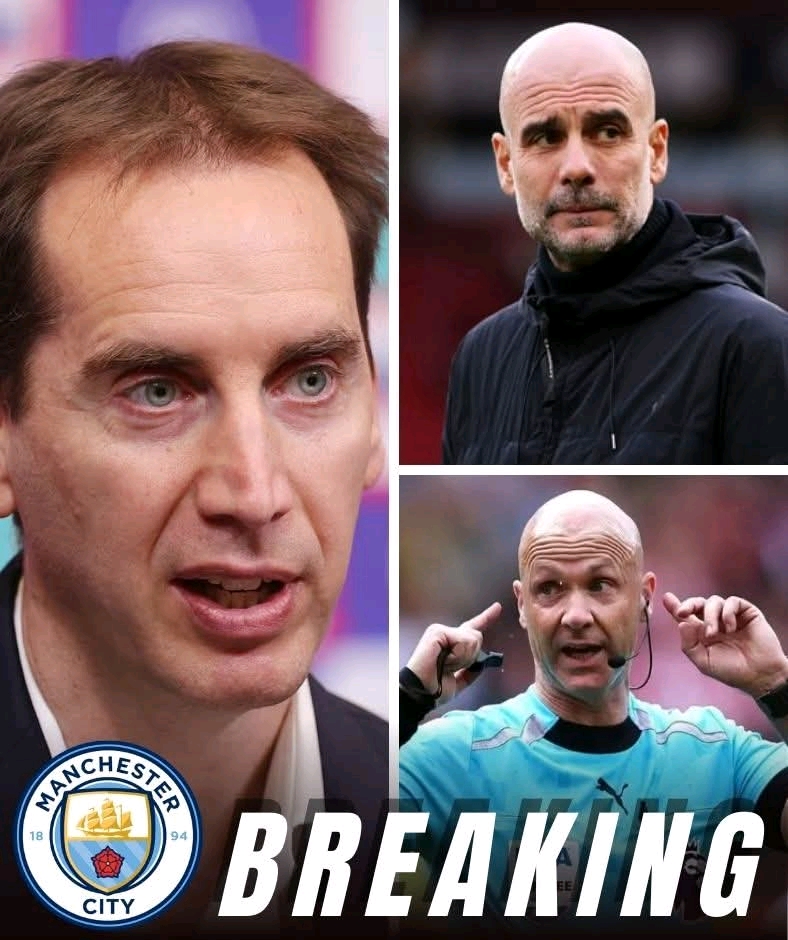
English football woke up to a nightmare that nobody saw coming, and by the time the sun had fully risen, the Premier League was already on fire. What was supposed to be just another chapter in the greatest rivalry in English football history has now turned into a scandal that threatens the very heart of the game. The Manchester City versus Manchester United clash has exploded far beyond ninety minutes of football, dragging referees, authorities, managers, and fans into a storm that shows no sign of calming down.
It all began quietly, as most disasters do. A few strange decisions during the match. A foul given here, one not given there. A moment of confusion. A long pause. A look between players that said something was not right. At first, it felt familiar. Fans complain about referees every weekend. Players shout. Managers wave their arms. Then the final whistle goes, and football moves on But this time, football did not move on.
Within minutes of the game ending, social media exploded. Clips were replayed again and again. Slow motion. Freeze frames. Angles from every possible direction. Fans from both sides began arguing furiously, but something different was happening. Neutral supporters, former players, pundits, and even retired referees began asking the same question. How were those decisions allowed to stand? The anger grew fast. Faster than anyone expected.
By the next morning, the Football Association confirmed what many people had already feared. An urgent investigation had been opened into the officiating of the Manchester City versus Manchester United match. Not a routine review. Not a quiet assessment. An urgent probe. The kind of investigation that immediately sends shockwaves through the sport.
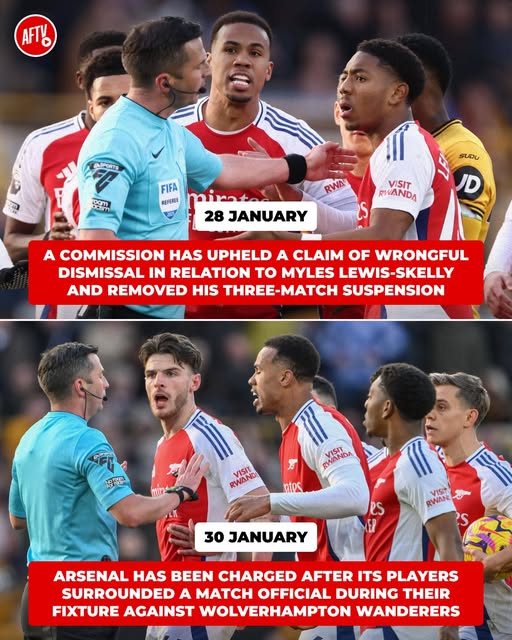
Several match officials were suspended pending inquiry. That single line alone was enough to send English football into panic mode. Suspensions do not happen lightly. They do not happen quickly. And they certainly do not happen without serious concerns behind closed doors. At the centre of the storm stood one name that instantly drew attention. Anthony Taylor.
Suddenly, one of the most recognisable referees in English football was being discussed not for authority or experience, but for integrity questions that nobody ever wants attached to the game. The FA were careful with their wording. They stressed that no conclusions had been reached. They repeated that the investigation was ongoing. But insiders were already whispering the same thing. The speed of the response told its own story. This was serious.
Related Posts:


As the hours passed, the fury among fans only intensified. Manchester City supporters felt robbed. Manchester United supporters felt attacked. Everyone else felt uneasy. Because when refereeing decisions become the main story of the biggest match in England, something has gone wrong.
Television studios turned into courtrooms. Analysts broke down every incident frame by frame. Former referees hesitated before speaking, choosing their words carefully, but even they struggled to defend what they were seeing. The phrase “inconsistency” was repeated so often it began to lose meaning. This felt bigger than inconsistency. This felt like confusion at best, and something far darker at worst.
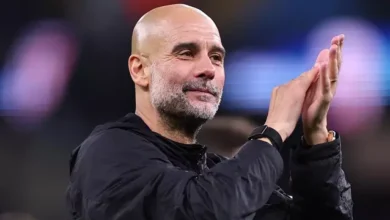
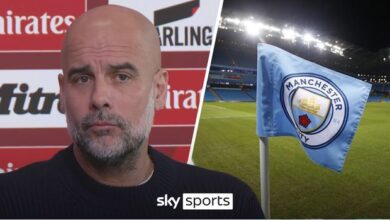
The FA tried to calm the situation. Statements were released. Reassurances were given. But the fire was already burning too hot. Then came the moment that turned a crisis into full-scale war. Pep Guardiola stepped forward.
In English football, managers complain about referees all the time. Most do it carefully. Most hide behind vague phrases. Most know the rules and fear punishment. Pep Guardiola is different. He chooses his moments. And when he speaks, the entire football world listens. What he did next shocked everyone.
Guardiola did not shout. He did not scream. He did not accuse directly. Instead, he did something far more dangerous. He questioned integrity. He questioned transparency. And he questioned silence.
With visible anger, Pep Guardiola made it clear that he could not stay quiet. He said that remaining silent would feel like complicity. That single word landed like a bomb. Complicity. Not mistake. Not error. Complicity. In that moment, everything changed.
Guardiola did not name individuals. He did not accuse the FA of corruption. But he drew a line in the sand. He made it clear that something was broken and that pretending otherwise was unacceptable. For many fans, it was the bravest thing they had seen from a manager in years. Finally, someone with power was saying what they felt. For others, it was reckless.
Critics accused Guardiola of crossing a line that managers should never cross. They warned that questioning refereeing integrity publicly could damage trust in the game itself. They argued that football survives on belief, and once that belief is shaken, everything becomes unstable.
Inside the league, the reaction was immediate. Executives held emergency meetings. Legal teams reviewed statements. Refereeing bodies felt exposed. This was no longer just a bad weekend. This was an institutional crisis.
League insiders described Guardiola’s intervention as a moment that could permanently change the balance of power in English football. For years, referees have been protected. Criticism has been managed. Complaints have been punished. But when one of the most respected managers in world football speaks this openly, the old rules stop working.
Supporters rallied behind him. They said he was speaking for them. That he was saying what millions of fans had been screaming for years. They praised his courage and accused the authorities of hiding behind silence and procedure.
Others were deeply uncomfortable. They feared the damage was already done. They asked how players were supposed to respect referees if managers questioned the system itself. They worried about young referees, about abuse, about the chaos that follows when authority collapses. Meanwhile, the FA found itself trapped.
On one side, furious fans demanding answers. On another, suspended officials awaiting investigation. And standing directly in front of them, Pep Guardiola, one of the most powerful figures in football, demanding transparency.
The pressure was unlike anything the FA had faced before. This was no longer about a foul or a penalty. This was about credibility. About whether the Premier League could still claim to be the most trusted league in the world. About whether decisions were truly fair, or whether something deeper needed fixing.
Behind the scenes, tension grew. Referees felt exposed. Officials felt attacked. Managers across the league watched closely, wondering whether Guardiola would be punished, protected, or used as an example. The silence from the FA became deafening.
Every hour without clarity made things worse. Rumours spread. Theories multiplied. Social media became a battlefield of speculation and anger. Conspiracy mixed with genuine concern. And in that noise, trust continued to erode.
Some fans began questioning past decisions. Old matches resurfaced. Old controversies were dragged back into the light. The game’s history itself began to feel unstable.
Football has always survived on emotion, but it also survives on belief. Belief that rules matter. Belief that decisions are honest. Belief that while referees can make mistakes, the system itself is clean. That belief was now under threat.
Guardiola knew what he was doing. He understood the consequences. He understood that he might face punishment. But sources close to him said he felt he had no choice. That protecting the game mattered more than protecting himself. Whether people agree with him or not, one thing is certain. He forced the conversation.
As the investigation continues, nobody knows what the final outcome will be. The FA insist that due process will be followed. That evidence will be reviewed. That conclusions will only be drawn when facts are clear.
But the damage has already been done.
Players are talking. Managers are watching. Fans are questioning. And referees are under a spotlight brighter than ever before.
This scandal has exposed something uncomfortable. Not just about one match, but about how football handles power, mistakes, and accountability.
English football has always prided itself on tradition and fairness. Now it faces its biggest test. Can it restore trust? Can it prove transparency? Can it show that no one is above scrutiny, and no one is protected at the expense of the game?
Because this is no longer just about Manchester City or Manchester United.It is about the future of the Premier League.And as the investigation unfolds, one thing is already clear