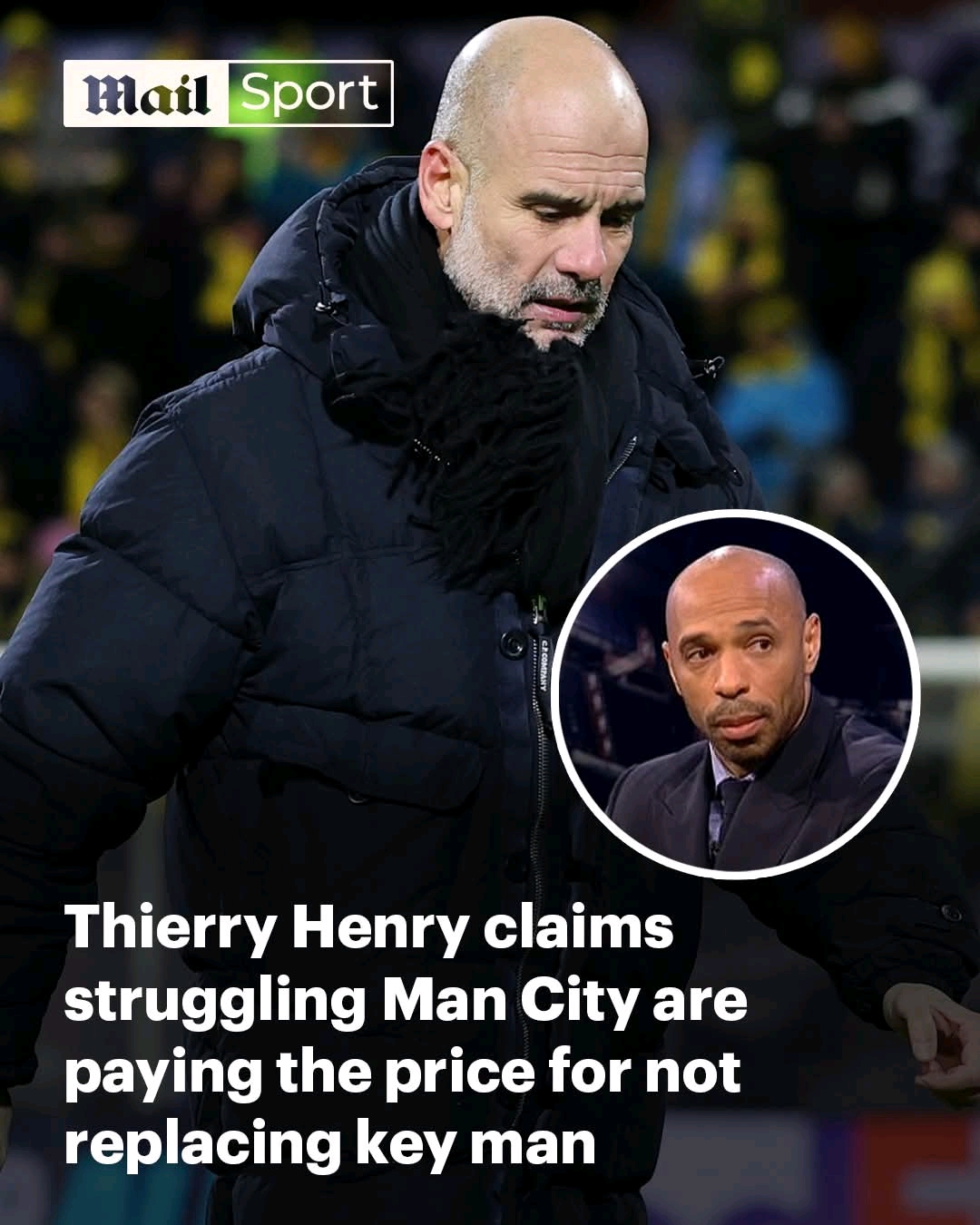
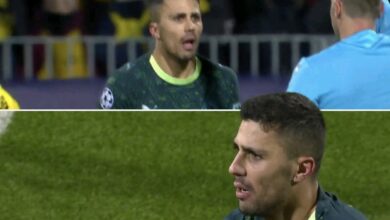
Manchester City walked off the pitch in Norway with their heads down, their pride bruised, and their season sinking deeper into trouble. A 3-1 defeat to Bodo/Glimt was not just another bad night in Europe. It felt like a warning siren for a team that once ruled England and scared Europe. The Etihad giants, built to dominate the ball and suffocate opponents, were instead torn apart by pace, belief, and simple counter attacks. As the final whistle blew, the questions came fast and loud. What has happened to Manchester City. Why do they look so open, so slow, so fragile. And why does it suddenly feel like Pep Guardiola’s great machine has lost one of its most important parts.
Thierry Henry did not hold back when he spoke after the match. The Arsenal legend and World Cup winner watched City struggle and saw something he believed was obvious. According to him, Manchester City are paying the price for failing to replace Kyle Walker. Not just replacing him with any right back, but replacing what Walker truly gave them. His pace. His recovery speed. His ability to erase mistakes before they became goals. Henry explained it in simple terms. City want the ball. They push high. They take risks. But now they do not press well, and they do not stop counters. Without Walker, when things go wrong, there is no one left to save them.
For years, Kyle Walker was the emergency button in Guardiola’s system. When City lost the ball high up the pitch, when a pass was misplaced or a press was broken, Walker was there. He chased. He recovered. He bullied wingers and strikers with his speed and strength. Even when City were caught out of position, they were never truly exposed because Walker could sprint back and fix the danger. That safety net allowed Guardiola to push his team even higher, even braver, even more aggressive. It was not just about defending. It was about freedom.
Walker’s last game for Manchester City came in January 2025. He was 35, his best years behind him, and the club decided to move on. He went on loan to AC Milan, and later ended up at Burnley, where he still plays today, with Burnley holding the option to make the move permanent. Many believed City would smoothly replace him, just as they had replaced other legends before. Guardiola had done it time and time again. Players left, trophies still came. The system survived. But Henry believes this time, something went wrong.
He pointed to the past to explain his argument. When Sergio Aguero left Manchester City, it hurt, but the team adapted. Goals still came. Wins still followed. When David Silva departed, his magic was missed, but City found new ways to control games. Guardiola had a gift. He could lose great players and still make the team look complete. Opponents barely noticed who was gone. But now, Henry says, it is different. The players who left recently have not been properly replaced. The balance is broken.
Against Bodo/Glimt, that broken balance was on full display. City had the ball, but they did not control the game. They pushed forward, but they did not protect themselves. Each time possession was lost, panic followed. Bodo/Glimt did not need complicated tactics. They waited, stayed brave, and ran into the spaces City left behind. The Norwegian side played with hunger, speed, and belief. Manchester City looked shocked. A giant was being pulled apart by a so-called minnow, and there was nothing inevitable about a City comeback.
Henry’s words cut deep because they were not emotional. They were tactical. He explained that if you want to dominate possession, you must be perfect when you lose it. You must press instantly. You must stop counters. You must recover the ball high up the pitch. If you cannot do that, you are in danger every time the opponent breaks forward. Without Walker’s recovery speed, City are now behind the eight ball. One mistake leads to a counter. A counter leads to a chance. A chance leads to a goal or a corner. Trouble follows.
Micah Richards, who knows the club well, agreed with Henry’s assessment. He spoke about how City used to retain the ball so well and push high with confidence. They trusted themselves. They trusted their structure. Now, that trust looks shaky. The press is not sharp. The distances between players are wrong. The defensive line looks exposed. When the ball is lost, there is hesitation instead of aggression. And in modern football, hesitation is deadly.
The numbers make grim reading. Manchester City have won just two of their last seven games. One of those wins came against Exeter City, a result that did little to convince anyone that the crisis is over. Confidence is low. Momentum is gone. The aura that once surrounded Guardiola’s team has faded. Opponents no longer arrive beaten before kickoff. They believe they can hurt City, and more importantly, they know how.
The club has not stood still in the transfer market. Money has been spent. A lot of it. Last January, City spent £127 million. In the summer, they added another £150 million. This window, they have already brought in Antoine Semenyo and Marc Guehi. On paper, the squad looks strong. Expensive. Deep. But football is not played on paper. It is played on grass, under pressure, in moments where instinct and understanding matter more than price tags.
Henry made another important point. He revealed that City have been forced to sign players in January for the first time because they were unhappy with previous recruitment. That alone tells a story. Guardiola is known for planning ahead, not reacting in panic. January signings often mean something has gone wrong. The machine needs fixing mid-season. The rhythm is broken. The trust in the original plan is gone.
The defeat to Bodo/Glimt came just days after a painful Manchester derby loss. Manchester United beat City and deserved it. Guardiola admitted as much. He spoke honestly after the match in Norway. He said the results since 2025 have not been good, in the Premier League and now in Europe. He admitted that everything feels like it is going wrong. The details. The moments. The fine margins. But he insisted the team must move forward.
Guardiola spoke about momentum. United had it. Bodo/Glimt had it. City did not. He said his team created chances, but on the transition, the opposition were really good. That sentence says everything. City create, but they suffer. They attack, but they bleed. The balance that once defined Guardiola’s City has disappeared.
The match itself told a painful story. City were undone by defensive lapses. Simple errors. Poor positioning. Slow reactions. Rodri, normally the calm heartbeat of the team, was sent off after picking up two yellow cards in the space of a minute. Frustration boiled over. Control vanished. Without Rodri, without Walker, without stability, City collapsed.
Images of Kyle Walker in a Burnley shirt now feel symbolic. Once the fastest man on the pitch for City, now watching from afar as his old team struggle to cope with the very problems he used to solve. His pace allowed City to cheat. To gamble. To push full backs into midfield. To overload opponents without fear. Without him, those gambles look reckless instead of brave.
This is not about blaming one player. Henry did not say that replacing Walker would fix everything. But he highlighted a profile, a type of defender that City no longer have. Someone who can defend space, not just zones. Someone who can win foot races, not just duels. In modern football, where transitions are king, that profile is priceless.
Pep Guardiola built one of the greatest teams English football has ever seen. Titles, records, domination. But football never stands still. Rivals adapt. Players age. Margins disappear. What worked yesterday can fail tomorrow. Guardiola knows this better than anyone. His challenge now is to find a new solution, a new balance, a new way to protect his team without the safety nets he once relied on.
The upcoming fixtures offer no mercy. Wolves await. Then Galatasaray. Pressure will not ease. Every mistake will be magnified. Every dropped point will fuel the narrative of decline. Guardiola insists he has no doubts in the competition, but belief alone is not enough. Answers are needed on the pitch.
For Manchester City, this defeat was more than a bad night. It was a mirror held up to their flaws. The loss of Kyle Walker is not just about one position. It is about what he represented. Security. Recovery. Confidence. Without that, City look exposed, vulnerable, human. Thierry Henry’s words were not cruel. They were honest. And sometimes, honesty hurts the most.
As the season unfolds, City must decide who they are now. A team trying to relive the past, or a team brave enough to rebuild its identity. The game moves fast. Those who fail to adapt are left behind. For Guardiola and Manchester City, the warning has been delivered, loudly and clearly, on a cold night in Norway.