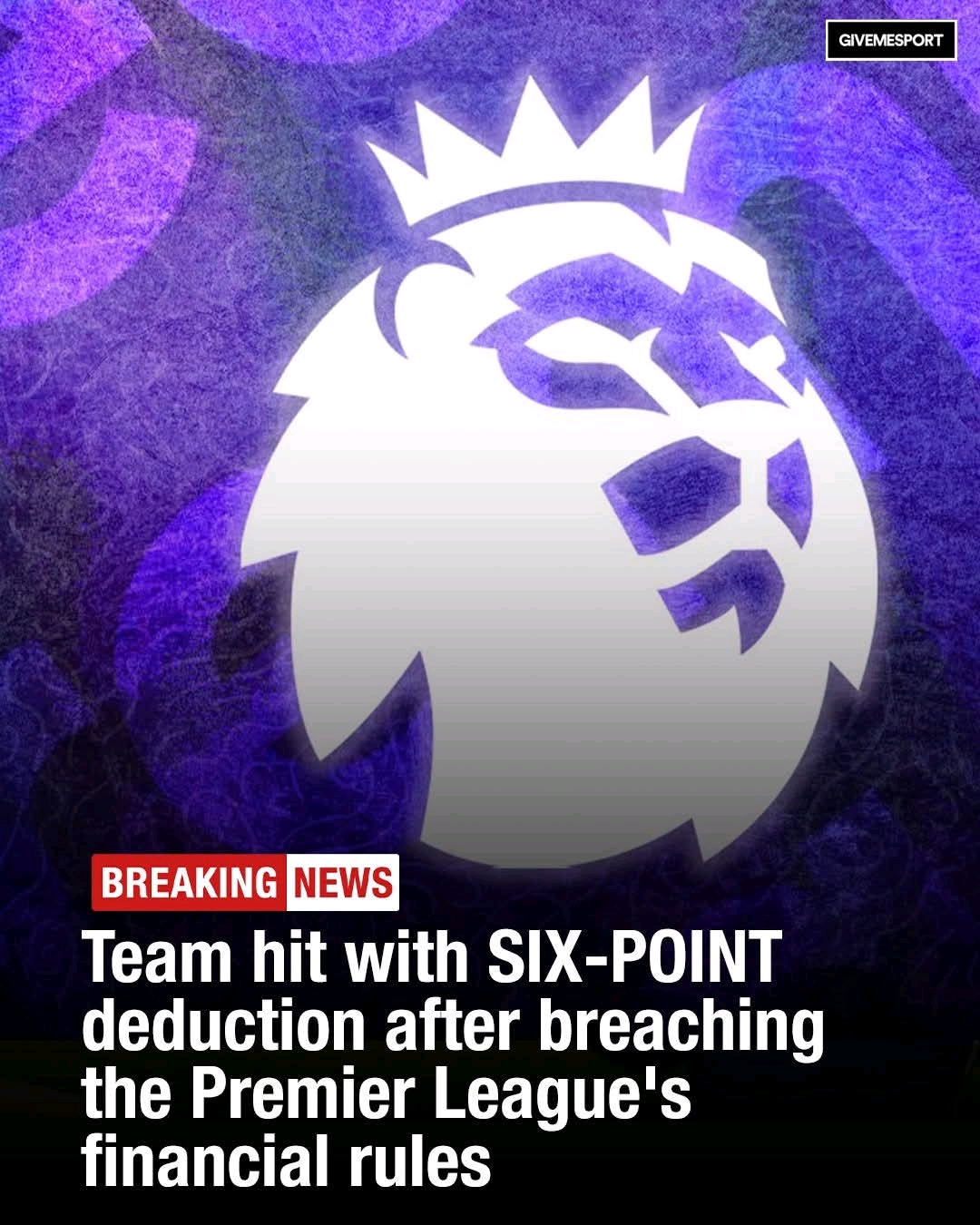
Leicester City woke up to one of the darkest moments in their recent history when confirmation finally arrived that the club had been hit with a six point deduction after breaching Premier League financial rules. It was a decision that had been hanging over the club like a storm cloud for months, whispered about in courtrooms, debated by lawyers, argued over by accountants, and feared deeply by supporters who had already lived through too much instability in recent seasons. When the punishment became official, it sent shockwaves through English football and instantly changed the mood around Leicester’s campaign.
The deduction dropped Leicester straight down to twentieth place in the league standings, leaving them just outside the Championship relegation zone on goal difference. In a season where every point feels like gold, losing six in one stroke felt like a hammer blow. Fans who had been counting wins and draws suddenly found themselves recalculating survival scenarios, staring at the table in disbelief. For a club that not long ago lifted the Premier League trophy in one of football’s greatest miracles, this fall felt painful, symbolic, and deeply worrying.
According to reports, the punishment followed a long and complicated legal process that finally reached its conclusion after months of uncertainty. The Telegraph revealed that Leicester’s hearing took place back in November in front of an independent panel. This panel was tasked with reviewing the club’s finances for the 2023 to 2024 season, a period when Leicester were operating outside the Premier League after their relegation. Despite being out of the top flight at the time, the consequences of that season have now come crashing down on them with full force.
The ruling confirmed that Leicester breached Profitability and Sustainability Rules, commonly known as PSR. These rules are designed to stop clubs from spending far more than they earn, protecting the long term health of teams and the wider football system. In Leicester’s case, the numbers told a harsh story. Over a three year rolling period ending on June 30, 2024, the club recorded combined losses of more than two hundred million pounds. Under PSR regulations, clubs are only allowed a maximum loss of eighty one million pounds across the same period, even after adjustments. Leicester were nowhere near that line.
This was not the first time Leicester had faced PSR trouble. In fact, just months earlier, they had successfully appealed against a previous alleged breach. In September 2024, an independent panel ruled that the Premier League did not have the authority to punish Leicester for an accounting period that ended on June 30, 2023, because the club had already been relegated to the Championship by that point. That decision was seen as a huge victory for Leicester and raised hopes that they might escape punishment entirely.
This time, however, there was no escape. The circumstances were different, the evidence stronger, and the legal ground less favourable. With Leicester no longer a Premier League club, responsibility for enforcing the punishment fell to the English Football League. The EFL met on Thursday February 5 and moved quickly to apply the sanction with immediate effect. There was no delay, no grace period, and no soft landing. The points were gone instantly.
The EFL acted under regulation 87.7, a rule that gives the league the power to implement sanctions equivalent to those recommended by an independent Premier League commission or appeal board. In simple terms, once the commission made its recommendation, the EFL had the authority to enforce it without hesitation. For Leicester, that meant six points wiped from their total in the blink of an eye.
The reaction among supporters was a mix of anger, sadness, and exhaustion. Many fans feel they are paying the price for decisions made behind closed doors, decisions they had no control over. Protests had already been growing against senior figures at the club, including director of football Jon Rudkin and chairman Aiyawatt Srivaddhanaprabha, known widely as Top. This punishment only added fuel to those frustrations, with supporters questioning how a club could fall so far financially after years of success.
Leicester’s financial problems did not appear overnight. The club spent heavily in an attempt to remain competitive, first in the Premier League and then in their push to return quickly after relegation. Big wages, transfer fees, and operating costs continued to pile up, even as revenue dropped outside the top flight. Television money decreased, commercial income suffered, and the gap between spending and earning grew wider. Eventually, that gap became impossible to ignore.
After the punishment was announced, Leicester released an official statement responding to the decision. The tone was calm but clearly disappointed. The club acknowledged the ruling of the independent commission and confirmed they would take time to consider their next steps. While they accepted that the original sanction sought by the Premier League had been reduced, they argued that even the final punishment remained disproportionate.
In their statement, Leicester stressed that the mitigating factors they presented during the hearing were not fully reflected in the outcome. They warned that the points deduction could have a serious impact on their sporting ambitions this season, especially given how tight the table is. Every match now carries extra pressure, every mistake feels heavier, and every dropped point hurts twice as much.
The club did highlight some positives from the commission’s findings. They welcomed the agreement that compliance for the 2024 financial year should be assessed over a thirty six month period. This was described as an important clarification, not just for the period under review, but also for providing certainty around PSR compliance for the 2025 financial year. In a landscape filled with financial confusion, any clarity is valuable.
Leicester also pointed out that the panel agreed there were no aggravating factors that should increase the sanction. This was something the club had argued strongly throughout the process. The commission also acknowledged that Leicester showed a positive trend in their finances during the 2024 financial year, suggesting that efforts had been made to improve the situation. Unfortunately for Leicester, those improvements were not enough to avoid punishment.
The statement ended with Leicester confirming they are now reviewing the decision in full and considering all available options. While no appeal has been officially announced, the wording leaves the door open. At the same time, the club said it remains committed to engaging constructively and ensuring that any further action is fair, proportionate, and handled through the correct processes. It was a careful balance of resistance and cooperation.
On the pitch, the impact of the deduction is immediate and brutal. Players must now find a way to respond under extreme pressure. Managers must lift morale while knowing that the margin for error has disappeared. A single defeat now feels catastrophic. A single win feels like a lifeline. The psychological challenge may be even greater than the sporting one.
Opposition teams will smell blood. Clubs fighting relegation now see Leicester as a direct rival dragged back into danger. Matches against fellow strugglers have suddenly become six point battles in the truest sense. The atmosphere at the King Power Stadium is likely to be tense, emotional, and unpredictable as fans try to push their team forward while processing the anger they feel off the pitch.
This situation also reignites the wider debate around financial rules in English football. Supporters across the country are divided. Some argue that rules must be enforced strictly to prevent reckless spending and protect the game. Others believe punishments like points deductions unfairly punish fans and players rather than the executives who made the decisions. Leicester’s case will be cited again and again in these arguments.
There is also the question of consistency. Other clubs have faced deductions, fines, and warnings under PSR, but every case feels different. Fans inevitably compare punishments and ask why one club receives one sanction while another seems to escape lightly. Trust in the system is fragile, and cases like this do little to strengthen it.
For Leicester, however, philosophical debates offer little comfort. The reality is simple and harsh. They are six points worse off and running out of time. The focus must now turn to survival, both on and off the pitch. Financial stability, squad unity, and strong leadership are no longer optional. They are essential.
The club’s recent history makes this fall even more dramatic. Not long ago, Leicester were celebrated across the world as underdogs who defied the odds. They won the Premier League, lifted the FA Cup, and regularly competed in Europe. That story feels distant now, replaced by court cases, balance sheets, and league tables filled with fear.
Yet football has a strange way of producing new chapters when everything feels lost. Leicester still have matches to play, points to fight for, and a chance to respond. Whether they can turn anger into energy and pressure into purpose will define their season. The six point deduction may have knocked them down, but the final outcome is not yet written.
What is certain is that this punishment will leave a lasting mark on the club. Lessons will need to be learned, structures reviewed, and trust rebuilt with supporters. The days ahead will be uncomfortable, noisy, and emotionally draining. But they will also reveal the true character of Leicester City, both as a football club and as a community bound together by belief, pain, and hope.