I was having my Man City medical when Arsenal called – I couldn’t turn them down

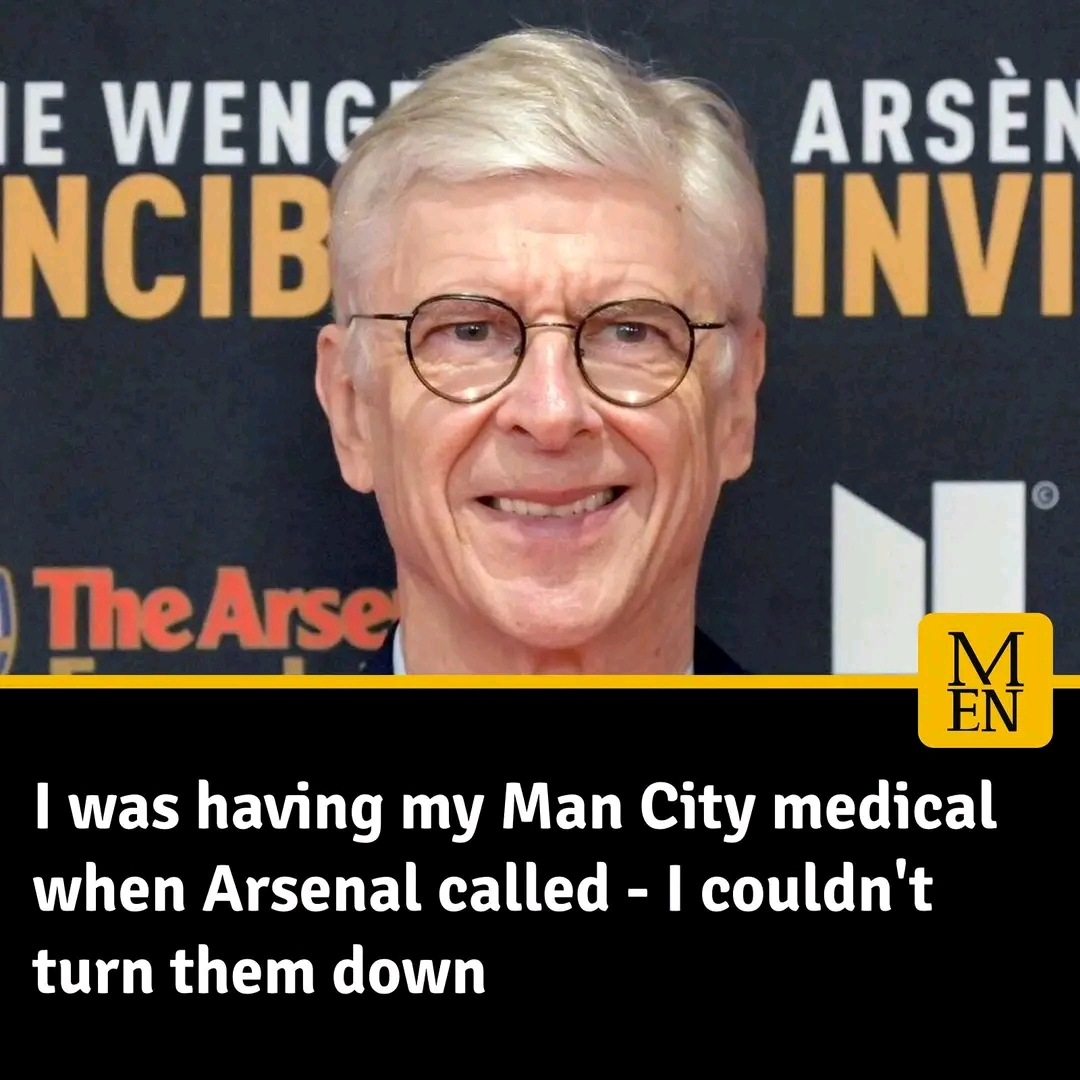
The story of Mikael Silvestre and the moment he almost signed for Manchester City is one of those football stories that feels like a movie scene, the kind where a man is standing in one room preparing for his future and suddenly a phone call from the past or from destiny comes in and changes everything. It is a moment that shows how football transfers are not only about documents and medicals and signatures but also about human emotions, loyalties, instinct and last-minute decisions that can shape a whole career. When Silvestre himself looked back at that moment, he knew it was one of the strangest and most dramatic days of his journey as a professional footballer, and he remembered every detail like it happened yesterday because it was a day where one call from Arsene Wenger changed everything he thought he was going to do.
Mikael Silvestre had already lived a big football life before that moment in 2008. He had played for Manchester United for nine years, collecting trophies like a man collecting souvenirs from battles he fought and conquered. He won four Premier League titles, he won an FA Cup, and he stood on that shining European stage as a Champions League winner. He played under Sir Alex Ferguson, a manager who coached him with intensity and who demanded everything from him. Silvestre played beside some of the greatest players of that era, and he fought for his place every single season, even when Patrice Evra arrived and later became the main left-back. Silvestre had become a senior figure, a respected player, someone United fans had watched through big moments, painful moments, injury battles and comeback stories.
But football moves fast, and by 2008 his time at Old Trafford was clearly moving toward the end. The knee injury he suffered in 2007 was serious, and coming back from it was difficult. Patrice Evra had taken the position with fire and consistency, meaning Silvestre was no longer the starting full-back. When a player who once played 361 matches for a club starts to see his minutes decline, there comes a point where he knows he must decide his next chapter. That was where Silvestre found himself in that summer.
Manchester City at that time were not yet the City we know today, not the financial powerhouse with world class stars in every position. But they were ambitious. They were rebuilding. They saw Silvestre as someone who could bring experience, leadership and calmness to the team. So they pushed for him. They arranged everything fast. They invited him to Manchester, and before he knew it, he was there, inside a room, doing medical tests, preparing to sign papers that would officially make him a Manchester City player. He was halfway through the medical when destiny decided to enter the building.
Silvestre said it clearly: “I was halfway through my medical in Manchester.” He was right there, one step away from wearing the sky-blue shirt. But football is football, and sometimes in this world the phone rings in the most unpredictable moment. Arsene Wenger did not call him directly, and that was what made it even more dramatic. Wenger reached him through a friend, someone both men trusted. That friend came with Wenger’s message: Arsenal wanted him, Wenger wanted him, and he should think twice about signing for City when he could instead join the Gunners.
Wenger calling at that moment felt like a movie twist. Silvestre could not ignore the voice of the legendary French manager. He respected Wenger deeply, he knew Wenger trusted French players, and Wenger had a long history of turning experienced players into important tools inside his young squads. Wenger told him that Arsenal needed him, and Silvestre felt something shift inside him. The idea of joining Arsenal was not something he could push aside. Wenger’s timing was perfect, surgical, almost unbelievable. And in that one moment, Silvestre made a decision he knew would shock Manchester City, confuse United fans and start debates across England. He walked away from the City medical. He left the room, left the deal, left the project, and the very next day he signed for Arsenal.
Related Posts:






When he looked back, he laughed at how crazy it was. “Nowadays when a club does a medical, they do it all in one day and don’t let the players leave the room,” he said. “They want to make sure the deal goes through.” But that day, City allowed him to move around, and Wenger used that small opening to pull him away. It was a true football heist, silent but powerful, carried out by Arsene Wenger, one of the smartest negotiators the Premier League has ever seen.
Silvestre joining Arsenal was one of those moves that made fans argue endlessly. Manchester United fans saw it in two different ways. Some understood that his time had come, that injuries had slowed him down, that he needed a new place to play. But others saw him joining Arsenal—not City, not Inter, not some club far away—but Arsenal, one of United’s biggest rivals for many years, and they saw it as something close to betrayal. But if they were angry about him joining Arsenal, imagine how angry they would have been if he had joined City instead, a club in the same city as United, a club United fans were already growing irritated by because City were becoming more ambitious.
At the same time, Arsenal fans were not fully excited either, because normally Arsenal did not sign players from Manchester United. The rivalry between Wenger and Ferguson was so deep and intense that transfers between the clubs were rare. For two managers who battled for years, who challenged each other, who argued on touchlines, who won titles by breaking each other’s hearts, the idea of exchanging players felt almost impossible. But here came Silvestre, the first senior player to make the move between the two clubs in more than 20 years. He entered Arsenal like a man entering a new house built by someone who used to fight with his old boss.
His time at Arsenal, however, was not one filled with big victories. He played 43 matches across two seasons. He was not terrible, but he was not exceptional either, and the club itself was in a phase of transition. They finished fourth, then third. They did not win the league, they did not win the Champions League, and Silvestre was mostly used as a backup, filling defensive gaps when needed. The unforgettable Champions League moment was one he wished could have ended differently. Arsenal met Manchester United in the semi-final, and United crushed them 4-1 on aggregate, showing the world that even though Silvestre had changed clubs, the football level difference between United and Arsenal in that moment was huge.
Facing his old club in a Champions League semi-final was emotional. It felt like a reminder of what he left and what he could no longer experience. He played against United three times after leaving them but won just one, a 2-1 Arsenal victory in 2008. That win was sweet, but it was not enough to build a legacy. And when he eventually left Arsenal in 2010, there were again whispers about him going to Manchester City. But this time, nothing happened. He moved to Werder Bremen instead, looking for one more fresh start.
And the irony of it all is that years later, after experiencing Arsenal’s style, culture and methods, Silvestre said something that made fans raise eyebrows: he said Wenger needed to be “more ruthless”. It was ironic because Wenger showed ruthlessness in 2008 when he snatched Silvestre from City’s hands during a medical like a thief in the night. But Silvestre felt Wenger was too gentle, too patient, too trusting with players, and that Arsenal needed sharper decisions. Some Arsenal fans agreed with him. Others disagreed. But the statement added another layer to the story of a man who moved from United to Arsenal in a way that still feels unbelievable to this day
What makes Silvestre’s story even more dramatic is how all sides viewed it differently. Manchester City saw it as a deal stolen from them. They were close, very close, dangerously close. They had him in the medical room. They had tests running. They had papers waiting. And then suddenly he was gone. United fans saw it as part sadness, part confusion. They respected Silvestre but did not like the idea of him wearing the red of Arsenal. Arsenal fans saw it as a strange signing, but they accepted him, hoping his experience would help. Wenger saw it as a smart tactical capture. And Silvestre himself saw it as the choice he felt he had to make at that moment.
Football is full of “almost” stories, but this one stands among the craziest. A player almost becoming a Manchester City signing, turning into a Manchester City defender, only for Arsene Wenger to interfere with perfect timing and redirect everything. Some say destiny has a sense of humor. Some say Wenger had a plan. Some say Silvestre followed his heart. But all agree on one thing: the moment he left that medical room, history changed.
The story remains a reminder that transfers can collapse even at the last second. A medical does not guarantee anything. A signature is the only final element. Until the pen touches the paper, anything can happen. Silvestre walked into a Manchester City medical as a near-future City player. He walked out as the next Arsenal signing. And that is how football, in one dramatic twist, wrote another unforgettable chapte