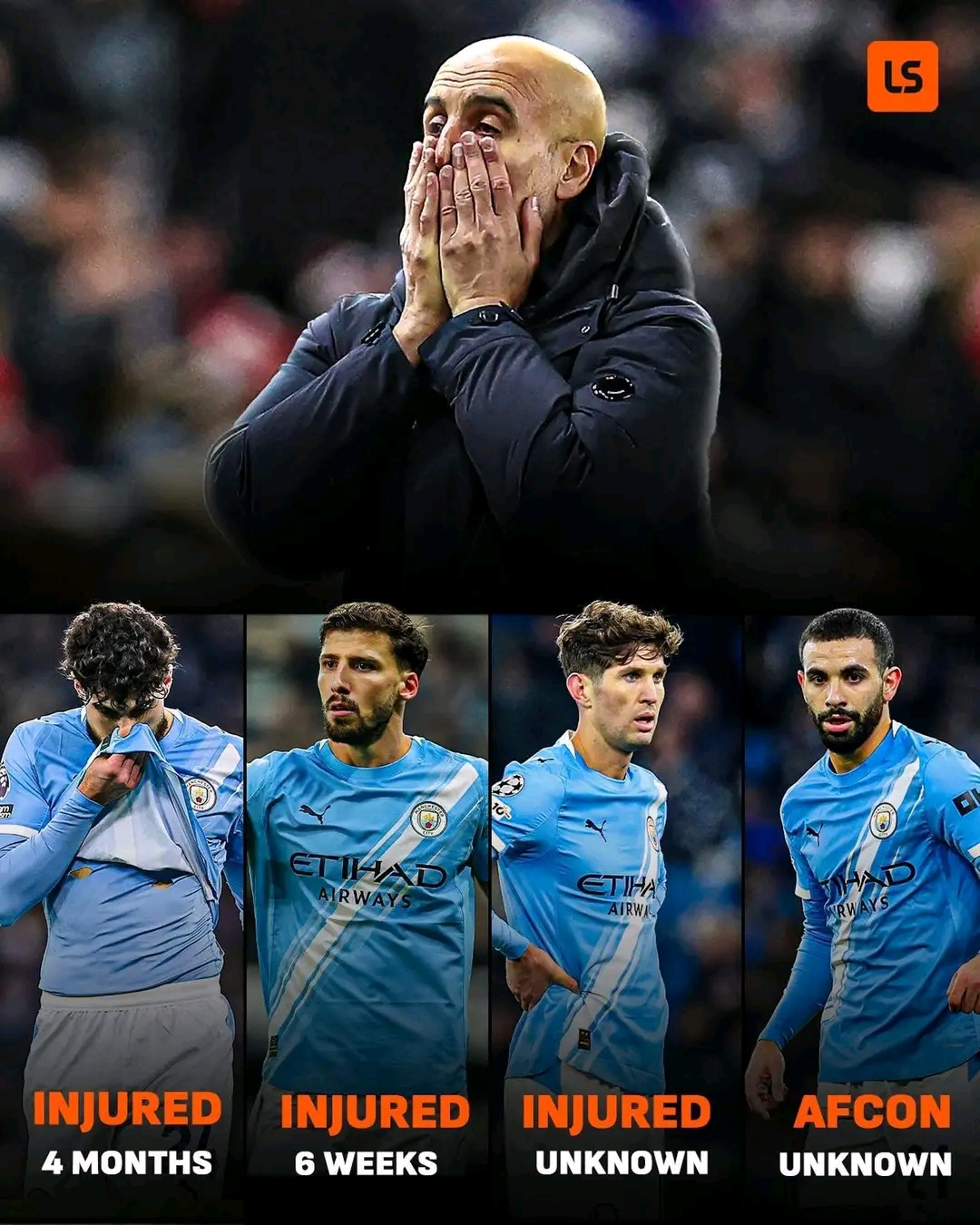
The news came quietly at first, but its impact hit Manchester City like a sudden cold wind in the middle of winter. Ruben Dias, the rock at the heart of City’s defence, the leader who has held the back line together through title runs, European nights, and moments of chaos, will be missing for up to six weeks. Pep Guardiola confirmed it himself, standing in front of the cameras ahead of City’s home clash with Brighton, his tone calm but his words heavy with consequence. Dias had suffered a hamstring injury during the intense battle with Chelsea, and while hamstring injuries are common in football, this one could not have arrived at a worse time.
For Manchester City, timing is everything, and this moment could not be more delicate. The season is entering a demanding phase, where every game carries weight, where injuries do not just remove players but reshape tactics, pressure minds, and test belief. Dias’ absence alone would have been enough to cause concern, but it does not exist in isolation. Almost at the same time, the club confirmed that Josko Gvardiol will undergo surgery on an ankle fracture, also picked up in the same bruising encounter against Chelsea. With John Stones still unavailable and struggling to regain fitness, City suddenly find themselves without three of their most important central defenders.
Pep Guardiola did not hide from the reality of the situation. When asked about Dias, he was direct, almost blunt, as if trying to strip emotion from the facts. Ruben has injured his hamstring and will be out for between four and six weeks. Josko, he added, will be out for a long time. There was no attempt to soften the blow, no effort to create false optimism. It was a manager acknowledging the storm his squad is about to face.
The situation with John Stones feels even more painful because it has become familiar. Once again, Guardiola admitted that Stones is not ready for the upcoming games. Once again, the words hinted at frustration, sympathy, and resignation all at the same time. Stones has been an important player for City for a long time, Pep reminded everyone, but last season he was injured for long stretches, and this season looks worryingly similar. The manager spoke of effort, of trying everything possible, but the simple truth remains that Stones is not fit. For a team that relies so much on defensive intelligence and positional discipline, losing Stones, Dias, and Gvardiol together is not just a setback, it is a structural shock.
And yet, this is Manchester City under Pep Guardiola, a club that has been built not just on talent but on belief in systems, spirit, and adaptability. Guardiola did not use the press conference to complain or ask for sympathy. Instead, he turned to the theme that has defined his time at the club: coping, adapting, and trusting the group. When asked if City can cope with the situation, his answer was immediate. Of course. With the spirit we have.
Those words carry weight because they reflect years of experience. City have faced injury crises before. They have lost key players at critical moments and still found ways to win. But that does not mean this situation is easy. Defensive partnerships are built on understanding, rhythm, and trust. Losing three central defenders forces changes not just in personnel but in communication and structure across the entire team.
There were at least some positive notes in Guardiola’s update. Nico is available for the Brighton game, and the return of Nathan Ake offers a sense of relief. Ake’s presence alone brings calmness, versatility, and experience. He can play at centre-back or left-back, and his understanding of Guardiola’s system makes him invaluable during moments like this. Pep made it clear that it was good to have Nathan back, a simple sentence that revealed how much City have missed him during his absence.
Another name mentioned was Max Alleyne, who has returned from his loan spell at Watford. Guardiola spoke with appreciation about the Championship club, thanking them for what they have done for the young defender. While Alleyne may not be expected to step straight into Premier League action, his return adds depth and options at a time when City need every available body.
The list of absences and returns paints a picture of a squad stretched thin but not broken. Omar and Rayan are away at AFCON, representing their countries and leaving gaps behind. John Stones remains injured. Oscar Bobb is also unavailable. At the same time, there is some light at the end of the tunnel, with Jeremy and Rodri having returned from long injury spells. The balance between absence and recovery defines City’s current reality.
Guardiola also touched on fatigue, an invisible opponent that often matters as much as injuries themselves. He explained how players feel in the days after matches, how the second day is usually the hardest, and how by the third day things improve. Decisions about who plays against Brighton will be made carefully, with faces, legs, and energy levels all taken into account. This is not just about selecting the best players, but about protecting those who are fit enough to play without risking further damage.
The Brighton game itself now takes on extra significance. Brighton are known for being entertaining, brave, and tactically sharp. They are not the kind of team that allows injuries to be an excuse. Guardiola knows this. City welcome them to the Etihad in the evening, under the lights, with the crowd expecting intensity, control, and answers. Tickets are on general sale, and fans are being encouraged to turn up, to support, to make it a night to remember. Adults can attend from £30, concessions from £15, and hospitality packages promise comfort and experience for those willing to pay more. But beneath the promotional details lies a deeper truth. This match is not just another fixture. It is a test
For the players who step onto the pitch, this is an opportunity and a responsibility. Defenders who might not have expected to start now carry the weight of the badge. Midfielders may need to drop deeper, wingers may need to track back more, and the goalkeeper may need to take on an even louder leadership role. Every line of the team becomes interconnected when the defence is under pressure.
Pep Guardiola’s calmness will be crucial. He has always believed that football problems are solved on the training ground and through collective understanding. He will drill movements, rehearse scenarios, and demand concentration. He will remind his players that injuries do not define a season unless the response allows them to. In moments like this, Guardiola’s philosophy is tested not by perfection, but by resilience.
Ruben Dias’ absence will be felt not just in tackles and clearances, but in voice and authority. Dias is a defender who organizes, shouts, demands, and leads. His presence gives confidence to those around him. Without him, others must step up, must communicate more, must fill the silence he leaves behind. Leadership is not a title, it is an action, and this is the moment when City’s squad depth must show its true value.
The injury to Gvardiol adds another layer of concern. Surgery means time, uncertainty, and a careful recovery process. It also means that Guardiola cannot rely on his versatility in the coming weeks. Gvardiol’s ability to play centrally or on the left has been a tactical gift. Losing that flexibility narrows options and forces harder decisions.
John Stones’ ongoing struggle is perhaps the most emotionally difficult aspect. A player so central to City’s recent success, so intelligent and adaptable, repeatedly held back by his body. Pep’s words carried empathy but also realism. Stones is trying everything, but effort alone cannot overcome physical limitations. The club will continue to support him, but the team must move forward regardless.
As the season unfolds, this injury crisis will shape narratives. Pundits will question City’s depth. Rivals will sense opportunity. Fans will worry, hope, and debate. But within the club, the message will remain consistent. Adapt, fight, and trust the process.
Manchester City have built their dominance not on avoiding problems, but on responding to them better than anyone else. This moment, defined by hamstring strains, fractures, and unavailable defenders, is another chapter in that ongoing story. The Brighton match is the first test, but it will not be the last.
As the Etihad fills, as the lights shine, and as the whistle blows, the focus will shift from injuries to action. The players on the pitch will carry the responsibility of proving that Manchester City are more than any single name on a team sheet. Ruben Dias will recover. Josko Gvardiol will return. John Stones will fight to regain fitness. But until then, the season continues, demanding answers in real time.
This is where belief matters. This is where spirit becomes more than a word. And this is where Manchester City, once again, must show why they remain one of the most formidable teams in world football.