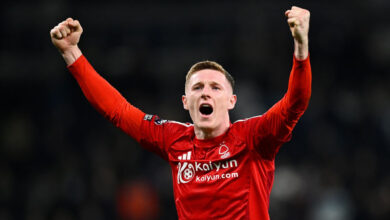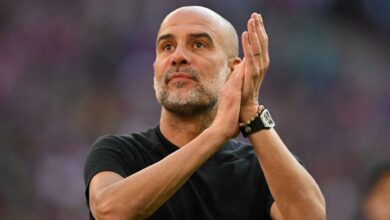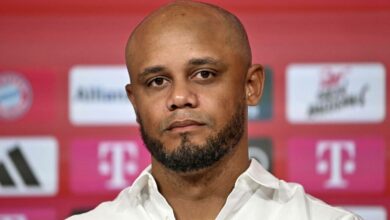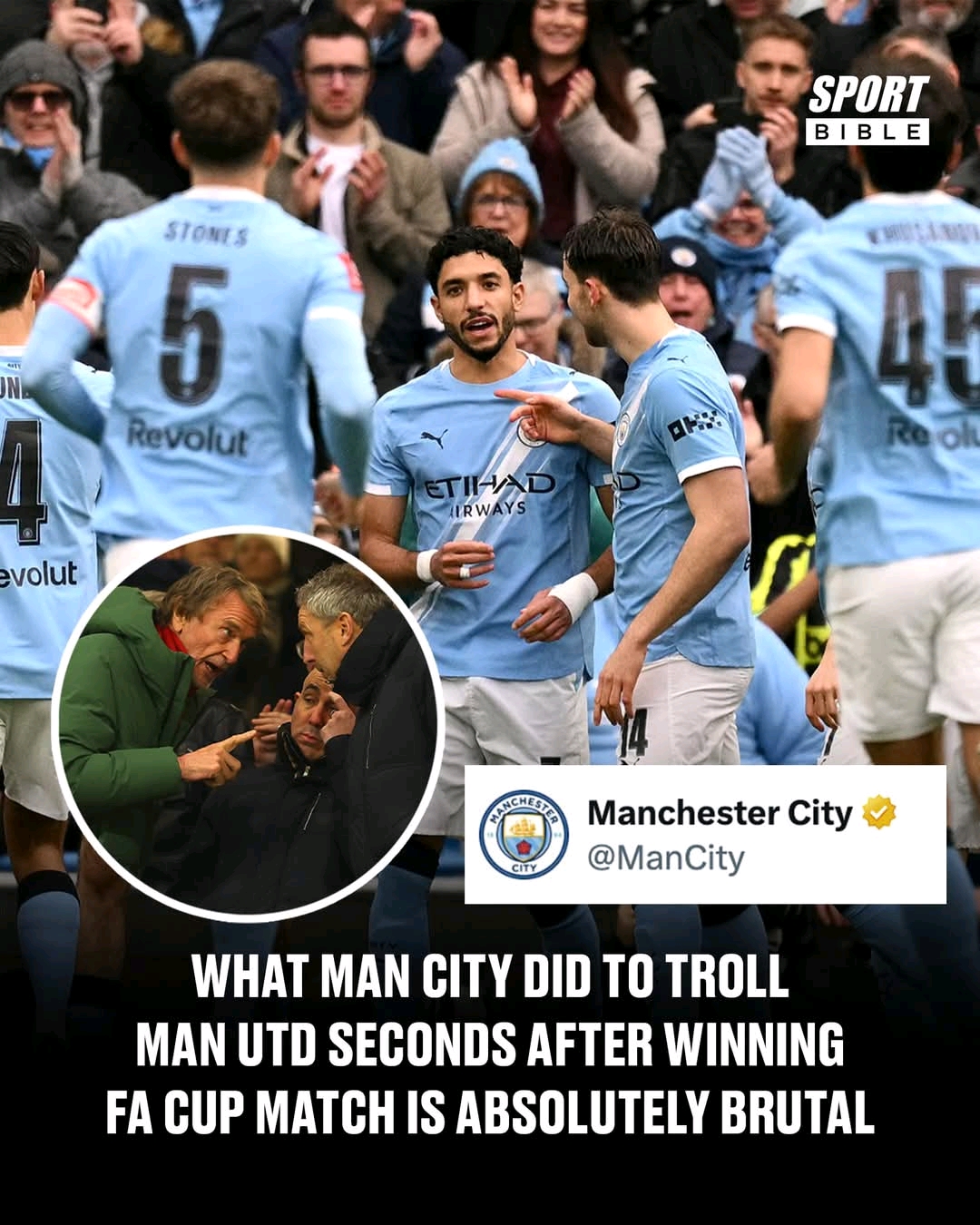
It was another powerful FA Cup night for Manchester City and once again they showed why they remain one of the most dominant forces in English football. Under the calm but intense leadership of Pep Guardiola, City handled their business professionally, defeating Salford City 2-0 to move into the fifth round of the FA Cup. But while the victory itself was expected, what happened moments after the final whistle caught even more attention than the match. It was not a goal, not a tackle, not even a controversial decision. It was a message. A short message. A clever message. And football fans immediately knew exactly who it was aimed at. The game started in a predictable way. Manchester City came out with control, composure and authority.
Salford, a proud League Two side, tried to stay organised and disciplined, knowing that one mistake could be punished. Unfortunately for them, that mistake came early. After just six minutes, pressure from City inside the box forced an unfortunate own goal by Salford defender Alfie Dorrington. It was one of those moments defenders hate. The ball came in fast, bodies were moving, and in the attempt to clear, it ended up in the wrong net. City were 1-0 up almost immediately. From there, Guardiola’s side did what they do best. They controlled possession. They stretched the pitch. They kept the ball moving patiently, waiting for openings. Salford worked hard and defended bravely, determined not to suffer embarrassment. Only weeks earlier, Exeter City had been destroyed 10-1 by Manchester City in the previous round. That result was fresh in everyone’s minds. Salford did not want to be the next headline humiliation. To their credit, they stayed compact and showed courage. They blocked shots, tracked runners and fought for every loose ball. The gap in quality was obvious, but their effort could not be questioned. As the second half progressed, City remained comfortable. They did not panic. They did not rush. They knew that eventually another chance would come. And with nine minutes left, it did. Marc Guehi rose inside the box
and made it 2-0, ending any doubt about the outcome. The Etihad crowd applauded. The tie was finished. Manchester City were through. On paper, it was a routine cup victory. But football rivalries are rarely just about what happens on the pitch. Salford City are not just any lower-league club. They are owned by Project 92 Limited, a group of former Manchester United legends including Nicky Butt, Ryan Giggs, Gary Neville, Phil Neville and Paul Scholes. The famous Class of 92. Their connection to Manchester United is deep and emotional. While Salford are a separate club, everyone understands the link. And that is why what happened next felt intentional. Just seconds after the final whistle, Manchester City’s official social media account posted a simple message: “A win to mark our 41st game of the season.” At first glance, it looked harmless. Just a statistic. Just information. But fans quickly connected the dots. Manchester United were knocked out of the Carabao Cup in the second round by Grimsby earlier in the season. They exited the FA Cup in the third
round after losing to Brighton. They have not played European football this campaign because they lost last season’s Europa League final and finished 15th in the Premier League. As a result, United will play only 40 matches across the entire 2025/26 season. Manchester City had just completed their 41st game. And it was only February. The message was subtle but powerful. City had already played more matches than their rivals would play all season. It was a quiet reminder of who is competing on multiple fronts and who is not. Social media exploded. Fans immediately understood the dig. One supporter wrote that City were cooking the other Manchester club. Another joked that 41 games is already one more than United will complete this season. A third said the admin knew exactly what they were doing by mocking United’s short campaign. It was classic football banter. No direct
mention. No explicit insult. Just numbers. And numbers can sometimes hurt more than words. For Guardiola’s side, a busy schedule is a sign of ambition and success. Competing in the Premier League, domestic cups and European competitions means more matches, more pressure and more opportunities to win trophies. It also means greater depth and resilience are required. Manchester City have built a squad capable of handling that demand. For Manchester United, this season has been about rebuilding. After a disappointing previous campaign, they found themselves without European nights. Fewer matches can sometimes help focus on the league, and to their credit, United are currently sitting fifth in the Premier League table, pushing to return to either Champions League or Europa League football next term. There are signs of recovery. There is optimism. But the reality remains that their season has been shorter and less demanding than their neighbours. The rivalry between Manchester City and Manchester United has always been intense, but over the last decade it has shifted dramatically. United once dominated English football under Sir Alex Ferguson, collecting league titles and trophies with ruthless consistency. City were considered the noisy neighbours. Now, under Guardiola, City have set new standards of excellence. Trebles, record-breaking seasons and relentless
consistency have become part of their identity. United have struggled to match that level. That is why even a small social media post carries weight. It reflects confidence. It reflects power. It reflects awareness of superiority. Some will say it was unnecessary. Others will call it clever. But in football, psychological edges matter. Moments like this keep rivalries alive. They fuel debates. They motivate players and fans. They add spice to future meetings. On the pitch, City’s performance against Salford was calm and controlled. They respected their opponents but never looked threatened. Salford left with pride intact, knowing they avoided humiliation and competed with heart. Their famous owners will have watched with mixed emotions, proud of their club’s fight but aware of the gulf in class.
Manchester City, however, left with progression secured and a statement delivered. Next up for Guardiola’s men is a Premier League clash against Newcastle United. The schedule remains heavy. The targets remain high. Silverware is still possible on multiple fronts. That is the difference a deep, competitive squad can make. For United, the focus stays on securing European qualification. A top-five finish could be enough for Champions League football depending on coefficients. If not, Europa League football would still represent progress. The rivalry will not end here. Football stories always evolve. United may respond with results. City may continue their dominance. But on this particular February evening, Manchester City did more than just win a football match. They reminded everyone of the gap between them and their rivals. Forty-one games. Forty games. A single number can sometimes speak louder than any celebration.