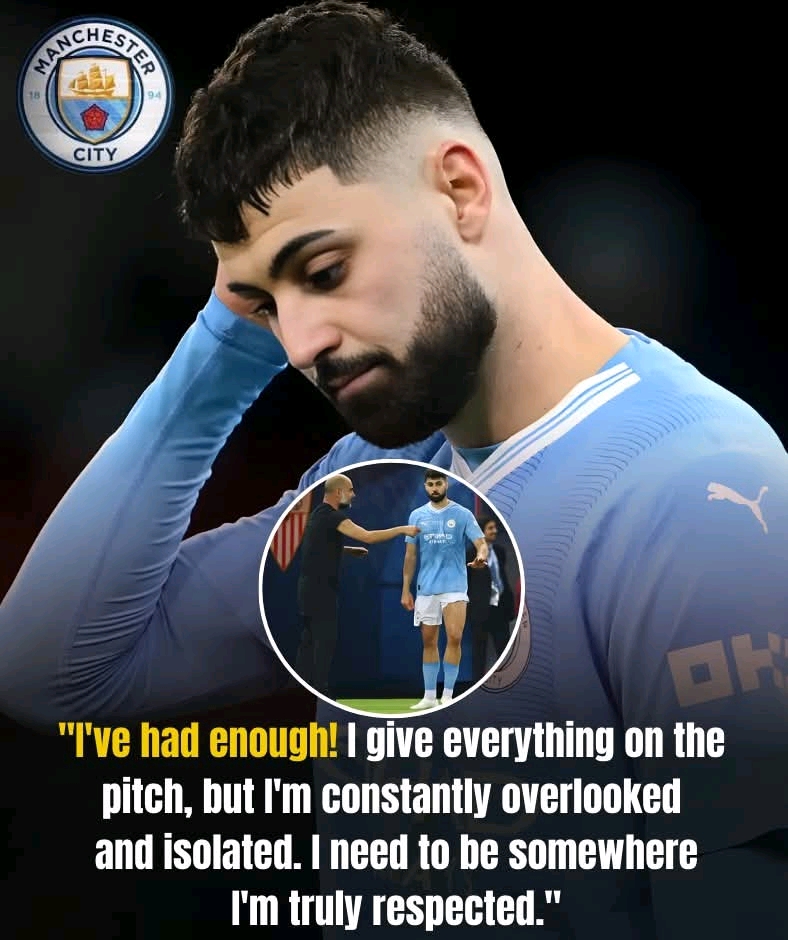
Joško Gvardiol has reached a point that many footballers fear but rarely speak about openly. A point where the love for the game starts to mix with frustration, doubt, and a deep feeling of being unwanted. When the words “I’ve had enough” began to circulate around Manchester City, they did not come from angry fans or rival supporters. They came from inside the club, attached to the name of a player many believed would be one of City’s long-term defensive leaders. Now, that dream is shaking.
When Manchester City signed Joško Gvardiol, it was meant to be a statement. A message to Europe that City were not slowing down, that they were planning for the future while still dominating the present. Gvardiol arrived with a huge reputation, praised as one of the most complete young defenders in world football. Strong, fast, calm on the ball, brave in tackles, and comfortable playing in multiple positions. The price tag was massive, but the belief was even bigger. City fans welcomed him as the next pillar of their defence, someone who could grow into a legend at the Etihad.
But football does not always follow the script.
Behind the trophies, the smiles, and the perfect team image, something has been slowly breaking. Reports now suggest that Gvardiol feels undervalued, misunderstood, and increasingly isolated inside the Manchester City dressing room. A player who once spoke with excitement about learning under Pep Guardiola is now said to be questioning his future at the club. The feeling is not just about minutes on the pitch. It is deeper than that. It is about trust, connection, and belonging.
Those close to the situation say Gvardiol has struggled to find his true place in Pep Guardiola’s system. While Pep is known as a genius, he is also known for demanding absolute tactical obedience. Every movement, every pass, every position must be perfect. For some players, this challenge brings out their best. For others, it slowly drains them. Gvardiol, who played with freedom and confidence before joining City, now feels boxed in, constantly judged, and rarely praised publicly.
He has been asked to play in roles that do not always suit his natural strengths. Sometimes a centre-back, sometimes a left-back, sometimes something in between. While versatility is often praised, it can also be exhausting. Instead of mastering one role, Gvardiol feels like he is constantly adapting, constantly proving himself again and again, while others seem to enjoy more trust and protection from the coach.
What hurts him the most, according to reports, is not even the tactical demands. It is the silence. The lack of reassurance. The feeling that mistakes are remembered longer than good performances. The sense that he is not truly part of the core group. In a team full of stars, small things matter. A word of encouragement. A public show of support. A clear sign that the manager believes in you. Gvardiol feels those things have been missing.
Even more worrying are claims that he feels isolated not just by the coach, but also by some teammates. Manchester City are often described as a tight group, a family built over years of success. But for new players, breaking into that inner circle can be hard. Language barriers, different personalities, and established hierarchies all play a role. Gvardiol is said to feel like an outsider, someone respected professionally but not fully embraced personally.
Social media has only added fuel to the fire. Fans have noticed his body language, the lack of visible joy in celebrations, the quiet expressions after matches. Every small detail is now being analysed. Supporters are divided. Some believe he needs more time, more patience. Others fear that Manchester City may be wasting a world-class talent by not using him properly. And then there are those who worry that City could lose another top player not because of money or trophies, but because of emotions.
The phrase “I’ve had enough” is powerful. It suggests a breaking point. A moment when a player stops fighting internally and starts looking for a way out. Reports claim that Gvardiol is already listening to interest from other top European clubs. Teams in Spain, Germany, and even Italy are said to be monitoring the situation closely. They see an opportunity. A young defender, proven at the highest level, possibly unhappy and ready for a new challenge.
For Manchester City, this is a dangerous situation. Losing Gvardiol would not just be about losing a defender. It would raise uncomfortable questions. How does a club so successful still struggle to keep certain players happy? Is Pep Guardiola’s intense style becoming too heavy for some? Are new signings given enough emotional support, or are they expected to simply fit in or fail?
City fans are stunned because this story does not match the image they see every week. They see a team winning, dominating, lifting trophies. But footballers are human. Success does not cancel emotions. Winning does not erase loneliness. And being part of a great team does not automatically mean you feel valued.
Some supporters have taken to social media to defend Gvardiol fiercely. They argue that he has been solid, reliable, and professional. They point out matches where he played through pain, covered for teammates, and followed instructions without complaint. They question why he is rarely praised compared to others. They ask why his mistakes are highlighted while others are forgiven quickly.
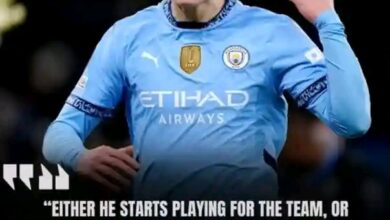
Others believe Pep Guardiola must act fast. Either reassure the player and give him a clear role, or risk losing him. Guardiola has always said he wants players who are happy, players who want to be there. If Gvardiol truly feels done, Pep may not stand in his way. That has been his philosophy in the past. But letting such a talent walk away would still hurt.
Inside the club, there is said to be concern. Manchester City’s hierarchy understand the importance of dressing room harmony. They know that unhappy players can affect the mood, even if results remain strong. They also know that replacing Gvardiol would not be easy or cheap. The market is brutal. Quality defenders are rare, and the best ones cost a fortune.
For Gvardiol himself, this is a deeply personal moment. He came to Manchester City to grow, to learn, to win. He did not come to feel invisible. He did not come to question his worth. Footballers at his level want more than medals. They want respect. They want trust. They want to feel like they matter.
Whether he stays or leaves, this situation will leave scars. If he stays, it will require honest conversations, changes in approach, and renewed belief. If he leaves, it will be remembered as another example of how even the biggest clubs can fail to protect the emotional side of their players.
As the story continues to develop, one thing is clear. Joško Gvardiol’s future at Manchester City is no longer certain. What once looked like a perfect marriage now feels fragile. Fans are holding their breath, waiting for clarity. Will Pep Guardiola step in and fix the situation? Will the club reassure their defender and rebuild trust? Or will this end with Gvardiol walking away, carrying his frustration to a new chapter elsewhere?
Football moves fast, but feelings linger. And right now, the feeling around Joško Gvardiol is one of disappointment, tension, and unanswered questions. The words “I’ve had enough” do not come lightly. They come after long nights of thinking, after silent frustration, after hope slowly fades. Manchester City may still be winning on the pitch, but off it, they are facing a problem that cannot be solved with tactics alone.