Jack Grealish’s name is once again sitting at the centre of English football conversation, but this time the story feels very different from the one that surrounded him during his difficult final months at Manchester City. After a season that has surprised many, moved supporters emotionally, and reshaped opinions about his future, Grealish now looks set for a return to the Etihad Stadium as fresh Everton transfer developments quietly point towards the end of his loan spell at Goodison Park.
For much of this season, Jack Grealish has looked reborn. The uncertainty, frustration, and pressure that once followed him around Manchester City have faded into the background. In their place is a winger who looks confident again, expressive on the ball, fearless when driving at defenders, and visibly enjoying his football. Everton’s supporters have embraced him, David Moyes has trusted him, and Grealish has repaid that faith with performances that remind everyone why he was once considered one of the most naturally gifted players in English football.
Yet football is rarely sentimental for long. Beneath the surface of Grealish’s impressive loan spell, a reality has been forming quietly, and it now appears that Everton are preparing for life after him. Reports linking the club with a £13 million move for Sevilla winger Ruben Vargas suggest that, despite Grealish’s impact, a permanent stay on Merseyside is far from guaranteed.
Jack Grealish arrived at Everton with something to prove. His time at Manchester City had slowly turned from a dream into a battle. Signed for a British record fee, Grealish found himself under relentless scrutiny. Every performance was judged against his price tag. Every quiet game became another talking point. Under Pep Guardiola, he learned discipline, positioning, and patience, but he also lost some of the freedom that once defined his game.
When the loan move to Everton was confirmed, many saw it as a final opportunity. Not just a fresh start, but a chance to remind the football world who Jack Grealish really is. At Goodison Park, he found a manager who believed in him instantly. David Moyes handed him responsibility, encouraged him to play with instinct, and built the team in a way that allowed Grealish to influence matches regularly.
The results spoke for themselves. In 16 Premier League appearances, Grealish registered six goal contributions. But those numbers only tell part of the story. He became Everton’s creative heartbeat, the player who carried the ball forward when the team needed relief, the one who slowed the game when pressure mounted, and the one who lifted the crowd with moments of flair.
For Everton supporters, Grealish felt like a luxury player they had not seen in years. For Grealish himself, it felt like football had become fun again. His confidence grew with every match, and with the World Cup approaching, his performances reignited hopes of an England recall. Gareth Southgate has always valued Grealish’s ability to change games, and a return to top form could not have come at a better time.
But while Grealish was shining on the pitch, Everton’s financial reality remained unchanged. The loan deal included a £50 million option to buy in the summer, a figure that always felt ambitious. Even as Grealish continued to impress, there was a growing sense that Everton would struggle to justify such an investment, especially for a player who will turn 31 next season.
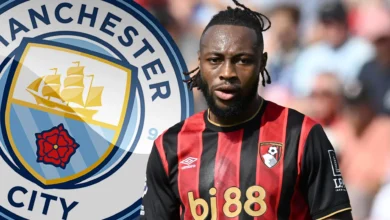
That sense has now been strengthened by fresh reports from Spain. According to ABC Deportes, Everton are preparing a move for Sevilla winger Ruben Vargas in January. The Switzerland international has impressed since joining Sevilla earlier in 2025, contributing seven goals and assists in just 12 matches. Sevilla are reportedly willing to listen to offers starting at £13 million, a figure far more realistic for Everton’s current financial position.
Vargas is younger, cheaper, and would represent a long-term asset rather than a short-term gamble. His profile fits the type of recruitment Everton have increasingly leaned towards under Moyes: players who can grow with the team rather than dominate the wage structure. While Vargas would not replace Grealish like-for-like in terms of style or star power, his arrival would clearly signal that Everton are planning for a future without the Manchester City loanee.
This is not the first time Everton have been linked with alternative wingers this season, but the timing of the Vargas reports feels significant. January is approaching fast, and clubs are already making decisions that will shape their summer strategies. For Everton, committing to Vargas now would reduce any need to stretch finances later to keep Grealish.
David Moyes has been honest about the situation. Despite his admiration for Grealish, he has never suggested that a permanent deal was realistic. Speaking earlier this month, Moyes openly admitted that the £50 million option would be extremely difficult to justify. His words were measured, respectful, but clear. Everton are not in a position to compete financially at that level, especially when age and long-term planning are taken into account.
Moyes explained that even before considering wages, bonuses, and the wider financial picture, the transfer fee alone would push Everton beyond their comfort zone. Paying a club-record fee for a player entering his thirties would represent a major risk, no matter how well he is playing now. From Everton’s perspective, it is not about Grealish’s quality, but about sustainability.
As a result, the most likely outcome now appears to be Grealish returning to Manchester City once his loan spell ends. That raises a fascinating question: what happens next for Jack Grealish?
A return to City does not automatically mean a return to the struggles of the past. In fact, Grealish may come back a very different player. His time at Everton has reminded him of his strengths. He has rediscovered confidence, rhythm, and leadership. Pep Guardiola has always admired Grealish’s work ethic and intelligence, even during difficult periods, and the version of Grealish now playing with belief could yet find a renewed role in City’s squad.
Guardiola has never closed the door on players who leave on loan and return stronger. If Grealish comes back sharper, more assertive, and mentally refreshed, there could still be space for him at the Etihad. City’s squad is constantly evolving, and Guardiola values players who understand his system and can adapt to different tactical roles.
However, there is also the possibility that City see this revival as an opportunity to reshape Grealish’s future elsewhere. A strong season at Everton has rebuilt his market value. Clubs who previously doubted him may now see him as a reliable Premier League performer again. If City decide to sell, they may find more interest than expected, even if Everton themselves step away.
From Grealish’s point of view, the llsituation is bittersweet. He has found happiness at Everton, rebuilt his reputation, and reconnected with fans who appreciate his style. But he also understands the realities of modern football. Loans end. Clubs make strategic decisions. Sometimes success does not guarantee permanence.
What Grealish can take comfort in is that he is no longer fighting doubt. He is no longer a player searching for form. Whether he returns to Manchester City, moves elsewhere, or somehow finds a compromise solution, he will do so as a footballer who has proven he still belongs at the highest level.
For Everton, the priority is balance. Moyes has stabilised the club, restored discipline, and built a team capable of competing without overreaching financially. While losing Grealish would be a disappointment emotionally, the club cannot afford to let sentiment override strategy. A move for Ruben Vargas represents that pragmatic approach.
As January approaches, the story will continue to evolve. Grealish will keep playing, Everton will keep planning, and Manchester City will quietly assess their options. But one thing already feels clear: Jack Grealish’s Everton chapter, however successful, is likely coming to an end.
And when he walks back through the doors at the Etihad, he will not be the same player who left. He will return with confidence restored, belief renewed, and the quiet knowledge that, wherever his future lies, he has reminded the football world of exactly who Jack Grealish is.