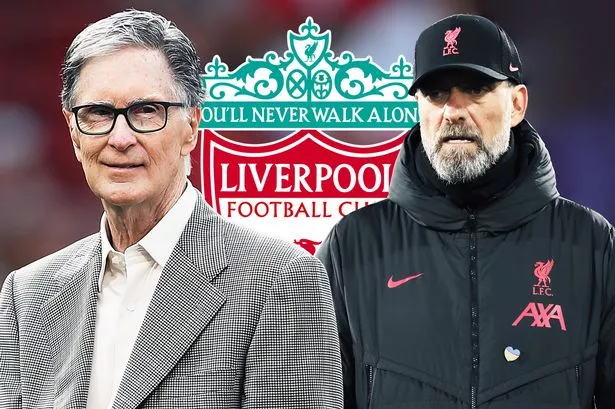
When Jurgen Klopp walked away from Liverpool after nearly a decade of transformational leadership, few imagined his name would resurface so quickly in conversations about the club’s future. Yet as Arne Slot battles through the most turbulent spell of his brief tenure, some supporters have begun to wonder — or even hope — whether the former manager might one day find himself back in the Anfield dugout.
The idea of Klopp returning has been amplified by Liverpool’s alarming collapse in form and by the German’s own recent remarks, which left the door slightly ajar for a possible comeback. While Klopp has not said he intends to replace Slot, his words have generated fresh speculation among fans eager for stability during a period of uncertainty.
This rewritten and expanded analysis explores the mounting scrutiny on Slot, the emotional bond between Klopp and the club he once led to glory, and why the conversation about a stunning managerial return has begun to resurface.
Liverpool’s Decline Under Arne Slot: A Crisis That Demands Answers
The pressure on Slot has escalated dramatically in the weeks following Liverpool’s 3–0 defeat to Nottingham Forest. It was not the loss alone that caused concern, but the trend it symbolized: a team that once prided itself on intensity, cohesion, and relentlessness now looks disconnected and confused.
Liverpool have lost six of their last seven Premier League matches — a disastrous stretch that has dragged them from defending champions to the bottom half of the table before the season’s midpoint. Across all competitions, they have dropped eight of their last eleven games, a collapse that has left supporters worried and pundits sounding alarms.
Slot, appointed after Klopp’s departure, arrived with significant expectations. Tactically astute, composed, and respected across Europe, he was chosen to usher Liverpool into a new era. But 12 league games in, the optimism that accompanied his appointment has evaporated. A title defense that once looked feasible now feels beyond reach. Even a top-four challenge seems unlikely without a major turnaround.
His team appears unsettled, the squad that conquered the Premier League last season suddenly performing far below its potential. Individual errors, slow transitions, defensive fragility, and a lack of creativity in the final third have all contributed to the malaise.
These issues do not necessarily place Slot in imminent danger — the club’s hierarchy is known for patience and long-term planning — but they have left supporters restless. And with restlessness comes speculation.
Fans Begin Whispering Klopp’s Name Again
As Slot’s struggles intensified, social media feeds became flooded with nostalgic memories of Klopp’s reign. In moments of instability, supporters naturally cling to familiarity, and few managers in football history have established as deep a connection with their club as Klopp did with Liverpool.
Bookmakers in the UK have noticed the shift as well. In recent updates, Klopp has emerged as the betting favorite to replace Slot if the club decides to move in a different direction. That alone doesn’t make his return likely — bookmakers simply mirror public sentiment — but it reveals how widespread the conversation has become among fans.
The German remains adored at Anfield. He is not just a former manager; he is an icon, a symbol of belief, passion, and defiance. His fist pumps, his infectious energy, and his ability to revive a broken club still resonate deeply with supporters. His departure last year was heartfelt and emotional, but also respectful — he left not out of conflict, but out of exhaustion.
That emotional connection is the foundation of why, even now, some fans dare to dream about his comeback.
Klopp’s Original Exit: A Promise Not to Manage in England Again
When Klopp announced his decision to leave Liverpool, he made one thing clear: he did not intend to manage another Premier League club. The thought of facing Liverpool from an opposing dugout felt wrong to him, and he said so explicitly.
His loyalty was unquestioned. He reaffirmed that he needed rest, recovery, and space after coaching more than a thousand matches. The intensity of top-level management had taken its toll. At the time, most interpreted his comments as the end of the chapter — perhaps even the end of his club-level managerial career.
But Klopp’s statements over the past several months have left just enough ambiguity to reignite hope.
The Podcast Comments That Changed Everything
The clearest signal emerged during Klopp’s appearance on Steven Bartlett’s Diary of a CEO podcast. While discussing his future, Klopp repeated that he would never manage an English team other than Liverpool. But then he added something else — something that fans have latched onto:
“I said I will never coach a team in England again. That means if it’s Liverpool, theoretically it’s possible.”
Those last two words — theoretically possible — ignited speculation. Klopp was not promising a return, but he was no longer ruling one out. It was a shift, subtle but unmistakable.
The football world is filled with emotional homecomings — Zinedine Zidane at Real Madrid, Max Allegri at Juventus, even José Mourinho at Chelsea and Inter. Fans began to wonder: could Klopp one day follow that path?
But Klopp Is Not Currently Seeking a Return to Management
Even as the speculation grows, Klopp has been consistent in one key message — he does not miss the day-to-day pressure of managing a football team.
Now 58, Klopp has stepped into a new role as Red Bull’s Global Head of Soccer, a position that gives him broad influence without the relentless grind of training sessions, media duties, and week-to-week tactical stress.
His comments paint a clear picture:
He does not miss standing in the rain during long training sessions.
He does not miss press conferences or constant interviews.
He does not miss the emotional battles inside the dressing room.
He values the freedom and renewed energy that his new role gives him.
These statements suggest that although he adores Liverpool, he is enjoying his new life. He is exploring football in a different capacity and discovering a new balance that was impossible during his managerial peak.
As he put it:
“I coached more than 1,080 games. I don’t want to die in a dressing room… Now I’m in a project I really love.”
That does not sound like a man planning an imminent return to the sideline.
The Door Isn’t Shut — But Klopp Isn’t Ready to Walk Through It
Klopp made one more point during his interview: he does not need to make a permanent decision about the future today. He doesn’t need to declare that he is done coaching forever or that he will definitely return.
This uncertainty is what keeps the conversation alive.
At 58, he still has many years ahead if he chooses to return to management. But he also appears content guiding a football empire rather than leading a single team. The choice is his — and no one can predict how he will feel in two, three, or five years.
For Liverpool fans imagining a dramatic reunion, this ambiguity is enough to keep the flame burning.
Why Liverpool Supporters Are Still Turning Toward Klopp
Supporters aren’t simply calling for Klopp because Slot is struggling. The longing for Klopp is emotional, symbolic, and rooted in nearly a decade of extraordinary memories.
Under Klopp, Liverpool experienced:
A Premier League title after 30 years of failure.
A Champions League triumph.
A Club World Cup title.
FA Cup and EFL Cup victories.
Record-breaking seasons, unforgettable comebacks, and a revived identity.
He restored belief at a club that had drifted for years. He brought joy back to Anfield. He built not just a team, but a culture.
Slot, for all his qualities, has not yet created anything comparable. He inherited an aging squad, big expectations, and the immense pressure of following a legend. Now, as results crumble, comparisons have become inevitable — and, for many supporters, painful.
Slot Still Has Time — But Not Unlimited Patience
Despite the frustrations surrounding current performances, Liverpool’s hierarchy is not known for knee-jerk decisions. Slot arrived as a long-term project manager, tasked with transitioning the club into a post-Klopp era. The board is aware of the difficulties he faces and the structural issues he inherited.
Slot also retains credibility from last season’s Premier League triumph — a success that cannot be erased by a difficult few weeks. Many fans still believe he deserves time to implement his ideas fully.
But football does not move slowly. The environment at Anfield is always intense. When results deteriorate rapidly, scrutiny becomes unavoidable.
Slot must find solutions quickly:
Restore the team’s defensive stability
Reignite their attacking creativity
Rebuild player confidence
Strengthen tactical cohesion
If he cannot stabilize the situation soon, the calls for change will continue to grow louder.
Klopp’s Name Will Hover Over Liverpool for Years
Whether or not Klopp ever returns, his legacy will always cast a long shadow over Liverpool’s future. Managers who transform clubs on the scale that Klopp did inevitably remain part of the conversation.
But for now, fans must accept that any dream of a return remains distant. Klopp is not preparing for a comeback, nor is he plotting to replace Slot. He is enjoying his life, adjusting to a new role, and protecting the energy he once poured entirely into Liverpool.
The German himself put it best:
“Only if I’m 100 percent focused, I can do it really good.”
That focus, right now, lies away from the touchline.
Conclusion: A Club Caught Between Past Glory and Present Turmoil
Liverpool find themselves in a challenging moment — not a crisis of identity, but a test of patience and belief. Arne Slot is under pressure, results have plunged, and fans are naturally reaching for comfort in the form of memories. Klopp represents stability, greatness, and the feeling of being unstoppable.
But nostalgia does not fix a team’s form. Slot’s responsibility is to reshape the present, not replicate the past. And Klopp’s role, at least for now, is to cherish his legacy rather than rekindle it.
Whether Slot can recover or not, and whether Klopp ever returns or not, remains to be seen. What is certain is that Liverpool stand at a crossroads — one forged not just by recent defeats, but by the towering legacy of the manager who came before