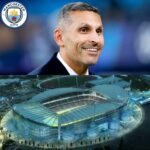
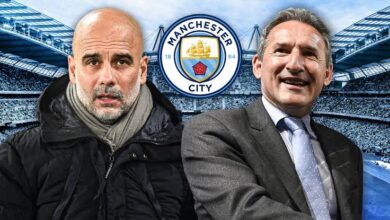
Khaldoon Al Mubarak Unveils $1 BILLION Etihad Stadium Makeover — Ambitious Vision to Turn Manchester City’s Arena Into a Football Mecca Stuns Fans and Premier League
Manchester stood still the moment the news broke. It was the kind of announcement that does not just shake a football club, but sends shockwaves across an entire league and beyond. Manchester City owner and chairman Khaldoon Al Mubarak had officially revealed plans for a $1 billion transformation of the Etihad Stadium, and from that moment, nothing felt ordinary anymore. This was not a routine renovation. This was not a cosmetic upgrade. This was a declaration of intent, power, and vision that instantly redefined what modern football ambition looks like.
For years, the Etihad Stadium has been the beating heart of Manchester City’s rise. It has witnessed titles, records, heartbreaks, and historic Champions League nights. It has seen Pep Guardiola turn football into art and players into legends. But as football continued to evolve globally, Khaldoon Al Mubarak knew standing still was not an option. The world’s biggest clubs were no longer competing only on the pitch. They were competing in technology, fan experience, global reach, and identity. And Manchester City had decided they would not follow that race. They would lead it.
The $1 billion Etihad Stadium revolution is about more than bricks and steel. It is about transforming the stadium into a global football destination, a place that blends sport, entertainment, technology, and culture into one seamless experience. Al Mubarak’s vision is bold, futuristic, and uncompromising. He wants the Etihad to become a world-class football mecca, a stadium that does not just host matches, but tells a story every single day of the year.
The current Etihad has served City well, but football fans around the world are demanding more. They want immersion. They want connection. They want to feel closer to the game than ever before. This is where the new Etihad begins. Under the ambitious plan, matchdays will become fully interactive experiences. Fans inside the stadium will be surrounded by digital innovation. Massive high-definition screens, augmented reality features, and smart mobile integration will change how football is consumed live.
Supporters will be able to access real-time statistics from their seats. They will see player heat maps, tactical breakdowns, instant replays, and exclusive behind-the-scenes footage during games. The stadium will no longer be silent between kick-off and full-time. Every moment will be alive. Every break will offer content. The Etihad will feel less like a venue and more like a living digital ecosystem built around football.
Technology will be at the center of everything. Artificial intelligence will power stadium apps that adapt to individual fans, offering personalized content, recommendations, and experiences. From food ordering to navigation, from merchandise offers to exclusive interviews, everything will be connected. This is football built for the future generation, without forgetting the soul of the game.
Luxury will also reach new heights. Khaldoon Al Mubarak’s plan includes a complete redesign of premium areas. Executive boxes will be rebuilt with better sightlines and comfort. VIP lounges will offer hotel-level hospitality. Corporate guests, legends of the game, celebrities, and loyal supporters will experience matchdays in an environment that matches the club’s elite status. But Al Mubarak has made it clear that luxury is not only for the few. Comfort across the entire stadium will improve, from seating to facilities, ensuring every fan feels valued.
Sustainability sits at the core of this revolution. The Etihad transformation will make the stadium one of the most environmentally responsible football venues in the world. Solar panels, energy-efficient systems, eco-friendly materials, and smart resource management will reduce the stadium’s carbon footprint significantly. Manchester City want to lead not just in football success, but in social and environmental responsibility. This project reflects that belief.
The impact on players will be enormous. Inside the stadium, state-of-the-art locker rooms will be built, designed to maximize recovery, preparation, and comfort. Advanced medical and rehabilitation centers will allow players to recover faster and more efficiently. Training and tactical rooms will use cutting-edge analytics and virtual tools, giving Pep Guardiola and his staff even greater control and insight. The Etihad will become not just a home stadium, but a performance fortress.
For potential signings, this matters. Elite players want elite environments. They want to feel part of something progressive and ambitious. A stadium of this level sends a message louder than any transfer bid. Manchester City are building a future where success is supported by infrastructure that matches their ambitions.
Beyond football, the Etihad’s transformation will turn it into a year-round global entertainment hub. Concerts, international sporting events, esports tournaments, and cultural showcases will all find a home there. The stadium will no longer sleep during the off-season. It will remain alive, active, and profitable, expanding Manchester City’s global brand beyond the pitch.
The economic impact on Manchester itself will be massive. Thousands of jobs will be created during construction. Local businesses will benefit from increased tourism, foot traffic, and global attention. Hotels, restaurants, transport services, and retailers will all feel the ripple effect. The city of Manchester will once again position itself as a global sports and entertainment capital.
Fans have reacted with a mix of disbelief and pride. Social media exploded the moment the news broke. Supporters around the world struggled to comprehend the scale of the investment. Many called it unreal. Others called it inevitable. Messages flooded in praising Khaldoon Al Mubarak’s vision and commitment. There was excitement, anticipation, and one consistent feeling: Manchester City are thinking bigger than anyone else.
Some fans expressed one shared hope. That in all the innovation, the soul of the Etihad is preserved. The noise. The chants. The intimacy. The sense of belonging. Al Mubarak has acknowledged this concern. He understands that atmosphere cannot be manufactured. It must be protected. The project is designed to enhance, not erase, what makes the Etihad special. The goal is to amplify the energy, not sterilize it.
Construction will begin in phases, carefully planned to avoid disrupting matches. Manchester City will continue to play at the Etihad while it evolves around them. This careful execution reflects Al Mubarak’s leadership style. Patient, strategic, long-term. He is not chasing headlines. He is building legacy.
This announcement also carries symbolic weight. Khaldoon Al Mubarak has previously expressed regret over Manchester City’s involvement in the failed European Super League. This project feels like a statement of accountability and direction. Instead of breaking football away from fans, City are investing directly into the fan experience. Instead of closed competitions, they are building open spaces. Instead of shortcuts, they are choosing infrastructure.
To the Premier League, this is a warning. Manchester City are not slowing down. They are not satisfied. They are not content with past success. They are setting standards others will struggle to match. The Etihad Stadium revolution will place City among the most advanced football institutions on the planet.
Globally, clubs will watch closely. Architects, designers, football executives, and governing bodies will study this project. The Etihad could become the blueprint for future stadiums worldwide. A place where technology, tradition, sustainability, and emotion coexist.
For Khaldoon Al Mubarak, this is deeply personal. Since taking charge, he has overseen one of the most dramatic transformations in football history. From infrastructure to youth development, from global branding to competitive dominance, he has reshaped Manchester City step by step. The Etihad revolution feels like the final piece of a long-term vision. A home that truly reflects the club’s journey and ambition.
This is more than a renovation. It is a message. Manchester City are here to stay. They are here to lead. They are here to redefine what a football club can be in the modern world.
When the transformed Etihad finally opens in full, it will not just host matches. It will host experiences. Memories. History. It will be a place where fans do not just watch football, but live it.
And as the Premier League looks on, stunned and silent, one thing will be clear. The future of football is not coming. At the Etihad, it has already arrived.