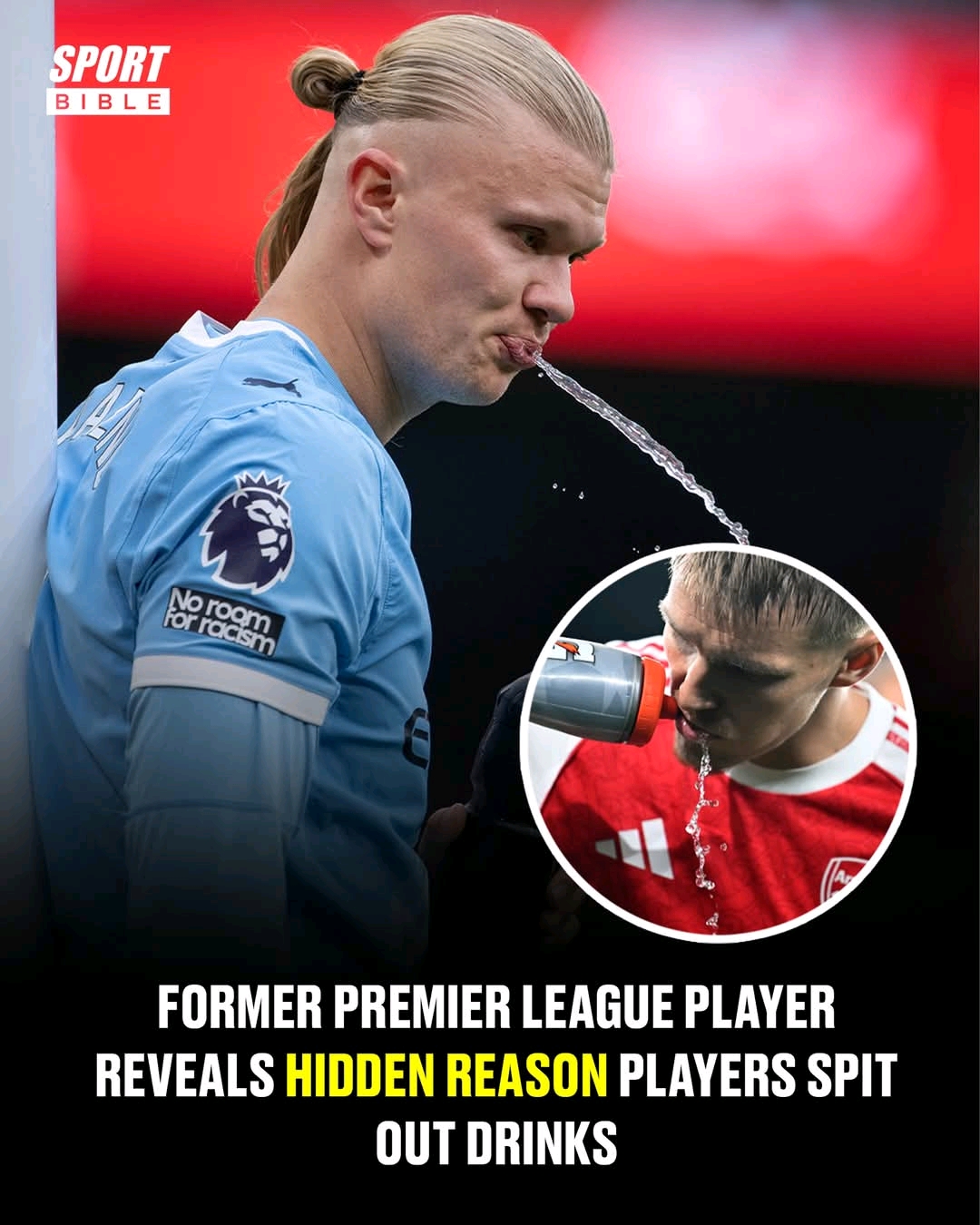
Premier League footballers are often seen performing actions during matches that leave casual fans scratching their heads one of the most puzzling is watching players spit out drinks at the side of the pitch instead of swallowing them it seems counterintuitive why would elite athletes take in a carbohydrate or hydration drink only to immediately expel it the answer lies in a mix of sports science psychology and marginal gains strategies that many top-level players adopt and former Premier League footballer Hal Robson-Kanu has provided a fascinating insight into the practice
Hal Robson-Kanu who played 94 times in the Premier League for Reading and West Bromwich Albion and is perhaps best remembered for his incredible Euro 2016 quarter-final goal for Wales against Belgium has become increasingly active in health fitness and sports science circles since retiring from professional football he regularly posts on social media about training nutrition and performance and has even founded his own hydration drink brand sold in retailers like Selfridges and Sainsbury’s his experience as a top-level athlete gives him a perspective that few outsiders appreciate
According to Robson-Kanu the practice of swishing drinks like Lucozade in the mouth and spitting them out allows players to access the benefits of sugar and hydration without actually ingesting it into their digestive system he explains that during high-intensity matches having a full stomach can be detrimental to performance particularly in a sport like football which involves continuous sprinting rapid directional changes and repeated bursts of energy consuming a sugary liquid can provide a sensory hit that the brain registers as energy and alertness while avoiding any digestive slowdown that might come from swallowing it
Robson-Kanu highlighted that players sometimes follow this method by swishing a carbohydrate drink in their mouth and then spitting it out before consuming something more substantial and easier to digest like a banana the idea is that the sugars activate receptors in the mouth that send signals to the brain increasing alertness reducing the perception of fatigue and even enhancing coordination temporarily this method leverages both physiological and psychological mechanisms to give players a marginal advantage which at the elite level can make the difference between winning and losing
He explained that “a lot of footballers will swish Lucozade in their mouths spit it out and then go and eat a banana because they also know that consuming Lucozade sugars in that form aren’t good for the body” highlighting that it’s not just about hydration but about timing and composition of nutrients in a way that maximizes performance Robson-Kanu emphasized that these techniques go beyond simply drinking water and that different beverages are consumed at very specific times for very deliberate purposes whether it’s providing a mental boost maintaining focus or simply giving the sensation of energy without the digestive load the decisions are informed by sports science research and years of elite playing experience
The psychological benefits of these drinks cannot be underestimated as players often develop routines that signal readiness and mental sharpness swishing a sugary liquid can act as a pre-performance ritual triggering alertness and readiness this has parallels in other sports where athletes engage in behaviors or use specific equipment that primes their cognitive and physical performance even though the act itself might seem trivial to observers on the outside these small rituals are integrated into the wider preparation strategy for the match
Robson-Kanu’s insights shed light on how marginal gains accumulate into substantial advantages over the course of a season football at the highest level is increasingly about attention to detail small edges and informed decision-making on nutrition and hydration these methods demonstrate how elite athletes exploit every possible mechanism to maintain peak performance over ninety minutes and often beyond into extra time or congested fixture schedules
The concept of swishing drinks without swallowing also reflects the growing sophistication of sports science in football clubs across the Premier League teams now employ extensive medical sports science and performance departments dedicated to optimizing hydration nutrition recovery and conditioning every element of a player’s intake is measured and timed to avoid spikes or drops in blood sugar that could compromise performance
From a physiological perspective carbohydrate mouth rinsing has been studied in sports science and shown to improve endurance and cognitive function in athletes without the need for actual ingestion of calories in some cases it can enhance sprint performance maintain reaction time and reduce perception of effort this is particularly useful in football where players must balance anaerobic bursts with aerobic endurance throughout a match
Robson-Kanu has used his own social media platforms to educate followers about these practices explaining in a simple relatable way why what looks like a quirky habit is actually a deliberate performance strategy he illustrates how the combination of sugar receptors in the mouth neural signaling and mental conditioning interact to give players an edge and how elite athletes constantly look for such subtle ways to outperform their competition
Beyond the biochemical effects these hydration strategies also have strategic applications during games substitutes and players on the bench often use drinks to keep themselves alert and engaged before being called onto the pitch a rinse and spit method provides that sensation of readiness without the risk of gastrointestinal discomfort which could impair performance the psychological comfort of knowing one has taken steps to maintain energy can be as important as the physical impact of the sugars
Robson-Kanu also highlights that understanding these hidden strategies offers insight not just for athletes but for enthusiasts and aspiring players it reveals how much preparation goes into elite competition and how the top professionals exploit small details that may not be immediately obvious to the public the science behind a simple gesture like spitting out a drink is actually complex combining neuroscience physiology psychology and tactical awareness
Footballers have a highly honed understanding of their own bodies and responses to stress fatigue and energy demand they know that certain beverages consumed at the wrong time could slow them down increase gastrointestinal load or affect concentration by swishing without swallowing they mitigate these risks while still leveraging sensory and neurological benefits of carbohydrate intake
Robson-Kanu’s own experiences give authenticity to these insights he has seen firsthand how small decisions during training and match preparation affect outcomes over time his goal against Belgium at Euro 2016 may be iconic but it was underpinned by countless hours of attention to nutrition hydration and conditioning throughout the tournament and during his professional career these marginal gains accumulated into performances at critical moments
His explanation also points to a broader philosophy in elite sport the idea that success is rarely down to single interventions but to the accumulation of subtle advantages over time marginal gains in hydration nutrition preparation and mental priming can compound to provide a decisive difference especially in matches where physical output is maximized and the margin for error is tiny
In essence footballers are optimizing every variable they can control hydration sugar intake and sensory stimulation all become tools in performance enhancement and the seemingly strange habit of spitting out drinks is part of a well-considered system designed to sustain energy, sharpen focus, and minimize physical stress
These insights from Robson-Kanu also underline the increasing role of education and technology in modern football where players are taught about the physiological and neurological effects of different foods and drinks teams employ sports scientists to tailor regimes individually and create protocols that maximize output while protecting long-term health
The practical implications are clear for players, coaches, and enthusiasts: attention to detail, understanding subtle physiological cues, and integrating sensory and psychological techniques can make measurable differences in performance and perceived exertion, even if they appear minor to a casual observer
As football continues to evolve, practices such as carbohydrate mouth rinsing demonstrate the sophistication now present at the highest level they remind fans that what looks like a quirk on the sidelines is in fact a highly effective performance strategy used by professionals who are always seeking ways to gain an edge over their competitors
Robson-Kanu’s explanation of why players spit out drinks opens a window into the world of elite football, showing that preparation is meticulous, science-driven, and sometimes counterintuitive the next time a fan watches a player swish and spit a drink they can appreciate the careful calculation behind the gesture, the neurological triggers it engages, and the subtle but tangible advantage it provides in a high-stakes match
Hydration, carbohydrate intake, mental readiness, and physiological efficiency all converge in that single action and it illustrates a broader truth about modern sport: small details executed consistently can deliver significant performance dividends across a long season
Elite players operate at the boundaries of human capability, seeking ways to minimize fatigue, optimize energy utilization, and maintain concentration under relentless pressure the spitting ritual is a microcosm of that philosophy where science, psychology, and practice intersect
By understanding these methods Robson-Kanu provides fans and young athletes with insights into what it takes to succeed at the top level it highlights that elite performance is rarely accidental and often the result of meticulously designed routines that include elements as seemingly simple as swishing a sports drink in the mouth and spitting it out
Whether it’s pre-match, during a break, or on the sidelines the technique ensures players access sensory cues, maintain alertness, and preserve gastrointestinal comfort allowing them to perform at peak efficiency throughout the ninety minutes
In conclusion the act of spitting out drinks is not careless or wasteful but a deliberate, scientifically informed approach designed to enhance performance marginal gains in elite football are pursued relentlessly and even minor actions like this are scrutinized, measured, and optimized for the ultimate goal of winning and maintaining peak athletic output
Hal Robson-Kanu’s insight bridges the gap between fan curiosity and elite practice, showing that the modern footballer combines biological science, psychology, and tactical acumen in every decision including something as simple as what to do with a mouthful of Lucozade in the heat of competition.