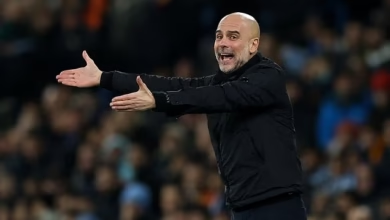
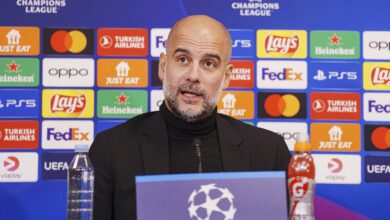
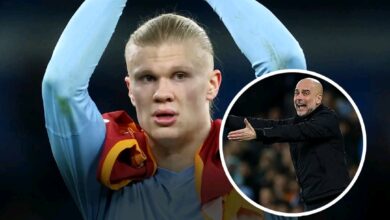
The night before another massive Champions League battle between Real Madrid and Manchester City, the air around Europe felt heavy with expectation, tension, and familiar fear. These are two clubs that do not meet quietly. When they face each other, history comes alive, pressure explodes, and every word spoken before kickoff carries weight. And on this particular night, Pep Guardiola stood in front of the cameras, calm as ever, yet fully aware that every sentence he said would be pulled apart, quoted, debated, and shared across the football world. The questions came quickly, one after another, but the focus was clear. It was not just about the match. It was about Real Madrid. It was about pressure. And it was about Xabi Alonso.
Guardiola did not dodge the topic. Instead, he leaned into it with honesty, empathy, and that familiar mixture of seriousness and dry humour that has made him one of football’s most fascinating figures. He began by speaking about Xabi Alonso, a man he knows well, not just as an opponent but as a colleague and friend from their time together at Bayern Munich. Guardiola’s words were not rehearsed praise. They sounded personal. He spoke like someone who understands exactly what Alonso is going through because he has lived it himself.
He said he empathised deeply with Xabi. He said they worked together, shared ideas, shared moments, shared football. He called that time an incredible experience. And then he shifted the conversation to something bigger, something darker, something every Real Madrid manager must face. Pressure. Relentless pressure. The kind that does not sleep, does not wait, and does not forgive. Guardiola explained that managing clubs like Barcelona and Real Madrid is different from managing anywhere else. The environment is brutal. The expectation is absolute. Everything revolves around winning. Not playing well. Not building something slowly. Not trusting a process. Just winning.
Guardiola said Xabi knows this reality. He knows that at Real Madrid, every match feels like a final. Every mistake is magnified. Every draw feels like a defeat. And every loss feels like the end of the world. Guardiola did not sugarcoat it. He made it clear that at Real Madrid, there is no room for patience. And then he delivered the line that would echo across Europe by morning. He said managing Real Madrid is the most difficult job in football. Not one of the most difficult. The most difficult. Coming from a man who has managed Barcelona, Bayern Munich, and Manchester City, that statement carried serious weight.
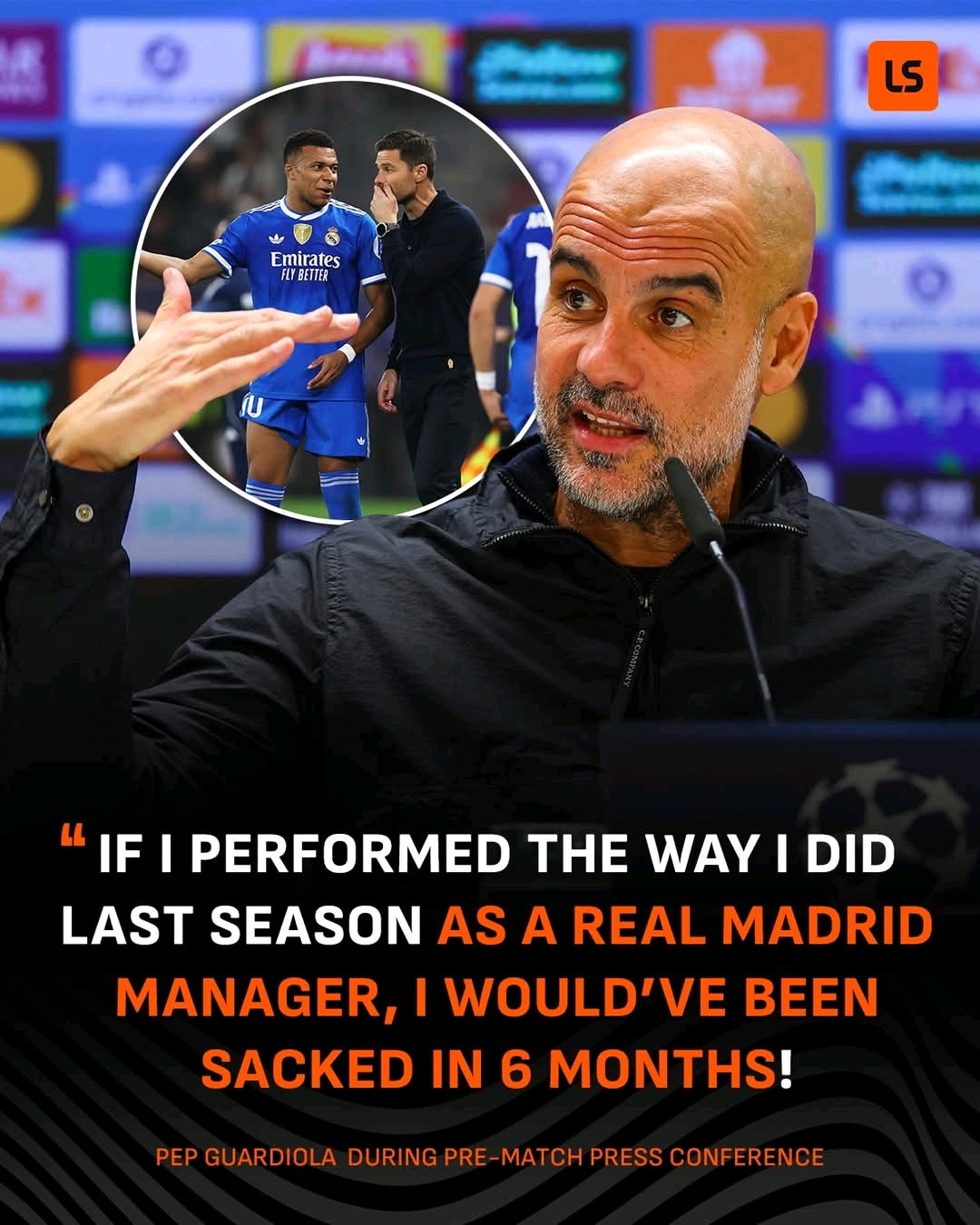
Guardiola then went further. He said something that stunned many people listening. He said that if he had performed the way he did last season while managing Real Madrid, he would have been sacked within six months. Not a year. Not two years. Six months. That sentence revealed everything about the difference between Real Madrid and other clubs. At City, Guardiola has been allowed to build, to fail, to adapt, to transition. At Real Madrid, failure is not part of the vocabulary. Success is demanded immediately, and anything less is unacceptable.
As he spoke, it became clear that Guardiola was not attacking Real Madrid. He was explaining them. He was describing a machine that consumes managers, regardless of their reputation, ideas, or intelligence. At Real Madrid, history weighs heavier than tactics. The badge demands perfection. The fans expect dominance. The board expects trophies. And when those expectations are not met, no explanation is enough.
Guardiola then turned his attention to the football itself. He spoke about last season’s meetings between Manchester City and Real Madrid, acknowledging that those matches were good, intense, and full of quality. But he also admitted that City were in a period of transition at that time. Players were changing. Roles were evolving. The team was still finding its new identity. Now, he believes the situation is different. He said the players City have now can leave a legacy. Not just win matches, but define an era. He spoke about the need to take the next step, the need to prove themselves again at the highest level.
He described the Santiago Bernabeu as a place of mystery, history, and intimidation. Big stadiums, he said, are always special, but some have something extra. Some have a presence that you can feel before you even step onto the pitch. He said coming to Madrid is always a test. Not just of quality, but of character. These are the matches players dream about, but also the matches that expose weakness.
The questions then returned to Xabi Alonso. Spanish football has been buzzing with rumours. Headlines have been relentless. Reports suggesting that Alonso’s job could be on the line if results do not improve. Guardiola was asked directly about Alonso’s future, about whether he believes the Real Madrid manager is safe, about whether he has spoken to Florentino Perez. Guardiola responded carefully, but honestly. He said he wishes Xabi all the best. He said he does not know what will happen. He said he is far removed from the situation. He said he has not spoken to Florentino. He said nobody has told him that the upcoming match would be Alonso’s last.
But then he spoke the truth that everyone already knows but few want to say out loud. He said that if you do not win big games at Real Madrid, things get difficult. Simple. Brutal. Unavoidable. He said Xabi understands this better than anyone. He is in control. He knows exactly what the job demands. Guardiola then delivered another powerful line. He said that to beat Real Madrid in the Champions League, it is not enough to be better. You have to be much better. That sentence alone explains why Madrid have dominated Europe for decades. They do not just punish mistakes. They punish hesitation. They punish doubt. They punish teams that are not brave enough.
And just when the press conference felt heavy, serious, and intense, Guardiola did what Guardiola always does. He smiled. He relaxed. And he dropped a sentence that he knew would explode on social media. A sentence that would become the headline. A sentence that would be replayed again and again. He said, “Let Xabi pee with his own.” It was classic Guardiola. Strange. Funny. Unexpected. A metaphor nobody asked for but everyone loved. He added that Xabi would not be peeing cologne, but that it would be fine. And then he said, almost laughing, “There’s your headline.
The room erupted. Journalists laughed. Cameras clicked. And just like that, Guardiola had turned a tense press conference into a viral moment. But beneath the joke, the message was clear. Leave Xabi alone. Let him deal with his own situation. Let him handle his own pressure. Let him fight his own battles. Guardiola was not mocking. He was protecting. He was defending a fellow coach who is learning the hardest job in football the hard way
As the press conference ended, the mood around the upcoming match shifted slightly. It was no longer just City versus Madrid. It was Guardiola versus the Bernabeu. It was Alonso versus expectations. It was legacy versus survival. For Manchester City, the match represented another chance to prove they belong among Europe’s giants year after year. For Real Madrid, it represented something deeper. It represented identity. Authority. Pride. And for Xabi Alonso, it represented something even more personal. Proof. Proof that he belongs. Proof that he can handle the pressure. Proof that he can survive in the most unforgiving job in football.
Guardiola knows this world better than most. He has lived under pressure. He has been criticised. He has been doubted. He has been praised. He has been worshipped. And he has been questioned. But even with all his experience, even with all his success, he admits that managing Real Madrid is different. It is heavier. It is louder. It is more dangerous. And that is why his words carried so much meaning.
In the days leading up to the match, fans debated his comments endlessly. Some agreed. Some disagreed. Some felt he was exaggerating. Others felt he was understating the reality. But nobody ignored him. Because when Pep Guardiola speaks about football, people listen. And when he speaks about Real Madrid, they listen even harder.
This Champions League clash was never going to be just another game. It was a collision of philosophies. A collision of histories. A collision of expectations. And thanks to Guardiola’s honesty, humour, and empathy, it became something more. It became a reminder of how cruel football can be at the highest level. How little margin there is for error. And how even the smartest, most talented managers are only ever one bad result away from disaster at the biggest club in the world.
As kickoff approached, one thing was clear. Guardiola respected Real Madrid. He respected their history. He respected their power. And above all, he respected the pressure they place on anyone brave enough to sit on that bench. He had been there. He had felt it. And he knew exactly what Xabi Alonso was facing.
And in that moment, before the whistle blew, before the ball rolled, before the noise of the Bernabeu swallowed everything, Pep Guardiola had already delivered one of the most honest press conferences of the season. Not with tactics. Not with team news. But with truth.