Man City have been accused of “bending the rules” and something is finally being done.

Football is a game of passion, sweat and heart, but sometimes it is also a game of mind games, tricks and silent strategies that people don’t see with their eyes but feel deeply in their hearts. What happened at the Etihad Stadium between Manchester City and Leeds United was not just a Premier League match. It was a battlefield of brains, a long chess match where one manager accused another of bending the rules in the shadows of football. The world saw goals, tackles, tension and last-minute drama, but behind everything, there was a very loud elephant in the room that Daniel Farke refused to ignore. And because of his words, football lawmakers are now considering changing the entire structure of the sport.
It was a cold evening and the crowd was roaring, the blue side of Manchester shouting with confidence, and the Leeds fans singing with hope. When Man City took a 2-0 lead early, many people thought the game was already a closed chapter. They believed Leeds would collapse like many other newly promoted teams who come to the Etihad and return home wounded. But football is never written until the last second. Leeds refused to die. They pushed, they fought, they pressed with fire, and before anyone could blink, they shocked the whole stadium by coming back and making the score 2-2. Pep Guardiola, one of the smartest managers ever, did not look comfortable. He looked stressed. He looked like a man whose perfect plan suddenly had holes in it.
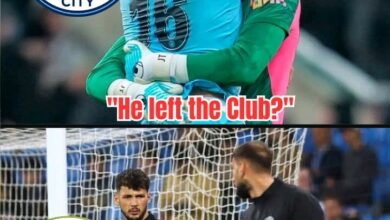
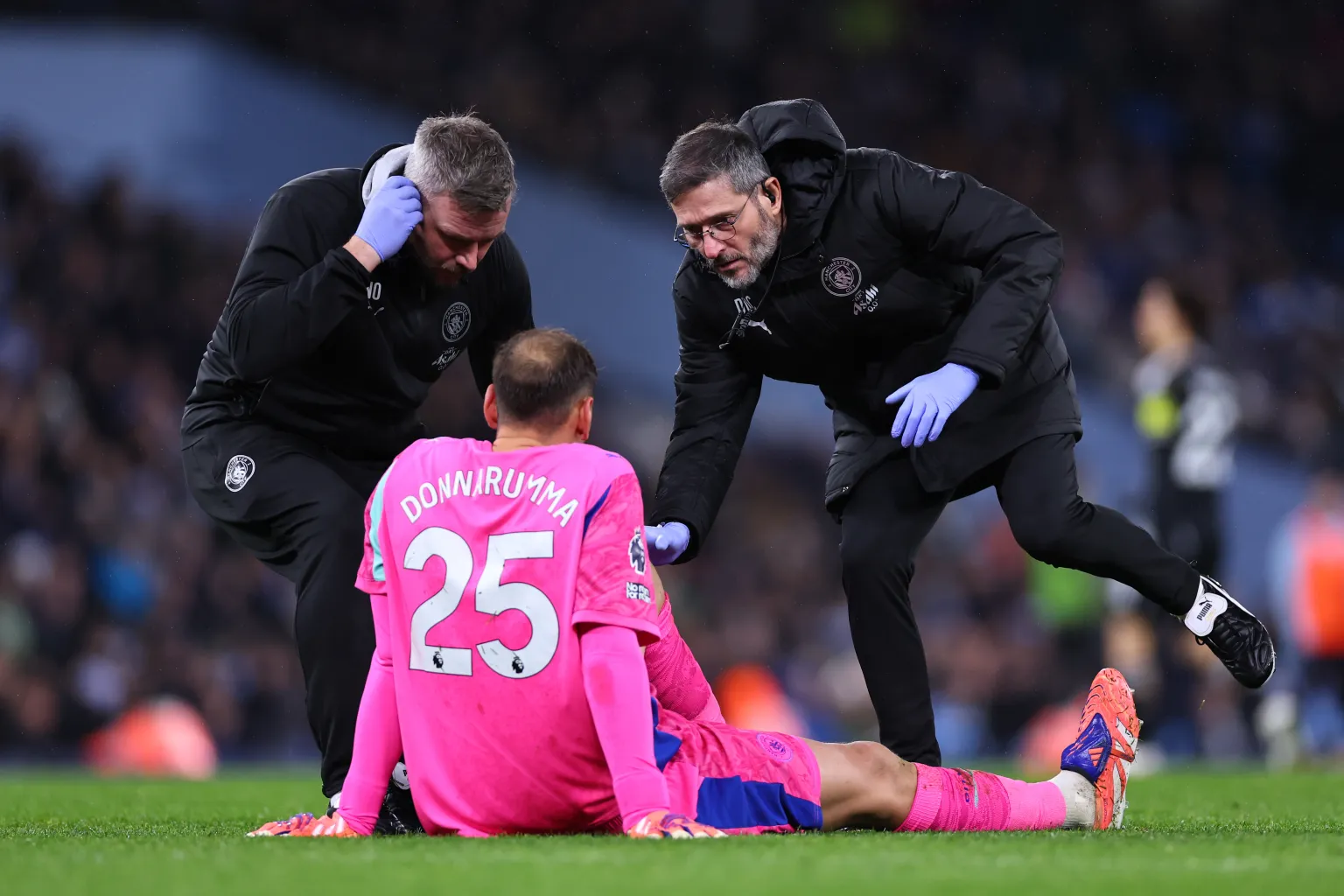
Then came the moment that started everything. Gianluigi Donnarumma, Manchester City goalkeeper, suddenly went down holding himself on the grass. The medical team ran in, two medics kneeling beside him, treating him like he was in serious pain. But the Leeds bench didn’t buy the performance. And their manager Daniel Farke especially did not believe for one second that Donnarumma was seriously hurt. Because while the goalkeeper was receiving treatment, Pep Guardiola quickly used the opportunity to bring his players together and talk to them, send instructions, change tactics and reorganize the match. The players listened carefully, heads down, eyes sharp, like soldiers waiting for a battle command. It was not a normal injury break. It was a tactical team meeting.
The Leeds players watched and felt boiling anger inside. Farke stood on the touchline shaking his head, feeling like somebody just outsmarted him in a way that had nothing to do with fair play. When Donnarumma stood up easily and continued playing normally like nothing had ever happened, the Leeds bench exploded in frustration. To them, it was not an injury. It was a trick. It was a mind game. It was what Farke called bending the rules.
And that one break changed everything. Manchester City came back with a new rhythm, with a new shape, with a new plan. Leeds were pushing for the winning goal, thinking they were close to a miracle, but City now looked like a different team. They took control of the ball, pushed Leeds back, hammered them again and again. And in the last minute of stoppage time, Phil Foden scored the winner, turning 2-2 into 3-2 and causing heartbreak for the newly promoted team who had fought with bravery. The blue side exploded with celebration. The white side collapsed with disbelief. Manchester City had survived. Leeds had been stabbed in the final seconds.
But when the match finished, that was when the real drama began. Daniel Farke walked onto the pitch, angry, hurt and ready to talk. He shook hands with Pep Guardiola, but his mind was not at peace. He went straight to the media, and he didn’t speak like a man giving a normal interview. He spoke like a man exposing a secret. He said very loud words that shook football in England. Everyone knows why Donnarumma went down, right? The elephant in the room. He didn’t hide anything. He went straight at Manchester City like a bullet.
Related Posts:





He said you can fake an injury to get extra team talks. And if it’s within the rules, it is smart. But is it fair play? No. And then he added something that made the situation even bigger. If we don’t teach footballers about sportsmanship and fairness, and instead we allow them to bend rules for advantage, then what are we teaching in this game?
These comments were not just frustration. They were a public warning. He was saying that one of the biggest clubs in the world was using loopholes in football laws to get tactical benefits. And he didn’t stop there. He said he asked the fourth official if they could do anything about the situation and the response was that their hands were tied because the rule for outfield players doesn’t apply to goalkeepers. If an outfield player goes down and needs treatment, he has to leave the pitch for 30 seconds. But goalkeepers do not have to leave. And that loophole allowed Pep to do what he did.
Those few minutes of Donnarumma on the grass changed the whole match. Everyone saw that. And suddenly the football lawmakers at the top of the sport decided to start discussing something that could change football forever. A new rule that would force a team to remove one outfield player temporarily if the goalkeeper goes down for treatment. That means you cannot use the goalkeeper injury break as a tactical meeting anymore. It takes away that secret weapon.
At first the idea sounded like just a conversation. But quickly reports came out saying that there was support for it inside the football lawmaking room. It was not something dismissed or ignored. It was taken seriously. It became a hot topic. Some even suggested a second idea — that players should be banned from going near the touchline when a goalkeeper is being treated so that no tactical instructions can be given. Both ideas were born from that moment in the match. One shout from Daniel Farke turned into a rule change that now has the whole Premier League talking.
The debate is not small. Some say Pep Guardiola did nothing wrong. They say he used the rules smartly, like a genius. Others say football should not allow loopholes to become weapons. Some praise City for being intelligent. Others accuse them of destroying the spirit of fair play. And in football, when Manchester City is involved — when their dominance and power is mentioned — the whole world always has something to say. Some people are tired of their success. Some people are waiting for any reason to criticize them. So this situation only added fuel to the fire.
On Match of the Day, Danny Murphy, a former Premier League star, supported the idea completely. He said the change should happen quickly. If a keeper goes down injured, one outfield player should go off. Then it is fair for everybody. No team talk advantage. No tactical reset. A small change, but the difference will be huge.
And while all the debates continued, inside Leeds United the pain of defeat was deep. They fought so hard to come back from 2-0 down, but they were killed in the last seconds. And knowing that the turning point happened during a moment they believe was a trick made it even more painful. It wasn’t just a loss. It was a heartbreak mixed with anger. Farke looked into Donnarumma’s eyes at full-time when they spoke on the pitch. It was not a friendly conversation. It was a silent message. It was a conversation of a man who felt robbed and another who felt superior.
In Manchester City’s dressing room, it was celebration and relief. They know they escaped danger. They know Leeds gave them one of the toughest fights of the season. And inside that dressing room, there would definitely be a conversation about the injury break moment. For some it will be called smart. For others it will be called survival. For outsiders it is controversy.
Football is emotional. Football is war disguised as a sport. And sometimes football is a classroom — where rules are not just followed, they are stretched to the limit. Pep Guardiola is one of the smartest tactical inventors in football history. His brain is a weapon. Daniel Farke is a fighter who refuses to accept defeat silently. When two football minds like these clash, something big always happens.
Now the lawmakers of the sport are sitting in rooms discussing new regulations because of this one Premier League game. Imagine that — one injury break in the 77th minute of a match is now shaking the whole football world. The Premier League might soon introduce a change that affects every club, every match, every goalkeeper, every manager. All because of this one match. And if the rule change becomes official, the whole world will remember the moment when Donnarumma went down and Pep gathered his players. That moment might become history — the last time a manager ever used a goalkeeper injury to reset tactics.
Leeds may have lost the match, but they might have changed football forever. Daniel Farke did not win three points, but he might win a new law across the world. And that is why this match will be remembered for years, not because of Foden’s late winner, not because of the five goals, not because of the comeback, but because of the controversy that created a wave of discussion from dressing rooms to boardrooms to FIFA halls.
Some will call it football evolution. Some will call it anti-City agenda. Some will call it justice. Some will call it emotion. But one thing is sure — this story is not finished. Because once new rules enter football, they create new wars, new strategies, new complaints and new ideas. And when the Premier League changes something, the whole world usually follows.
Manchester City will continue winning. Leeds will continue fighting. Pep Guardiola will continue being the master of football brains. Daniel Farke will continue speaking his truth. And the fans will continue arguing in bars, in Twitter spaces, in comment sections, in stadiums, because football is not just a sport — it is noise, it is chaos, it is love, it is heartbreak, it is anger, it is joy, it is war and peace at the same time.
And in the heart of all the noise stands one unforgettable memory. Donnarumma lying on the grass. Guardiola whispering tactics to his soldiers. Farke standing on the touchline, boiling inside. And football lawmakers somewhere far away listening, writing notes and planning something big. Football changed that night — and the world will soon feel it