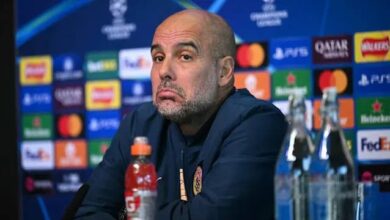
Man City legend Vincent Kompany beats Pep Guardiola: “He’s the best of the past at Etihad” 👉 Read the full story to see Kompany’s comments

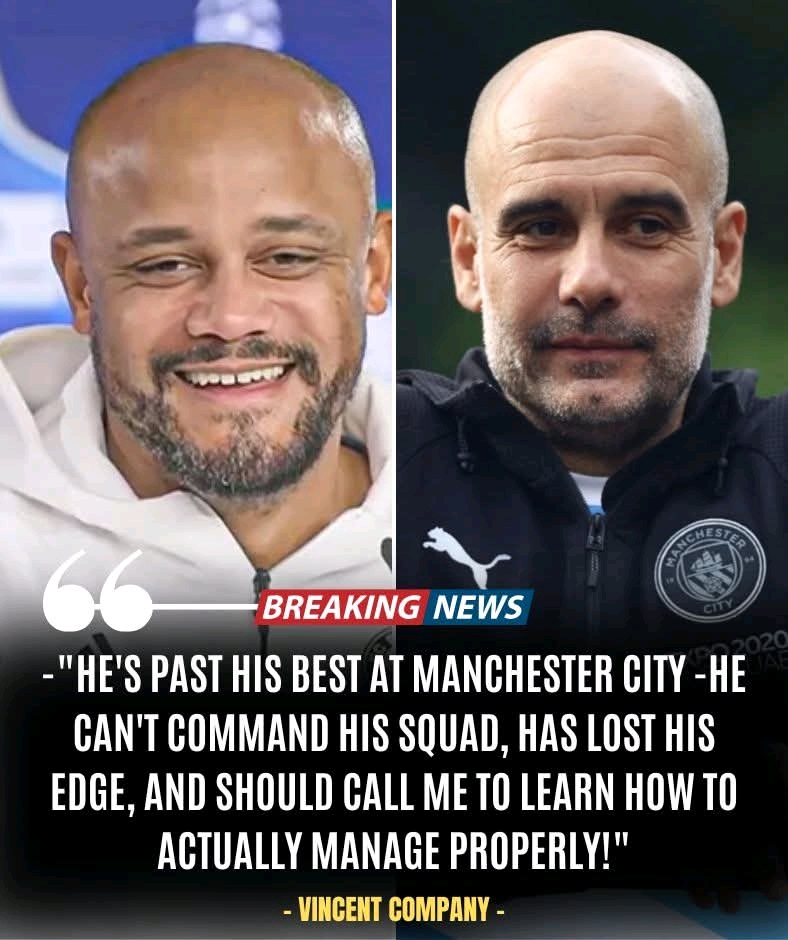
The football world was thrown into chaos when a Manchester City legend spoke words that nobody expected to hear, especially not about Pep Guardiola. Vincent Kompany, a man whose name is carved into the history of the Etihad Stadium, a captain who lifted trophies, led battles, and defined an era, has now ignited one of the most explosive debates Manchester City fans have faced in years. His comments were sharp, confident, and impossible to ignore. According to Kompany, Pep Guardiola is no longer the standard of the present at Manchester City. Instead, Kompany described him as “the best of the past” at the Etihad, words that cut deep and landed hard.
For many supporters, Pep Guardiola is untouchable. He is the architect of City’s dominance, the mastermind behind record-breaking seasons, historic title wins, and a style of football admired across the world. But Kompany’s comments did not come from an outsider. They came from a man who bled Manchester City blue, a leader who understands the club’s soul, expectations, and hunger better than almost anyone alive. That is why his words carried such weight.
Kompany did not speak with anger. He spoke with authority. He spoke like someone who believes the standards at Manchester City have shifted, and not in a good way. When he suggested Guardiola has exceeded his limits and even hinted that Pep should call him to learn how to truly manage, the shockwaves spread instantly. Social media exploded. Fans argued late into the night. Former players, pundits, and journalists rushed to pick sides. Was this arrogance? Was this truth? Or was this the start of a new rivalry nobody saw coming?
To understand the power of Kompany’s words, you must understand who he is to Manchester City. Vincent Kompany was not just a defender. He was the spine of the team. He was the leader in the tunnel, the voice in the dressing room, the man who stood firm when City were doubted, mocked, and dismissed. He captained City through their transformation from challengers to champions. His goals, tackles, and presence defined an era before Guardiola ever arrived.
When Pep Guardiola joined Manchester City, Kompany was already a legend. Their relationship was built on mutual respect. Pep admired Kompany’s intelligence and leadership. Kompany respected Pep’s ideas and ambition. But as time passed, Kompany’s role faded. Injuries, rotation, and tactical changes slowly pushed him to the edges. Eventually, Kompany left, and Guardiola’s City moved forward without him.
Now, years later, Kompany has returned to the football spotlight as a manager himself. He has tasted leadership from the touchline, not just the pitch. He understands pressure from a new angle. And with that experience has come confidence, maybe even boldness. When Kompany speaks now, he speaks not only as a former player, but as a coach who believes he understands the game deeply.
Related Posts:


His statement that Guardiola is “the best of the past” was not random. It was loaded with meaning. It suggested that while Pep’s achievements cannot be denied, his current methods may no longer be enough. That his control, once praised, may now be suffocating. That his obsession with perfection may have crossed into stubbornness. For a manager who prides himself on evolution, this accusation cuts deeply.
Kompany went further by implying Guardiola has gone beyond his limits. In football terms, that can mean many things. Tactical overthinking. Rotating too much. Failing to trust players. Losing the emotional connection with the dressing room. Manchester City fans have seen moments this season where things have not looked smooth. Strange selections. Public criticism of players. Growing tension inside the squad. Kompany’s words poured fuel on an already burning fire.
The reaction across the football world was immediate and fierce. Some fans accused Kompany of disrespect. They argued that without Guardiola, City would never have reached these heights. They reminded everyone of the trophies, records, and dominance Pep delivered. To them, Kompany’s comments felt like betrayal.
Others quietly agreed. They pointed out that Guardiola’s City no longer feel unstoppable. That rivals have caught up. That fear has faded. That mistakes are becoming more common. They believe Kompany said what many were afraid to admit. That football moves fast, and no manager stays ahead forever.
Former players also weighed in. Some defended Pep, calling him a genius whose ideas still shape modern football. Others admitted that Guardiola’s style demands total obedience, and when players stop responding, problems arise. Several pointed out that Guardiola’s greatest strength has always been adaptation, and if Kompany’s criticism hurts him, it may push Pep to evolve again.
What makes this situation even more dramatic is the idea of a manager-versus-manager rivalry. Kompany is no longer just a City legend watching from afar. He is an ambitious coach with his own ideas, his own philosophy, and his own desire to prove himself. When he suggests Guardiola should call him to learn how to manage, it is not just talk. It is a declaration. A statement of belief in himself.
Pep Guardiola, for his part, has remained publicly calm. He has not fired back. He has not mocked Kompany. But those who know Pep understand that silence does not mean indifference. Guardiola is intensely competitive. He remembers every criticism. Every doubt. Every challenge. Kompany’s words will not be forgotten.
Inside Manchester City, this debate adds another layer of pressure. Players hear everything. They read headlines. They feel the tension. When a club legend questions the manager, it creates uncertainty. Whose side do you take? Do you trust the past or the present? Unity becomes harder to maintain when voices from within history speak loudly.
Guardiola has always believed that legacy is built in the present, not protected by the past. He knows football does not wait. If results drop, respect fades quickly. Kompany’s comments remind him of that reality. They serve as a warning that even legends can become critics.
For Kompany, the risk is also high. Speaking against Guardiola invites scrutiny. If Kompany’s managerial career struggles, critics will remind him of these words. They will say confidence turned into arrogance. They will ask whether he backed up his talk. In football, words live forever.
Yet Kompany does not appear afraid. His confidence suggests he believes the future belongs to those willing to challenge greatness, not worship it. He sees himself as part of the next generation. A leader shaped by the past but not controlled by it.
Manchester City fans are now caught in the middle. Loyalty pulls them in different directions. Kompany gave them unforgettable moments. Guardiola gave them dominance. Choosing between them feels impossible. Perhaps that is why the debate burns so fiercely.
As the season continues, every Manchester City result will be viewed through this lens. A win will be seen as Guardiola proving he is still the best. A loss will be used as evidence that Kompany was right. The pressure will only grow.
Football history is filled with moments like this, when legends clash across generations. Sometimes they spark decline. Sometimes they inspire renewal. What happens next at the Etihad could shape the club’s future far beyond this season.
One thing is certain. Vincent Kompany has spoken, and the silence around Pep Guardiola has been broken. The debate is alive. The tension is real. And at Manchester City, the battle between past, present, and future has officially begun.