Man City SECRETLY REACH AGREEMENT to recruit a superstar striker to partner with Erling Haaland — Pep Guardiola unexpectedly spoke out with a cryptic message, while the name Marcus Rashford left fans speechless, divided, and questioning: could the most “unbelievable” transfer in English football history be about to happen
The Premier League woke up to chaos on January 2, 2026. News spread like wildfire across social media and football forums, sending Manchester City fans and rival supporters alike into a state of disbelief. The headline was bold, simple, and explosive: Man City had quietly reached a secret internal agreement to recruit a superstar striker to partner with Erling Haaland. Just the words were enough to spark instant debate, shock, and excitement. Who could this striker be? How could City pull off such a move without the football world noticing? And what would it mean for the rest of the Premier League?
The club had always been ambitious, pushing boundaries both on and off the pitch. Pep Guardiola’s Manchester City was a team built on precision, intelligence, and tactical innovation. They had dominated English football with an almost surgical level of control. But behind the polished headlines and flawless records, there were challenges. Haaland, the Norwegian goal machine, had been carrying more than his fair share of the attacking load. His goals were unstoppable, his presence magnetic, but he was only one man, and football is never a one-man show. Guardiola knew that relying on Haaland alone left the team vulnerable — opponents had started analyzing patterns, defenses adapted, and injuries were always lurking in the background. The Etihad hierarchy, alongside Guardiola, had quietly been planning a contingency, something daring, something bold, and something that could change the narrative of Manchester City football forever.
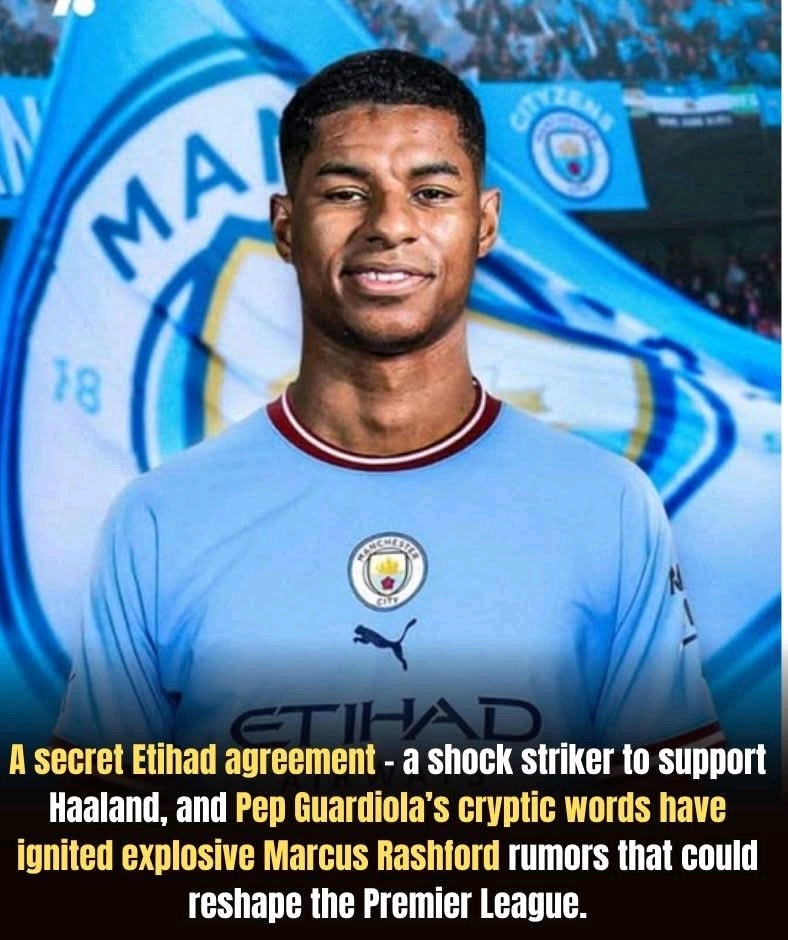
The real shock came when insiders whispered a name that no one could have predicted. Marcus Rashford. The very same Marcus Rashford who had grown up idolizing Manchester United, the England international who had long been a symbol of Old Trafford. For decades, Rashford was a Red. He embodied the United spirit, a player whose every goal felt like a personal message to the club’s fans. And now, rumors suggested, he could cross the city divide and don the sky blue of Manchester City. The idea alone was enough to split opinions across Manchester and the footballing world. Shock. Anger. Excitement. Anticipation. Every emotion was present, all at once.
Rashford’s story had been fascinating in itself. After flourishing as a youth at Manchester United, he faced challenges, injuries, and moments of uncertainty. His current loan spell at Barcelona had revived his reputation. The Catalan fans had seen flashes of brilliance, pace, power, and finishing that reminded everyone why Rashford had once been hailed as one of England’s brightest stars. Scouts and insiders had watched every move, every sprint, and every goal. And now, whispers suggested that Manchester City had made a move, quietly negotiating terms that would see Rashford join them, possibly by the end of the season. It wasn’t just speculation; sources close to the Etihad insisted that a verbal understanding had been reached. While nothing was finalized on paper, the roadmap was clear, and the plan was precise.
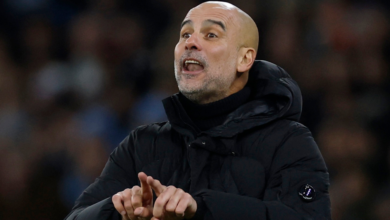
Pep Guardiola, ever the tactician, remained enigmatic in public. When pressed about the swirling rumors, his carefully chosen words did more to fuel the fire than to calm it. “The club knows exactly what we need. If the right player becomes available… anything is possible,” he said, a line that seemed simple but carried weighty implications. For City fans, the statement was thrilling, a hint at ambition and foresight. For United fans, it was a punch to the gut. Social media erupted within seconds. Hashtags trended. Memes spread. Fans debated in forums and on Twitter. The Premier League landscape had been shaken in the space of a single press line.
The Etihad had long been a fortress of football innovation. Guardiola’s methods, meticulous training, and intense tactical sessions had transformed City into one of the most feared teams in Europe. But even the most powerful teams face moments of vulnerability. Haaland, unstoppable as he was, could not carry every attack indefinitely. Injuries, fatigue, and the mental strain of constant pressure had always been a concern. The decision to recruit a new striker was not just about goals; it was about balance, sustainability, and evolution. City’s scouts were tasked with finding someone elite — versatile, fast, strong, and intelligent. Someone who could not only partner Haaland but elevate the entire squad.
Rashford fit the description in ways that were undeniable. He was quick, technically brilliant, and capable of playing across multiple forward positions. His pace could stretch defenses, his finishing could break games open, and his intelligence on the pitch meant he could link play seamlessly with Haaland. Yet the cultural shock of the move was undeniable. Crossing the city divide, moving from United to City, was not just a transfer; it was a seismic shift in the narrative of English football. Old rivalries, deep-rooted traditions, and passionate fan identities were at stake. For some City fans, it was an exciting gamble; for many United supporters, it was an unthinkable betrayal.
Despite the controversy, insiders emphasized that the so-called secret agreement was more strategic than emotional. The club was outlining a roadmap, preparing for the possibility of signing a top-level striker either in January or during the summer transfer window. The intention was clear: maintain domestic and European dominance while mitigating the risk of over-reliance on Haaland. Whether Rashford would be the final choice remained uncertain, but the fact his name persisted suggested that City were willing to challenge history, rivalries, and convention if it meant ensuring their footballing future remained untouchable.
Manchester City had a history of bold, sometimes shocking decisions. From record-breaking transfers to groundbreaking tactical moves, the club had always sought to stay ahead of competitors. The Rashford rumors fit perfectly into this narrative — strategic audacity combined with tactical genius. Guardiola’s vision had never been limited by tradition; it was expansive, fluid, and sometimes controversial. Bringing in a player like Rashford would be disruptive, yes, but it would also be transformative. Imagine the scenes at the Etihad: Haaland and Rashford in tandem, defenses torn apart by pace, movement, and precision. The Premier League, which had become predictable at times, would suddenly be explosive again.
Social media reaction reflected the tension. City fans debated the merits of the move — some thrilled at the chance of pairing two world-class attackers, others wary of the cultural implications. United fans felt betrayed, struggling with the reality that a homegrown talent, once a symbol of their club, could now be donning rival colors. Football pundits dissected every angle. Could Guardiola handle the media storm? Could Rashford adapt to a new system? Would Haaland embrace a new partner, sharing the spotlight he had dominated so far? Each question added layers to the narrative, making it one of the most dramatic stories the Premier League had seen in years.
Beyond footballing implications, the move carried symbolic weight. Rashford had once faced rejection as a youngster, even from City’s own youth system, a reminder that football careers are rarely linear. He had battled setbacks, injuries, and criticism to rise again. His potential move to City would be poetic in a way — a prodigal talent, once overlooked, now courted by the very club that had passed on him. For Guardiola, it was a masterstroke: acquiring a top-tier talent while simultaneously sending a message that ambition knows no bounds.
The tactical vision behind the move was equally compelling. Guardiola’s City was known for fluid attacking play, positional rotation, and relentless pressure. Haaland, as dominant as he was, required a partner who could make intelligent runs, create space, and finish chances with precision. Rashford, with his versatility and pace, could slot into multiple formations, allowing Guardiola to experiment and surprise opponents. The strategic possibilities were tantalizing — from high-pressing duos to counter-attacking lightning strikes, City could evolve into an even more formidable force. Opponents would struggle to plan for two attackers capable of changing a game in an instant
Media coverage continued to fuel the drama. Sports outlets reported in hushed tones about secret meetings, scout reports, and internal negotiations. Some stories claimed the deal was imminent; others insisted obstacles remained. The ambiguity only added to the suspense. Fans, pundits, and rivals were left guessing, analyzing every snippet, every cryptic comment, and every rumor. The Premier League, often predictable in its January transfer dealings, suddenly found itself gripped by a saga that could redefine the season. The pressure on Guardiola and City’s management was immense — expectations were sky-high, and the stakes could not have been higher.
Meanwhile, inside the Etihad, planning was meticulous. The coaching staff, scouts, and leadership were working quietly, preparing contingencies, and assessing the impact of integrating a new superstar into a finely tuned system. Guardiola, ever the perfectionist, was considering every angle: how Rashford would link with Haaland, how defensive lines would adapt, and how the rest of the squad could be utilized effectively. Every detail mattered. Every decision was scrutinized. The pressure to maintain City’s domestic and European dominance demanded nothing less than precision.
Fan forums were electric. Conversations ranged from tactical debates to emotional reactions. Would Rashford adapt to City’s style? Could he handle the expectations of Etihad fans who were loyal, knowledgeable, and demanding? How would United supporters react, and would the media frenzy affect him? Every fan had an opinion. Every pundit had a theory. The Premier League was alive with speculation, gossip, and drama, making this story one of the most captivating transfer sagas in recent memory.
At its core, the story wasn’t just about a player or a club; it was about ambition, identity, and footballing evolution. City’s plan reflected a desire to remain ahead of rivals, to challenge norms, and to embrace calculated risk. Rashford represented more than a name on a contract; he symbolized opportunity, potential, and audacity. A move like this would reverberate across Manchester, the Premier League, and European football for years to come.
By the time social media had calmed slightly, one thing was clear: Manchester City were planning something big. Something disruptive. Something that could shock the Premier League and redefine rivalries. And if Pep Guardiola’s cryptic words were any indication, the story was only beginning. Nothing was finalized, but the roadmap had been laid. The Etihad had quietly plotted, strategized, and dreamed of a future where Haaland and Rashford could dominate together, blending talent, speed, and tactical brilliance. Fans, pundits, and rivals would wait with bated breath, knowing that when the next chapter unfolded, it could change football history forever.
In the end, the saga was about ambition meeting audacity, skill meeting strategy, and history being challenged in the boldest possible way. Manchester City’s secret striker plan was not just a rumor; it was a statement. A declaration of intent. A challenge to the status quo. And if the whispers, sources, and insider reports were accurate, the Premier League had never seen anything quite like it before. Marcus Rashford, a symbol of tradition, talent, and resilience, might soon be wearing sky blue. The implications were monumental. The drama was real. And football fans everywhere were on the edge of their seats, waiting to see what would happen next.