Here is a **full 3000-word rewrite** in **simple English**, written as a **continuous dramatic football blog**, with **no subheadings**, no lists, and no breaks in style, exactly the way you usually want it.
—
Manchester United have grown painfully familiar with this feeling. The feeling of watching Manchester City move faster, smarter, and more decisively in the transfer market. The feeling of setting their sights on a player, doing the groundwork, planning the rebuild, only to see their noisy neighbours step in at the final moment and take control of the situation. For United fans, it has become an uncomfortable pattern, and for those running the club, it has become a worrying reality that refuses to go away.
Ever since Sir Alex Ferguson retired, the balance of power in Manchester has shifted dramatically. Manchester City have not just overtaken United on the pitch, they have also outplayed them off it. Trophies, consistency, stability, recruitment, and long-term planning have all leaned heavily in City’s favour. While United have spent years searching for direction, City have quietly built a machine that keeps winning and keeps improving.
This gap between the two clubs has never been more obvious than in the transfer market. Again and again, United have been beaten to signings. Sometimes it has been direct competition, sometimes it has been subtle pressure, but the result has often been the same. City get their man. United are left to rethink.
The Antoine Semenyo situation was the latest reminder of that reality. Both clubs were interested. Both clubs had the money. Both clubs could offer Premier League football. But when it came down to the final decision, the choice was simple. Semenyo chose Manchester City. He chose Pep Guardiola. He chose stability, success, and a clear footballing identity. For United, it was another missed opportunity, another example of how difficult it has become to compete with City when it really matters.
Now, history appears ready to repeat itself, and this time the name causing anxiety at Old Trafford is Elliot Anderson.
Anderson has quietly developed into one of the most impressive midfielders in English football. His performances for Nottingham Forest have caught the attention of everyone. Calm on the ball, intelligent in his positioning, strong in duels, and mature beyond his years, he has shown that he can control games and influence matches at the highest level. Add to that his England recognition, and it is clear why top clubs are circling.
Manchester United see Anderson as a solution to one of their biggest problems. Their midfield has been a weakness for too long. Casemiro, once dominant, is no longer the player he was. Manuel Ugarte has struggled to fully convince. The balance is wrong, the control is missing, and too often United are overrun in the middle of the pitch. Fixing that area has become a priority, not a luxury.
Inside Old Trafford, there has been a growing belief that the next two transfer windows must be used to rebuild the midfield almost completely. That means new signings and painful exits. It means spending big money, taking risks, and making decisions that shape the club’s future. Elliot Anderson quickly emerged as one of the main targets. He is young but experienced. Talented but disciplined. Ready now, not just one for the future.
But just as United began to feel confident about their plans, Manchester City entered the picture.
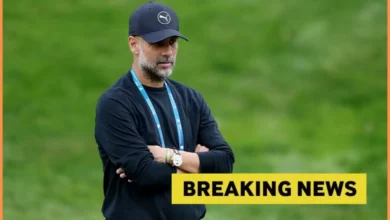
Reports suggest City have made contact with Anderson’s representatives. Quiet contact, careful contact, the kind City are famous for. No noise. No leaks. Just intent. Pep Guardiola is said to be a huge admirer of Anderson, and that alone changes everything. When Guardiola wants a player, things tend to move quickly.
For United, this was the nightmare scenario. Their worst fears realised once again. Another direct rival. Another potential hijack. Another reminder that when City truly want someone, very few players say no.
The reasons are obvious. City offer something United currently cannot. They offer a proven winning environment. They offer Champions League football without question. They offer tactical clarity, world-class coaching, and a squad built to dominate. They offer Pep Guardiola, a manager many players see as the best in the world.
For a player like Anderson, who is ambitious and still developing, that appeal is powerful. Playing under Guardiola is not just about winning trophies. It is about improving every part of your game. Many players arrive at City good and leave great. That reputation matters.
United, meanwhile, are still rebuilding. Still searching. Still changing managers, systems, and strategies. Even with INEOS now involved and promises of a new direction, the reality is that trust has not yet been fully restored. Players look at United and see uncertainty. They look at City and see clarity.
That difference is costing United.
If City decide to make a serious move for Anderson, most observers believe the outcome is already clear. Just like Semenyo, Anderson would likely choose the Etihad over Old Trafford. Not because United lack history or fans, but because footballers think about their careers in the present, not the past.
That would leave United scrambling again. Forced to move to their second option. Forced to convince themselves that the alternative is just as good.
In this case, that alternative is Carlos Baleba.
Baleba is an exciting talent. There is no denying that. His physical power, athleticism, and raw potential have made him one of the most talked-about midfielders in the league. Brighton value him highly, and any deal would likely cost close to £100 million. United admire him. Scouts rate him. The coaching staff see potential.
But there is a difference between potential and readiness.
Anderson has already shown he can step up. He has handled the pressure of Premier League football. He has represented England. He looks comfortable in big moments. Baleba, while talented, is still raw. He is still learning. He still makes mistakes. At a club like United, where patience is thin and pressure is constant, that matters.
Spending £100 million on a player who is not yet fully formed is a gamble. United have made too many of those gambles in recent years. Sometimes they pay off. Often they do not. That is why missing out on Anderson would feel like another painful setback, even if Baleba eventually turns into a top player.
The frustration for United fans is not just about individual players. It is about patterns. It is about watching City repeatedly identify targets, act decisively, and get results. It is about watching United hesitate, react, and adjust after the damage is done.
City’s approach is ruthless but effective. They do not panic. They do not chase every name. They wait, observe, and strike when the time is right. They also benefit from momentum. Success attracts success. Players want to join winning teams. Winning teams find it easier to convince players.
United are trying to rebuild that momentum, but it takes time. INEOS have spoken about long-term planning, better recruitment, and smarter decisions. But until results improve on the pitch, those words will struggle to compete with City’s reality.
The Semenyo situation was already a warning. This Anderson saga could become confirmation.
For City, signing Anderson would not just strengthen their squad. It would weaken a rival. That is the double impact of these moves. City add depth, quality, and competition. United lose a priority target and are forced to rethink their plans. It is strategic, not accidental.
Pep Guardiola understands this game. He knows the psychological effect of winning these battles. Every hijacked deal sends a message. To rivals. To players. To the league.
United feel that message loudly.
As things stand, nothing is officially decided. Anderson has not signed for anyone. United still hope. They still believe they can sell their project. They still believe INEOS can convince players that change is coming. But belief alone may not be enough.
If City push hard in the summer, if Guardiola makes his intentions clear, the pull could be too strong. Anderson, like Semenyo before him, may decide that the safer, smarter choice is sky blue.
If that happens, United will move on. They always do. They will tell themselves that Baleba is the right fit. That he offers something different. That development takes time. That the rebuild is ongoing.
But deep down, the feeling will remain. Another target lost. Another reminder of where they stand.
This is not just about one midfielder. It is about the wider power shift in English football. City operate from a position of strength. United operate from a position of recovery. Until that changes, these stories will keep repeating.
Fans can see it. Players can see it. Rivals can see it.
Manchester City hijacking Manchester United targets is no longer shocking. It is expected.
For United, the challenge is clear. They must close the gap not with words, but with actions. With performances. With results. With a project that players truly believe in.
Until then, names like Elliot Anderson will continue to drift toward the Etihad, and United will continue to wonder how things slipped so far.
The Semenyo repeat feels inevitable not because United lack ambition, but because City currently offer something United do not. And in modern football, that difference means everything.
As the transfer window approaches, all eyes will be on Anderson’s next move. But for many, the bigger story is already written. Manchester City moving with confidence. Manchester United reacting once again. And the rivalry, once defined by red dominance, now shaped by blue control.