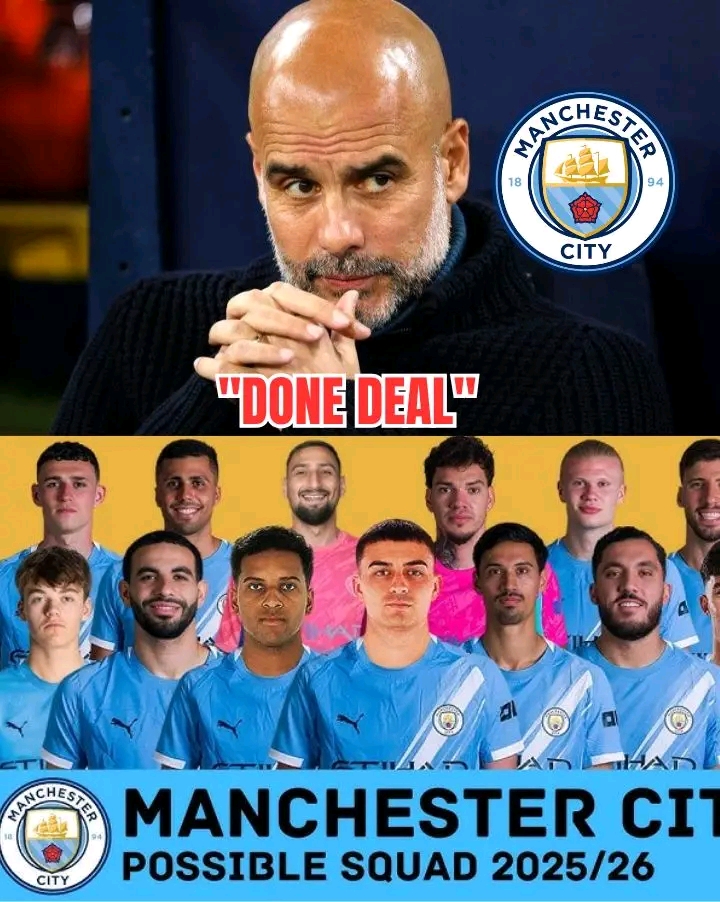
Manchester City finally won the transfer battle over Liverpool and Chelsea to the signing of £80m best Midfielder in Europe who have just scored 15 goals this season so far – Deal set to be completed soon as Pep Guardiola Second January signing
James Trafford’s time at Manchester City has come to an unexpected end. The young goalkeeper, once seen as a promising talent destined to grow into a first-team star, has left the Etihad Stadium to join a Premier League rival after being relegated to second-choice despite arriving before the club’s superstar goalkeeper, Gianluigi Donnarumma. It is a move that has shocked fans and raised questions about the handling of one of England’s brightest goalkeeping prospects.
Trafford’s journey began with excitement and hope. He joined Manchester City as a teenager, quickly impressing scouts and coaches with his composure, reflexes, and ability to read the game. Pep Guardiola, known for nurturing young talent, saw Trafford as a goalkeeper who could one day challenge the very best in world football. Trafford’s development at City was carefully planned, and the academy staff had high hopes that he would become a fixture between the posts for years to come.
For a time, everything seemed on track. Trafford made steady progress through the academy ranks, showing maturity beyond his years. He played regularly for the youth sides and impressed on loan spells, gaining experience in the lower leagues. Coaches praised his professionalism, work ethic, and willingness to learn from every training session.
Then came the high-profile signing of Gianluigi Donnarumma. The Italian international arrived at City with a reputation that preceded him: a World Cup winner, a goalkeeper with world-class ability, experience, and the kind of pedigree that commands respect in every dressing room. For Trafford, this meant adapting to a new reality.
Initially, Trafford remained patient. He knew that Donnarumma’s arrival would limit his opportunities in the short term but believed that hard work and perseverance would eventually pay off. He continued to train diligently, studying the game, and absorbing Guardiola’s instructions like a sponge. He contributed whenever called upon and demonstrated professionalism in every situation.
But despite his commitment, opportunities remained limited. Matches that Trafford had expected to play were instead handed to Donnarumma, and even when Guardiola rotated the squad, Trafford found himself as the backup. The young keeper’s frustration grew, not out of arrogance, but from the simple desire to play. For any athlete, minutes on the pitch are life and progress, and the lack of them began to weigh heavily on Trafford.
It was a bitter pill to swallow. Trafford had joined Manchester City believing he would have a pathway to first-team football. He had arrived ahead of Donnarumma in terms of seniority, experience, and integration within the club, yet he found himself second-choice. Conversations with staff and management reassured him of his potential, but nothing changed on matchday. The disparity between expectation and reality became impossible to ignore.
The decision to leave was not made lightly. Trafford consulted with family, mentors, and close friends. He weighed the value of remaining at City, training under Guardiola and competing alongside Donnarumma, against the opportunity to play regularly elsewhere. The lure of first-team football, the chance to showcase his talent week after week, proved irresistible.
Manchester City, for their part, understood the situation. The club recognized Trafford’s potential but also understood that ambition must be respected. Keeping a player unhappy on the bench benefits no one, and a mutual agreement was reached. Trafford’s exit was amicable, professional, and framed as a necessary step in his career development.
The move to a Premier League rival now offers Trafford a fresh start. He joins a club where the goalkeeping spot is available and where he is expected to compete for the number one position immediately. The pressure will be high, but so will the opportunity. Trafford now has the chance to play regularly, make crucial saves, and establish himself as one of the league’s top goalkeepers.
This transfer also underscores the challenges of being a young goalkeeper at a club like Manchester City. The standards are incredibly high, competition is fierce, and patience is tested constantly. Talent alone is not always enough; timing, opportunity, and luck play huge roles in shaping a player’s career trajectory. Trafford’s experience illustrates both the promise and the difficulty of breaking through at a club competing on multiple fronts.
The timing of Trafford’s departure comes amid other developments at Manchester City. The club has been active in the transfer market, securing key signings to strengthen the squad. Antoine Semenyo, a versatile forward, joined from Bournemouth for over £62 million, while defensive reinforcements like Marc Guehi from Crystal Palace are reportedly high on Guardiola’s radar following injuries to Ruben Dias and Josko Gvardiol. These moves signal City’s ambition to compete across four competitions and maintain their status as Premier League giants.
Despite these reinforcements, Guardiola faces challenges in managing squad balance and player expectations. Trafford’s situation highlights the delicate nature of squad management at elite clubs. Decisions about playing time, hierarchy, and rotation can affect careers profoundly. For young players, the pathway to the first team can be blocked by world-class signings, leaving talent waiting in the wings.
Trafford’s exit may also have wider implications for Manchester City’s goalkeeping pipeline. With the academy producing talents like Max Alleyne returning from loan spells and other young prospects in development, the club will need to ensure opportunities are available for emerging players. Retaining talent, balancing ambition, and managing expectations are ongoing challenges for Guardiola and his coaching staff.
Meanwhile, the Premier League rival securing Trafford gains more than just a player. They acquire a goalkeeper who has been trained under one of the world’s best managers, has experience at a top club, and possesses the confidence and technical ability to make an immediate impact. The signing is a statement of intent, demonstrating ambition and long-term planning
The football world is watching closely. Young goalkeepers leaving elite clubs for first-team opportunities is not uncommon, but the circumstances of Trafford’s departure—being overtaken by a high-profile signing despite arriving first—adds drama. Fans, pundits, and analysts will debate the decision, Guardiola’s management style, and the timing of the move.
For Trafford, the journey is far from over. At 21, he is still at the beginning of his professional career. Regular playing time at his new club can accelerate his development, increase his visibility for national team selection, and provide the platform to fulfill his potential. The Premier League rival that signed him will be investing not just in talent but in the confidence, ambition, and hunger that Trafford brings.
Trafford’s story is a reminder of the fine margins in football. One decision, one signing, or one moment of timing can alter a career path. Patience, professionalism, and resilience are as important as talent. Trafford demonstrated all three, and now he has the opportunity to reap the rewards.
As he begins this new chapter, the expectations are clear. He must step onto the pitch, command his area, and deliver performances that justify the faith placed in him. He must seize every chance, knowing that the Premier League is unforgiving but full of opportunity for those who rise to the challenge.
Manchester City, meanwhile, will continue to chase trophies, navigate the transfer window, and manage a squad full of world-class players. Trafford’s departure is a part of that ongoing evolution—a reminder that even at the top, football is dynamic, competitive, and often cruel.
Fans at the Etihad may feel disappointment at seeing a young talent leave, but those who understand the game recognize that this is football’s nature. Players move, opportunities shift, and careers progress in ways that are sometimes unpredictable. Trafford’s journey is a testament to ambition, patience, and the courage to take control of one’s destiny.
In the weeks and months ahead, all eyes will be on Trafford. How quickly will he settle at his new club? How will he handle the pressure of being the first-choice goalkeeper? Will he rise to the occasion and remind the Premier League why he was considered one of England’s brightest talents?
Only time will tell. But one thing is certain: Trafford’s decision to leave Manchester City, to step out from the shadow of Donnarumma, and to embrace a fresh challenge, shows maturity, courage, and belief in his own ability.
The Premier League rival that signed him now has a young goalkeeper with everything to prove and everything to gain. The stage is set for Trafford to write the next chapter of his career—one where he is no longer second-choice, no longer waiting, but fully in control of his destiny.
The story of James Trafford is far from over. It is a story of promise, challenge, and ambition. It is a story of a young goalkeeper who refused to wait for opportunity and instead chose to create it himself. Manchester City may have lost a talent, but the Premier League—and football fans everywhere—stands ready to witness the next stage of his journ