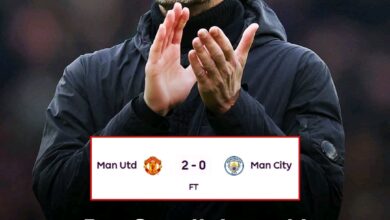
As the UEFA Champions League league phase reaches its critical midpoint, Manchester City finds itself preparing for one of the most significant fixtures of their European campaign. The journey to the Santiago Bernabéu represents more than just another match in the competition—it symbolizes a moment of reckoning for Pep Guardiola’s side as they seek to reestablish their dominance on the continental stage.
The Context: A Season of Transition and Challenge
Manchester City’s current campaign has been marked by unexpected turbulence. The club that has dominated English football for much of the past decade finds itself navigating unfamiliar waters, with results that have raised questions about squad depth, tactical flexibility, and the ability to compete effectively across multiple competitions simultaneously.
The Champions League league phase, introduced as part of UEFA’s revamped competition format, has presented unique challenges for all participating clubs. The expanded group stage requires consistency across eight matches rather than the traditional six, demanding greater squad rotation and management. For City, this has proven particularly testing given the injury absences and form fluctuations that have characterized their season thus far.
The defeat to Bayer Leverkusen on matchday five served as a stark reminder of the fine margins that separate success from disappointment at this level. Guardiola’s decision to rotate his squad extensively—making ten changes to the starting lineup—backfired as the team produced a performance lacking the intensity and cohesion expected of Champions League contenders. The German champions capitalized ruthlessly on City’s vulnerabilities in transition, exposing defensive frailties that have become an increasingly concerning pattern this season.
The Opposition: Real Madrid’s Enduring Mystique
Real Madrid arrives at this encounter carrying the weight of history and expectation that defines the club. As the most successful team in Champions League history with fourteen titles to their name, Los Blancos possess an almost supernatural ability to deliver when the stakes are highest. The Bernabéu has witnessed countless memorable European nights, and the stadium’s atmosphere creates an intimidating environment that has broken the resolve of many visiting teams.
Under Carlo Ancelotti’s astute management, Madrid has maintained their status as European royalty despite facing their own challenges this season. The Italian tactician’s experience and calm demeanor have proven invaluable in navigating difficult periods, and his tactical acumen in knockout scenarios is unmatched. Ancelotti understands the rhythms of Champions League football better than almost anyone, knowing precisely when to attack and when to absorb pressure.
Madrid’s squad, while dealing with some injury concerns of their own, retains a core of world-class talent capable of deciding matches in moments. The experience accumulated through years of success in this competition cannot be quantified but manifests in crucial situations when composure and decision-making determine outcomes. This intangible quality—this winning mentality—makes Madrid dangerous even when not performing at their absolute best.
Tactical Considerations and Strategic Approaches
The tactical battle between Guardiola and Ancelotti promises to be fascinating. Both managers are masters of their craft, capable of outmaneuvering opponents through meticulous preparation and in-game adjustments. However, their philosophies differ significantly, creating an intriguing clash of styles.
Guardiola’s Manchester City typically seeks to dominate possession, constructing attacks through patient buildup and creating numerical superiority in key areas of the pitch. The positional rotations, particularly involving fullbacks inverting into midfield, aim to overwhelm opponents structurally and create spaces for the team’s creative players to exploit. This approach requires exceptional technical quality throughout the squad and demands that every player understands their responsibilities within the system.
However, this style also carries inherent risks, particularly against teams equipped to counterattack effectively. When possession is lost in advanced positions, City can find themselves vulnerable to quick transitions, with spaces opening up behind their high defensive line. Madrid excels precisely in these situations, possessing players with the pace and quality to punish opponents swiftly.
Ancelotti’s tactical approach tends to be more pragmatic and adaptable. Madrid is comfortable conceding possession when necessary, maintaining defensive organization before exploding into attack when opportunities arise. The Spanish giants have perfected the art of patient defending followed by incisive counterattacking, and they possess multiple players capable of producing decisive moments from seemingly innocuous positions.
The midfield battle will prove crucial in determining the match’s outcome. Whichever team can establish control in central areas will gain a significant advantage. For City, maintaining composure under Madrid’s pressure while finding ways to progress the ball through tight spaces will be essential. For Madrid, disrupting City’s rhythm and forcing turnovers in dangerous areas could provide the platform for victory.
Squad Selection and Availability Issues
Team selection represents one of the most critical decisions facing both managers. Injuries and fatigue have depleted both squads, forcing careful consideration about which players can deliver the required performance level while managing workloads across a demanding fixture schedule.
For Manchester City, the absence of several key players complicates Guardiola’s planning. The unavailability of important squad members forces the manager to make difficult choices about how to balance experience with freshness, quality with fitness. The traveling party of twenty-one players indicates that Guardiola has options, but questions remain about whether those options possess the necessary quality and experience for a match of this magnitude.
The goalkeeper position, while stable with quality options available, requires absolute reliability at this level. Any uncertainty between the posts can prove costly against opponents as clinical as Real Madrid. The defensive unit faces perhaps the biggest challenge, needing to contain Madrid’s attacking threats while also providing support to the team’s buildup play. Finding the right balance between defensive solidity and attacking contribution will be crucial.
In midfield, City must find ways to control the tempo without the presence of some players who would typically anchor the team’s play. The creative burden falls heavily on those selected, requiring them to link defense with attack while also tracking back to support when Madrid counters. This demands exceptional fitness levels and tactical discipline throughout the ninety minutes.
The forward line presents both opportunities and concerns. While City possesses attacking talent capable of troubling any defense, consistency has been an issue this season. Converting chances into goals represents the ultimate challenge, and against a team like Madrid, opportunities may be limited. Clinical finishing could prove decisive.
The Broader Implications: Qualification and Momentum
This match carries significance extending well beyond the immediate result. With three matches remaining in the league phase, City needs to accumulate points to secure passage to the knockout rounds. While the expanded format provides some margin for error compared to the traditional group stage, successive disappointments would leave City’s qualification in genuine jeopardy.
The psychological impact of the result cannot be understated. A positive performance and result in Madrid would provide a significant boost to confidence and momentum heading into the busy winter period. Conversely, another defeat would intensify pressure on Guardiola and raise further questions about the team’s ability to compete at the highest level this season.
Beyond Champions League qualification, this match serves as a statement opportunity. City has established itself as one of European football’s elite clubs over the past decade, but skeptics still question whether the team possesses the mentality to consistently succeed in the knockout stages of the Champions League. A commanding performance in one of the competition’s most intimidating venues would silence those doubts and demonstrate that City remains a genuine contender for continental glory.
Historical Context and Previous Encounters
The history between these two clubs adds another layer of intrigue to this encounter. Previous meetings have produced memorable matches, with both teams experiencing triumph and heartbreak. These fixtures have often been decided by fine margins, individual moments of brilliance, or controversial decisions that spark debate for years afterward.
City’s dramatic Champions League semifinal victory over Madrid in recent seasons remains fresh in memory, demonstrating that Guardiola’s side can overcome the Spanish giants when performing at their best. However, Madrid’s ability to respond to adversity and produce miraculous comebacks is legendary, creating an underlying tension even when they trail in matches.
The familiarity between the clubs means that tactical surprises will be limited. Both managers understand their opponent’s strengths and weaknesses intimately, having studied them extensively over numerous encounters. This knowledge creates a chess match where anticipation and counter-moves become as important as raw quality and execution.
Player Spotlight: Key Individuals Who Could Decide the Match
Individual quality often proves decisive in matches of this magnitude. While football remains fundamentally a team sport, moments of brilliance from exceptional players can shift momentum and determine outcomes when teams are evenly matched.
For Manchester City, the forward line carries the responsibility of converting opportunities into goals. The clinical finishing required at this level means that wastefulness will be punished. These players must combine intelligent movement with composure in front of goal, creating and finishing chances even when service is limited. Their ability to press effectively when City loses possession will also be crucial in preventing Madrid from building attacks smoothly.
In midfield, City’s creative players must find ways to unlock Madrid’s defense while also contributing defensively. The dual responsibility of creating while protecting requires exceptional awareness and work rate. These players serve as the connection between defense and attack, and their performance will significantly influence whether City can establish any control over the match’s tempo.
Defensively, City’s backline faces a formidable challenge containing Madrid’s attacking threats. Maintaining concentration throughout the match, making correct decisions about when to press and when to drop off, and communicating effectively will all be essential. Any lapses in focus or execution could prove catastrophically costly.
For Real Madrid, their attacking players possess the quality to punish any defensive errors. Their movement, timing of runs, and finishing ability make them among the most dangerous forwards in world football. If provided with opportunities, they have proven repeatedly that they can deliver in crucial moments.
Madrid’s midfield generals bring experience and composure that prove invaluable in high-pressure situations. Their ability to control tempo, find passes through tight spaces, and support both attack and defense provides the foundation for Madrid’s play. These players have performed on the biggest stages repeatedly and understand what is required to succeed.
The Atmosphere: The Bernabéu Factor
Playing at the Santiago Bernabéu creates unique challenges for visiting teams. The stadium’s atmosphere, particularly during important European matches, generates an intensity that can overwhelm opponents. The crowd’s expectations and demands create pressure that Madrid’s players have learned to channel into their performance, while visiting teams often struggle to maintain composure in such an environment.
The noise levels during key moments, the whistling and jeering directed at opponents, and the celebration of home success all contribute to making the Bernabéu a fortress. City’s players must demonstrate mental strength to perform effectively under these conditions, maintaining focus on their tactical responsibilities despite the hostility surrounding them.
Guardiola’s experience managing in these environments will be crucial in preparing his team mentally for what awaits. The players need clear instructions and the confidence that their game plan can succeed regardless of external factors. Managing emotions and avoiding rash decisions in response to provocation or disappointment will be essential throughout the match.
Conclusion: A Defining Moment
As Manchester City prepares to face Real Madrid in this crucial Champions League encounter, the stakes extend beyond the three points available. This match represents an opportunity to demonstrate resilience, quality, and mentality against one of European football’s most storied clubs in their legendary stadium.
The challenges facing City are significant. Injury absences, recent disappointing results, and the inherent difficulty of playing Madrid at the Bernabéu all combine to create a formidable test. However, Guardiola’s side possesses the quality and experience to rise to such occasions when performing at their best.
The tactical battle between two master managers, the individual duels across the pitch, and the pressure of the occasion all contribute to what promises to be a compelling encounter. For City, this represents a moment to silence doubters and reestablish their credentials as genuine Champions League contenders. For Madrid, it offers another opportunity to demonstrate why they remain European football’s most successful club.
Whatever the outcome, this match will provide significant insight into both teams’ capacity to compete for the ultimate prize in club football. The performance and result will shape the remainder of both teams’ campaigns and could prove pivotal when the final standings are determined at the conclusion of the league phase.
Manchester City travels to Madrid with purpose and determination, seeking to prove that they belong among Europe’s elite. The challenge is immense, but so too is the opportunity. In these moments, on these stages, legacies are forged and histories are written. City must seize this opportunity and deliver a performance worthy of their ambitions.