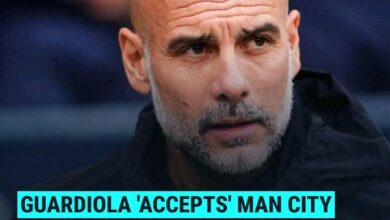
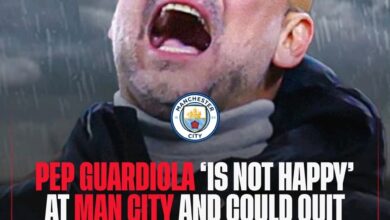
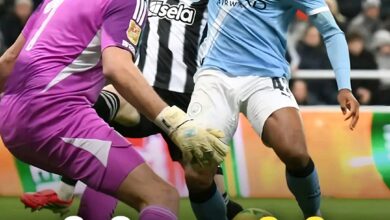
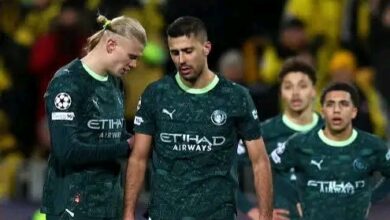
Pep Guardiola walked away from the touchline at the Etihad Stadium with a face that did not match the scoreline on the big screen. Manchester City had just beaten West Ham United 3-0, gone top of the Premier League, and stretched their winning run to seven games in all competitions. The crowd was happy, the players celebrated, and the league table looked healthy again. But Guardiola was angry, frustrated, and deeply concerned. For him, the result hid problems that could destroy City’s season if they are not fixed quickly. He made that clear after the match, and he made it even clearer inside the dressing room, where the message was sharp, honest, and far from festive.
City started the game well on paper. Erling Haaland scored after just five minutes, doing what he does best by punishing the slightest mistake. Tijjani Reijnders added a second before half time, giving City control and comfort. West Ham looked shaken, and most people expected a routine afternoon. But Guardiola saw something very different. He saw loose passing, poor positioning, slow ball movement, and players not occupying the right spaces. He saw a team winning because of individual quality rather than collective control. That, in his mind, is never enough to win titles.
West Ham, despite being second best overall, created chances. They found space between City’s lines, ran through midfield too easily at times, and forced City to defend more than Guardiola likes. If they had taken one of their chances, the game could have changed. When Haaland scored again later, helped by almost comical defending, the scoreline looked comfortable again. But Guardiola was not fooled. He knows football too well to trust results without performance.
After the match, Guardiola did not hide. He spoke openly and strongly. He said City must improve with the ball if they want to win anything this season. He said that without improvement, they can forget about trophies. Those words landed heavily because they came on a day when City were top of the league. For many managers, that would be the perfect moment to praise players and enjoy the break. For Guardiola, it was the perfect moment to demand more.
He admitted he was happy with certain individuals. He thanked Haaland for his goals, as always. He praised Phil Foden for his effort and intelligence. He mentioned Nico O’Reilly, a young player still learning his role, for helping the team. He said the defensive side of the game is improving, and that is true. City look more solid than earlier in the season. But football for Guardiola is built from the ball outward, not from defending backward. And with the ball, he was unhappy.
Guardiola explained that how a team attacks depends on how opponents defend. Players must understand space, timing, and position. They must move to the right spots naturally, without thinking. That is what makes a team fluid. Against West Ham, Guardiola felt his team did not do that. They were slow to move the ball, hesitant in midfield, and disconnected in attack. Even with possession, they did not dominate the game the way a Guardiola team should.
He spoke about honesty, with himself and with his players. He said he told them in the dressing room that even though it is Christmas time, improvement cannot wait. He said it will not be enough to arrive in March and April playing like this. Titles are not won in December, but they are lost there. Guardiola knows that by the time the pressure moments arrive, habits are already formed. If City accept poor performances now, they will suffer later.
City’s season has been strange. They started badly, dropping points, lacking rhythm, and looking tired. Injuries hurt them badly. Rodri’s absence in particular changed the balance of the team. Without him, City lost control in midfield and confidence in possession. Over time, Guardiola adjusted. Results improved. Momentum returned. Arsenal dropped points. City climbed back into the race. Now, suddenly, they are favourites again. But Guardiola refuses to relax.
He said City are fourth in the Champions League group stage and in the Carabao Cup semi finals. On the surface, everything looks positive. But he repeated that the way they played with the ball is not good enough. Guardiola measures performance against the highest possible standard, not against the opponent of the day. West Ham are a good team, but they are not Real Madrid, Bayern Munich, or Arsenal at full power. If City struggle to control games like this, the future is dangerous.
Guardiola also spoke about spirit. He said the spirit is there now. Last season, he felt the team lacked aggression, hunger, and edge. This season, those qualities have returned. Players are running, fighting, and pressing. That is a big step. But spirit alone does not win trophies at City. Structure, positioning, and precision do. Guardiola believes the foundation is there, but the house is unfinished.
Injuries remain a major problem. Guardiola listed names almost like a warning. Jeremy Doku is not available. Mateo Kovacic is missing. Rodri is still out. Omar Marmoush is unavailable. Rayan Ait-Nouri is not there. These absences limit options and force young players into big roles. Nico O’Reilly, for example, cannot play ninety minutes every game in his role. Guardiola knows that. He wants him protected, developed properly, not overused.
City had four or five academy players on the bench. Guardiola said he is delighted with them. He respects their effort, attitude, and commitment. He trusts them. But he also knows that to reach the next level, experience matters. When systems change, whether it is a diamond midfield, five at the back, or a back four, players must understand where space appears. That understanding comes with time, repetition, and senior leadership.
Guardiola returned again to positional play. For him, that is the soul of his football. It is not about highlights or beautiful moments. It is about structure that allows creativity. It is about players being in the right places before the ball arrives. Against West Ham, he felt City failed in that basic idea. Too many players wanted the ball to feet. Too few attacked space. Too many passes were safe instead of sharp.
The reaction to Guardiola’s comments was mixed. Some fans agreed completely. They have watched City long enough to know when the performance is below standard, even in victory. Others felt Guardiola was too harsh. A 3-0 win is a 3-0 win. Top of the league is top of the league. But Guardiola has never been a manager who manages emotions for public approval. He manages standards.
This is not the first time Guardiola has criticised his team after a win. In fact, some of City’s best seasons have included moments like this. Guardiola believes comfort is the enemy. When players feel safe, they stop growing. His job, as he sees it, is to keep them uncomfortable, always chasing a better version of themselves.
The timing of this message is important. City are entering a Christmas break. Matches come quickly. Injuries increase. Fatigue grows. Guardiola wants his players mentally sharp before that storm. He wants them thinking about improvement, not relaxing. He wants them hungry, not satisfied.
He also mentioned the Club World Cup. Recovery from that competition will be important. It adds extra strain to the season. Guardiola knows squad depth will be tested. He hopes to have Rodri back soon. That alone could transform the team. Rodri is not just a defensive midfielder. He is the rhythm, the pause, the control. Without him, City often look rushed.
Guardiola said if the players follow him, City will be there in the title race. That is a promise and a warning at the same time. He believes in his ideas completely. But he also knows not every player always follows perfectly. Fatigue, confidence, and ego can interfere. His job is to reset focus.
Looking at the Premier League, Guardiola sees danger everywhere. Arsenal are strong, organised, and hungry. Other teams are improving. The margins are small. City cannot rely on late runs every season. They must build consistency now.
The West Ham game was a reminder that football is not always honest. The scoreboard lies sometimes. Guardiola reads the game beneath the numbers. He saw issues that goals could not hide. That is why he spoke the way he did.
Erling Haaland’s role in this story is interesting. He scored twice, did his job, and was praised. But even Haaland is part of Guardiola’s demands. Goals are not enough if the team shape breaks. Haaland depends on service, but he also depends on structure behind him. When City lose control, even the best striker can suffer.
Phil Foden continues to be important. Guardiola trusts him in big moments. His movement, energy, and intelligence help connect midfield and attack. Nico O’Reilly represents the future, but also the risk of relying too much on youth. Guardiola balances development with results, but it is not easy.
As City fans digest Guardiola’s words, the message is clear. Enjoy the win, but do not ignore the warning. Being top in December means nothing if standards drop. Guardiola has been here before. He has seen seasons slip away because small problems were ignored.
The manager’s honesty may feel uncomfortable, but it is part of why City have been so successful. Guardiola refuses to lie to himself or to his players. He believes that truth, even when harsh, builds champions.
The next phase of the season will show whether the message landed. If City return sharper, more fluid, and more dominant with the ball, this West Ham game will be remembered as a turning point. If not, it will be remembered as a missed warning.
For now, Guardiola rests briefly, but his mind never stops. He is already thinking about positioning, passing lanes, recovery runs, and pressing triggers. He is already planning adjustments. That is who he is.
Manchester City are winning again. They are strong again. But under Guardiola, winning is never enough. Only improvement satisfies him. That is the burden and the beauty of playing under one of football’s most demanding managers.