Pep Guardiola is known all over the football world as one of the greatest managers of this generation, a man who has changed the game with his ideas, his passion, and his constant demand for excellence. But this week, the Manchester City boss was not making headlines because of tactics, trophies, or team selection. Instead, he found himself at the center of a global conversation after speaking openly and emotionally about political and humanitarian issues that many believe football figures should avoid. His words touched on painful events involving Immigration and Customs Enforcement in the United States, the ongoing suffering in Palestine, the wars in Ukraine and Russia, and the violence in Sudan. For Guardiola, these were not distant news stories. They were human tragedies, and he refused to stay silent about them.
It is rare for an active manager at the very top of European football to speak so directly about global injustice. Many managers choose careful words, avoiding anything that could distract from football or upset sponsors, owners, or fans. Guardiola did the opposite. He spoke from the heart, clearly and forcefully, and he knew very well that his comments would anger some people. As expected, criticism followed quickly. Some fans, pundits, and commentators argued that Guardiola should stick to football and leave politics to politicians. They said his job was to prepare his team for matches, not to speak about war, migration, or global suffering. But Guardiola was never going to accept that argument quietly.
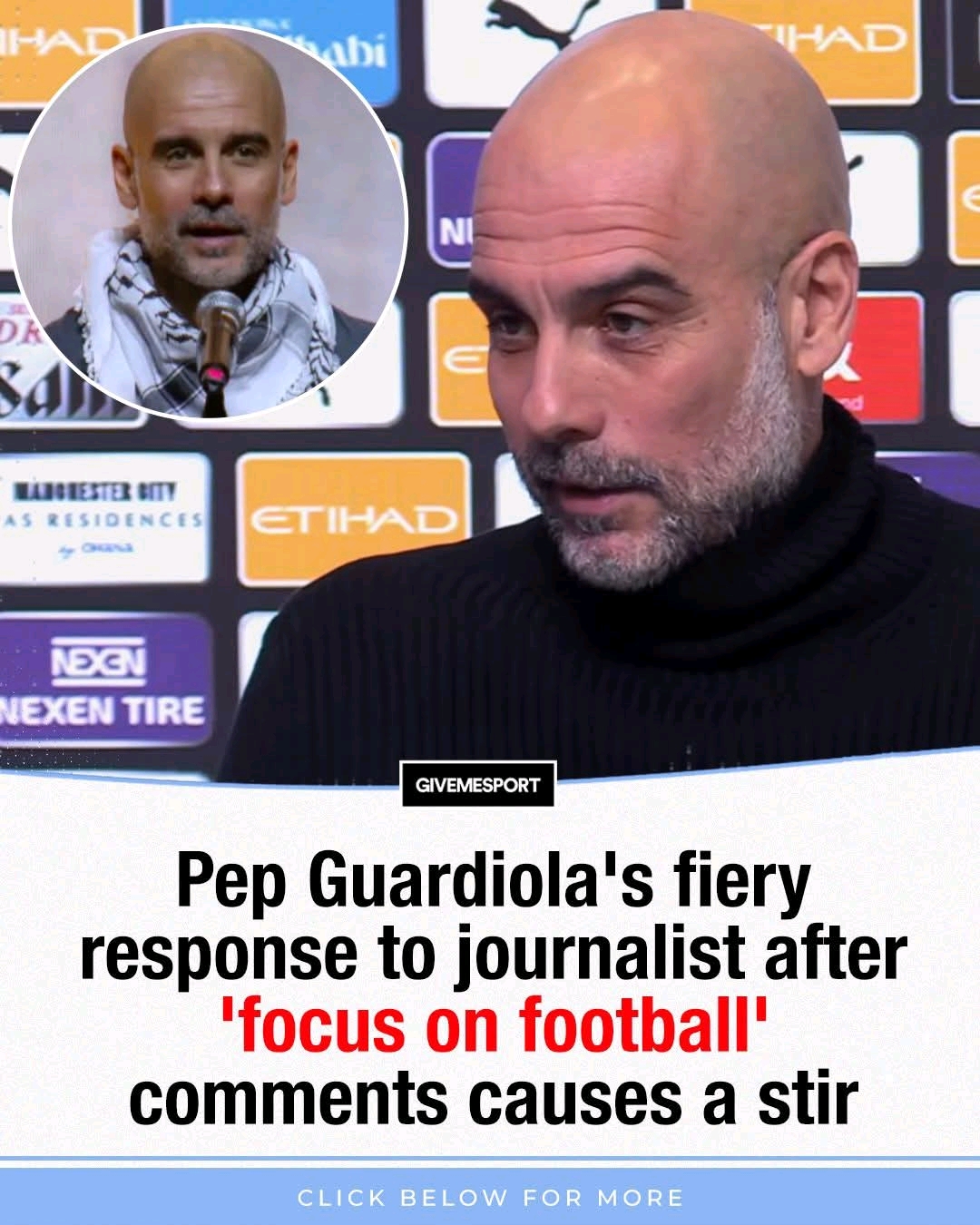
Ahead of Manchester City’s important Premier League trip to Liverpool, Guardiola was asked directly about those who believe he should remain silent on political matters. His response was sharp, emotional, and deeply personal. He challenged the idea that people should only speak about what fits neatly into their job title. In his view, being a football manager does not mean switching off your humanity. He compared the criticism he receives to telling a journalist they can only talk about football and nothing else. For Guardiola, that way of thinking is dangerous, because it encourages silence in a world that already has too much of it.
He made it clear that staying silent is exactly what many people in power want. Silence is comfortable. Silence avoids conflict. Silence allows injustice to continue without challenge. Guardiola said he believes the opposite approach is needed. Speaking up, even when it is uncomfortable, is part of being human. His words struck a chord with many fans around the world who see football as more than just a game, but also as a powerful platform with the ability to shine a light on suffering and injustice.
The reaction online was immediate and intense. Social media filled with thousands of comments within hours. Some praised Guardiola for his courage and honesty, calling him a role model and thanking him for using his voice. Others were angry, accusing him of hypocrisy or claiming he was overstepping his role. The debate quickly moved beyond football and into deeper questions about the responsibility of public figures. Should famous coaches and players speak out about global issues, or should they stay quiet to avoid division? Guardiola’s stance was clear. For him, silence in the face of suffering is not an option.
This was not the first time Guardiola had shown his willingness to speak about political and humanitarian issues. Only days earlier, he had missed a scheduled press conference for personal reasons. It later emerged that he had been in Barcelona, his home city, attending a pro-Palestinian rally. There, he delivered an emotional speech about the conflict in Gaza, expressing his pain and frustration at the images of destruction and loss of innocent life. That appearance added more fuel to speculation about his future, with some suggesting that his growing involvement in activism could be linked to thoughts about stepping away from football.
There is already ongoing speculation that Guardiola could leave Manchester City at the end of the season, even though his contract runs until 2027. Some believe he may be feeling exhausted after years of pressure at the highest level. Others think he may want to take a break or return to Spain. His recent comments and actions have only increased the noise around his future. Manchester City, aware of this possibility, are reportedly already considering potential replacements, with names like Xabi Alonso, Enzo Maresca, and Cesc Fabregas mentioned as possible successors. Still, Guardiola remains fully focused on his job, preparing City for crucial matches while also staying true to his beliefs.
Earlier in the week, Guardiola had spoken in detail about several global crises, and his words were raw and powerful. He talked about the killings of Renee Good and Alex Pretti by ICE agents in the United States, describing the violence in shocking terms. He asked how anyone could defend such actions, comparing them to a situation where armed officers fire multiple shots at a person in a public place. For Guardiola, there was no justification. If someone does something wrong, he said, they should go to jail, but killing people in such a way could never be acceptable. He admitted that no society is perfect, including himself, but insisted that everyone has a responsibility to try to be better.
Guardiola then widened his focus to the global stage, speaking about what he described as genocide in Palestine, as well as the wars in Ukraine and Russia and the suffering in Sudan. He said that never before in human history have we had so much information so clearly in front of us. With modern technology, we can see images and videos of suffering almost in real time. For him, this removes the excuse of ignorance. We know what is happening, he said, and the real question is whether we choose to look away or to care.
He explained that the suffering hurts him deeply, regardless of which side is involved. For Guardiola, it is not about politics or taking sides, but about human life. When thousands of innocent people are killed, it causes pain, no matter who they are or where they come from. He said he cannot understand how anyone could see images of destroyed homes, grieving parents, and injured children every day and feel nothing. That lack of empathy, more than anything else, troubles him.
Guardiola spoke about his own friendships with people from many different countries, cultures, and backgrounds. He said that having different ideas is normal, but when defending those ideas requires killing thousands of people, he cannot accept it. He promised that he would always stand up against such violence, no matter the criticism. For him, this is not a political position but a moral one. It is about defending life and dignity.
He also reflected on the strange contradiction of modern humanity. We live in an age of incredible technological progress. Humans can reach the moon, develop advanced medicine, and connect instantly across the world. Yet, despite all these achievements, we continue to kill each other over borders, beliefs, and power. Guardiola asked a simple but powerful question: for what reason? When he sees images of war and destruction, it hurts him deeply, and that pain is what drives him to speak out whenever he can.
Another issue Guardiola highlighted was the treatment of refugees and migrants. He spoke about people who are forced to flee their countries to escape violence and atrocities, often risking their lives at sea. He said that when someone is drowning or fleeing danger, the first response should always be to help them, not to question whether they deserve help. For Guardiola, protecting human life is the most important value, above politics, borders, or ideology. He stressed that this responsibility applies everywhere in the world, not just in certain regions.
These comments have added another layer to Guardiola’s already complex public image. To many fans, he is not just a brilliant coach but also a thoughtful and principled person. To others, his outspokenness is uncomfortable and unwelcome. But Guardiola seems prepared to accept that division. He understands that speaking honestly comes with consequences, but he believes those consequences are worth it.
As Manchester City continue their push in the Premier League and other competitions, Guardiola remains under intense scrutiny, both for his football decisions and his words off the pitch. Every press conference now carries the possibility of another headline beyond football. Yet, those close to him say he has not changed his approach. He prepares meticulously for matches, demands the highest standards from his players, and remains fully committed to the club. His activism is not a distraction for him but an extension of who he is.
In a world where many powerful voices choose silence, Guardiola’s refusal to stay quiet has made him a rare figure in modern football. He does not claim to have all the answers, and he admits his own imperfections. What he insists on is the right, and perhaps the duty, to speak when something feels deeply wrong. For him, football is part of life, but it is not separate from humanity.
Whether people agree with Guardiola or not, his comments have forced a conversation that goes beyond tactics and results. They have reminded fans that the people involved in football are not robots but human beings who see, feel, and react to the world around them. Guardiola has shown that even at the very top of the sport, it is possible to speak with honesty and emotion.
As debates continue and opinions clash, one thing is clear. Pep Guardiola will not be silent. He has chosen to use his voice, knowing it will bring criticism as well as support. In doing so, he has once again shown that his influence reaches far beyond the touchline. He is not just shaping how football is played, but also challenging how football figures engage with the world. And for Guardiola, that challenge is as important as any trophy he has ever won.