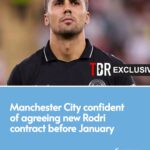
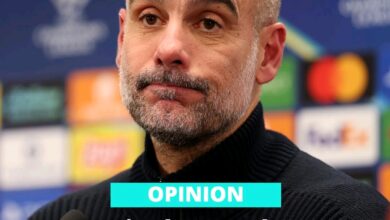
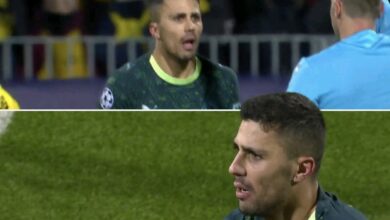
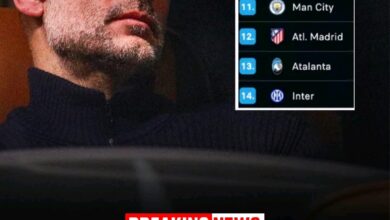
Pep Guardiola stood in front of the press room looking like a man carrying a heavy load on his shoulders, the kind of invisible weight only a football manager truly understands. It was early morning at the Manchester City training ground, but the tension in the air felt like something that had taken years to build. For eighteen months, City had been without the player Guardiola described again and again as the heartbeat of his team, the one footballer he trusted more than anyone else in the world to keep his side calm, organised, controlled, and dangerous. That player was Rodri, and this entire press conference felt like a long confession from a manager tired of pretending that everything was fine.
Guardiola looked around the room and asked the reporters a simple question, but it carried a deep emotional weight. He said, “Do you know what it means to play without the best player in the world two seasons ago? Our main player when we won the Treble, playing seventy games? Do you know what we miss during one and a half years without him?” His voice was firm, but the pain behind the words could not be hidden. Anyone listening could tell that this was not just football talk. This was a man admitting the truth he had been avoiding: Manchester City had been suffering without Rodri, and everyone knew it.
For months, fans had argued online about what was wrong with the team. Pundits said City were weaker, less confident, less organised, and they pointed to different reasons: the defence, player rotation, injuries, tactics, or fatigue. But deep down, Guardiola knew the answer was simple. He had been trying to fill the empty space left by Rodri, a space no other player could fill. When he continued speaking, he sounded like someone finally telling the truth he kept inside for too long. “I want him back now, here,” Guardiola said. “But he is suffering, struggling. He wants to come back but I want to protect him. I want to minimise the risk.”
It was strange to see Guardiola speak so openly and emotionally about a single player, but Rodri is not just any player. Rodri is the system. He is the anchor. He is the silent leader. When Rodri plays, City move like a machine, ordered and controlled. When he is missing, the entire team feels it. Guardiola explained it perfectly when he said, “If Rodri came the last twenty minutes against Fulham, put right in the middle, do you know the effect? Just his presence, not even touching the ball. The others feel safe. They play better even if he doesn’t touch the ball.” It was not a tactical explanation. It was psychological. It was emotional. It was almost spiritual. Guardiola was saying that Rodri gives confidence to ten other players without even needing to receive a pass.
In football, there are players who score goals and players who create goals. But there are very few players who change the mood and the mentality of the entire team just by standing on the pitch. Rodri is one of those rare footballers, and Guardiola made sure the world understood it. When he said “Rodri is another level of player. Another level,” he was not exaggerating. This was the manager telling everyone that he knows exactly how important his midfielder is and how much the team has missed him.
But the frustration didn’t stop there. Guardiola was angry at the situation, angry at the injuries, angry at the timing, angry at the long recovery, and maybe even angry at himself as he remembered some decisions he made in the past. Because in the same breath that he said he wanted to protect Rodri now, he remembered moments when he didn’t protect him enough. He didn’t mention it directly, but everyone who followed Manchester City could see the connection. Rodri played on a dangerous pitch against Al Hilal. Rodri played three games in one week in September. Rodri played consecutive matches in October. These decisions led to repeated hamstring problems, and eventually, the massive injury that caused the eighteen-month absence.
So while Guardiola said he wants to protect Rodri now, he must also be feeling guilty for the past. Football managers always talk about protecting players, but they also need to win games, survive pressure, and deliver results. Sometimes, especially with a player like Rodri, it becomes too tempting to keep playing him even when he needs rest. Guardiola seemed to be reflecting on all of this as he spoke. He was not only talking about Rodri’s current injury, but everything that led to it.
The question that triggered this long emotional speech from Guardiola was not even about all this. It was a simple question, but his answer travelled far away from the original point. It was as if he had been holding these words inside for months and finally allowed them to spill out. Reporters looked at each other, surprised at how long and detailed the answer was. The fans watching would have the same reaction. It felt like a manager tired of pretending.
He said, “There are irreplaceable players, not just for how good they play, it’s what they do for the others. The others say ‘oh, I have Rodri there’ and they give him the ball and know he won’t lose it.” He explained how Rodri understands the pitch like few others in world football. He knows when to switch play, when to slow down the game, when to accelerate, and when to position himself to maintain control. These are the small things that casual viewers do not always notice, but they are the soul of how Manchester City play. Without Rodri, City’s soul feels different.
For Guardiola to say he wants Rodri back “desperately” showed the depth of frustration. The word “desperately” is not a word managers use lightly, especially Guardiola, who is always calm and calculated. But this time, he allowed his emotions to take over. He was speaking like someone begging fate not to take any more from his team. He wants Rodri back, but he also wants him healthy. He wants him strong. He wants him to finish this season, not return for one week only to disappear again.
The irony of football is that desperate players want to return fast, while smart managers sometimes must slow them down. Rodri wants to return. Guardiola wants him back. The fans want him back. But the risk is too great. Guardiola said Rodri must do a “pre-season” again before playing full matches. This statement shocked many people because it meant the return is not as close as City fans hoped. Recovering from an ACL injury is never simple. The player’s body becomes different. The muscles need rebuilding. The speed, balance, and strength need time to return. And rushing the process can destroy a player’s long-term career.
Guardiola knew this more than anyone, and he spoke as a man caught between desperation and responsibility. City are in a tight situation in the league. The pressure is high. They need their midfield general. But they cannot take the risk. One wrong move could mean losing Rodri for even longer.
As Guardiola spoke, he also showed signs of another kind of frustration — the rumours linking Rodri to Real Madrid. These rumours had been flowing for months, and many City fans were tired of hearing them. Some journalists called them nonsense, and Guardiola also dismissed them indirectly. He emphasised again and again how important Rodri is and how desperate he is to have him back. A manager who speaks like that is not preparing to lose the player. He is fighting to keep him.
Real Madrid know Rodri is special. They know he is Spanish. They know he is world-class. They know Luka Modric and Toni Kroos have reached the end. So the rumour mill keeps turning. But from Guardiola’s tone, anyone could see there was no fear inside him about Rodri leaving. His fear was only about Rodri’s recovery, not Real Madrid. The manager has enough battles already; he doesn’t need imaginary ones
When Guardiola finished speaking, the room felt heavier. Everyone understood this was not a normal press conference. This was a man revealing the heart of his team’s struggle. This was a confession of how much City had lost without Rodri. This was a window into Guardiola’s emotional state — the frustration, the guilt, the hope, the desperation, the fear of rushing, and the longing to restore the team’s balance.
For eighteen months, City fans watched their team dominate at times but wobble at other moments, especially in midfield. They saw matches where City controlled everything except the rhythm. They saw leads slip away. They saw defenders exposed. They saw midfielders playing roles they were not naturally suited for. They saw chaos in moments where there used to be calm. And every time, they said the same thing: “We need Rodri.” Guardiola finally admitted the same thing publicly.
But even though Guardiola sounded emotional, he also sounded determined. He will not rush Rodri. He will not gamble. Not again. City will need to survive the coming weeks without him. Other players will need to step up. The team will need to adapt. The club must think long-term, not short-term.
Guardiola knows that one healthy Rodri in February, March, and April is better than one risky Rodri in December. He knows that trophies are won in the final months, not in the middle of the season. He knows that a rushed comeback can destroy everything. So even though he is desperate, his decision is clear: patience
The story of Manchester City right now is the story of waiting. Waiting for balance. Waiting for leadership. Waiting for calm. Waiting for the man who turns chaos into control. Waiting for Rodri. Football is a game of goals, passes, tackles, and results, but it is also a game of emotions. And in this moment, Manchester City’s emotions are wrapped tightly around one man’s recovery timeline.
Guardiola ended the press conference knowing he had said more than he planned. But maybe he needed to say it. Maybe he needed the world to understand. Maybe he needed the fans to know he feels the pain too. And maybe he needed Rodri to see that the club is waiting for him, missing him, and protecting him at the same time.
For now, City will continue fighting, hoping, and adjusting. But the story remains the same: the return of Rodri is not just a football issue. It is a psychological issue. A tactical issue. A leadership issue. A stability issue. It is everything. And Guardiola made that clearer than ever.