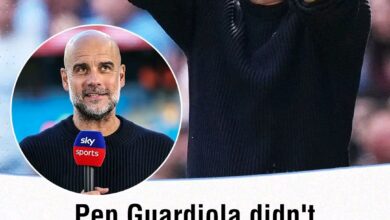
Pep Guardiola has given an intriguing interview, in which he speaks glowingly about his love of taking Manchester City to various away grounds and suggests the end is near

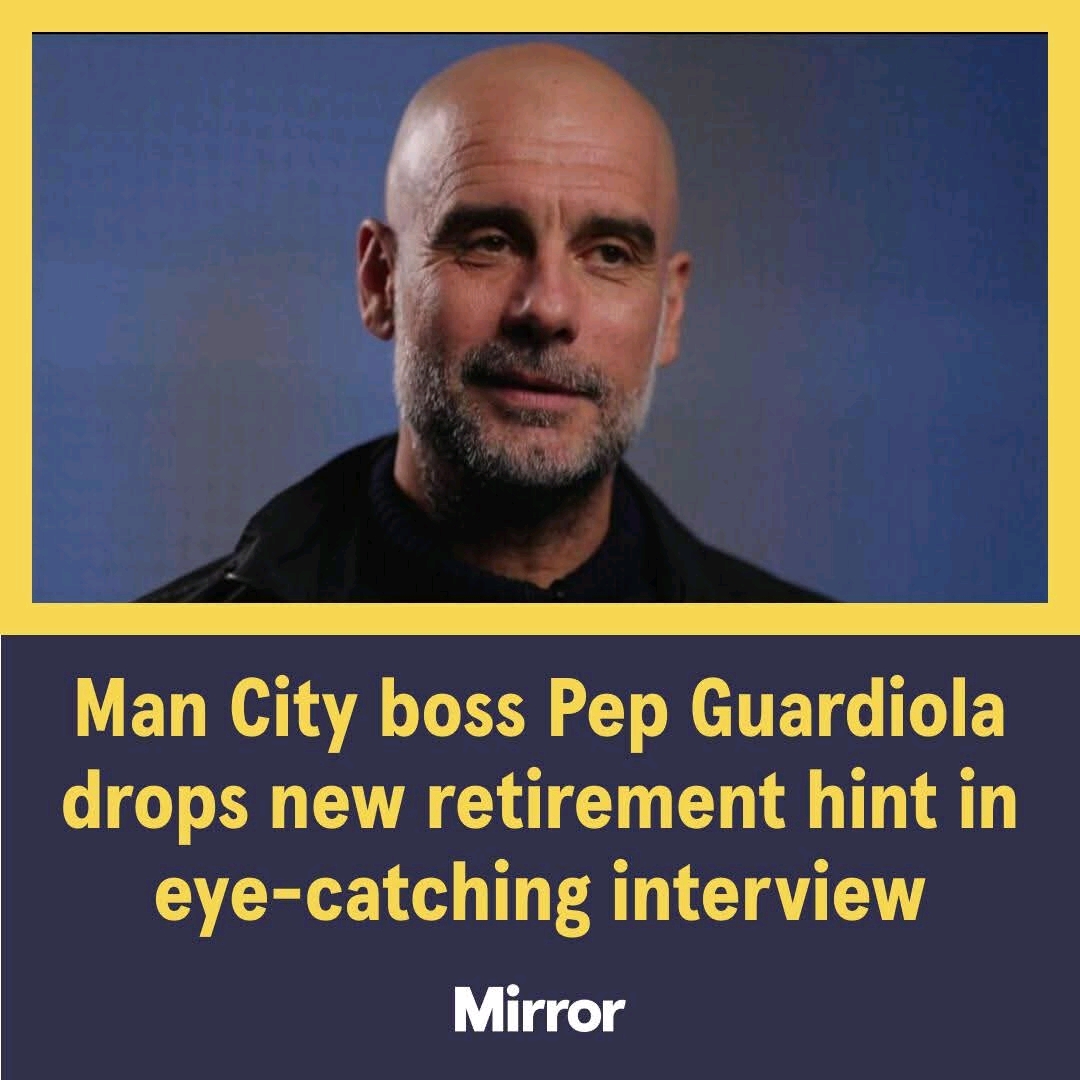
The future of one of football’s greatest managers has once again become a huge topic of discussion after comments from **Pep Guardiola** sparked fresh speculation about when his incredible journey in football management might finally come to an end. For nearly two decades Guardiola has been one of the most influential figures in the modern game, building legendary teams, winning trophies across Europe and redefining the way football is played. But now, with time continuing to move forward, even the most successful managers must eventually begin to think about the day when the passion, pressure and endless cycle of matches will finally stop.
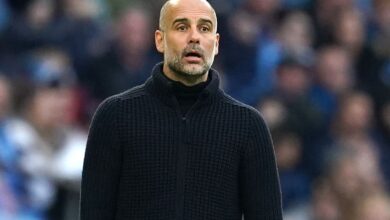
Guardiola currently leads **Manchester City**, the club where he has built perhaps the most dominant side in the history of English football. Since arriving in Manchester in 2016, he has transformed the team into a machine capable of controlling matches with breathtaking passing football and tactical precision. Under his leadership City have won multiple **Premier League** titles, lifted domestic cups and conquered Europe in the **UEFA Champions League**. The club has broken records, redefined standards and produced a style of play that many fans consider the most beautiful football ever seen in England.
Yet even during this golden era Guardiola has often spoken honestly about how demanding football management can be. The pressure never stops. Every match is analysed, every decision questioned and every defeat examined from every possible angle. The life of a top manager means constant travel, endless preparation and little time to truly rest. That is why when Guardiola recently spoke during an interview he once again hinted that the day when he walks away from the touchline might not be too far away.
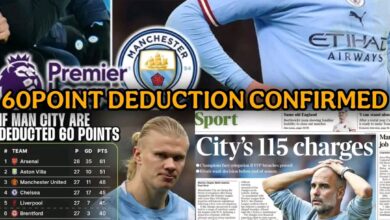
His current contract with Manchester City runs until 2027. On paper that suggests stability and long term commitment. But inside the football world contracts do not always tell the full story. Clubs often begin planning for the future long before any official departure is announced. Behind the scenes there has already been quiet discussion about what Manchester City might do when the Guardiola era finally ends.
Reports have suggested the club has looked at several possible successors. One name that has been mentioned is **Enzo Maresca**, who once worked as an assistant under Guardiola and understands the tactical philosophy that has made City so successful. Bringing in a former assistant could allow the club to maintain the same football identity even after Guardiola eventually steps aside.
Another idea sometimes discussed inside football circles is that Guardiola might remain connected to Manchester City in a different role once he finishes managing. After achieving so much on the pitch he could potentially move behind the scenes, offering advice, helping guide the club’s long term strategy and sharing his extraordinary knowledge of the game.
But when Guardiola himself speaks about the future, he often sounds like a man who simply wants to stop for a while.
During a recent conversation ahead of a major Champions League clash with **Real Madrid**, Guardiola was asked a simple but powerful question. Would he miss nights like this when he finally retires?
His answer revealed just how much football still means to him.
Guardiola explained that of course he would miss these special matches. Nights in the Champions League carry a unique atmosphere that few competitions can match. The tension, the noise from the crowd, the feeling that every moment could decide a club’s destiny. For Guardiola, these nights represent the pure magic of football.
He spoke warmly about his admiration for Real Madrid, showing the respect he has always had for the Spanish giants and their incredible history in European competition. Madrid’s success in the Champions League has made them one of the most respected institutions in world football and Guardiola acknowledged that openly.
But his reflections did not stop there.
He began to think about all the different stadiums he has visited during his career and the places he will miss when he finally stops managing.
He mentioned the legendary **Camp Nou**, the home of **FC Barcelona** where Guardiola built the team that many consider the greatest club side ever assembled. That Barcelona squad dominated world football with players like **Lionel Messi**, **Xavi**, and **Andrés Iniesta** orchestrating a style of football known as tiki-taka.
Guardiola admitted that returning to those stadiums brings powerful memories. The history, the emotions, the moments that shaped his career.
He also spoke about his time managing **Bayern Munich**, another giant of European football where he continued to develop his tactical ideas and dominate domestic competition in Germany. Even though he did not win the Champions League during his time in Munich, the experience helped him evolve as a coach and prepare for the next chapter of his career in England.
But perhaps the most interesting part of Guardiola’s reflections came when he started talking about the smaller stadiums across England that many fans might not expect a global superstar manager to love so much.
He mentioned the famous atmosphere of **Selhurst Park**, home of **Crystal Palace**. Guardiola said he genuinely enjoys visiting grounds like that because they represent the heart and soul of English football. The noise from the supporters, the closeness of the crowd to the pitch and the unpredictable nature of those matches make them unforgettable experiences.
He also spoke fondly about stadiums like **Goodison Park**, the historic home of **Everton**, where generations of football history have been written. These are the places where the traditions of English football feel alive.
For Guardiola, the beauty of English football is not only about the biggest arenas or the most famous teams. It is also about the variety of stadiums, the passionate supporters and the deep culture that surrounds the game.
He even mentioned how much he enjoys matches in the **FA Cup**, especially when Premier League teams travel to face lower league sides. Those games can create magical moments where underdogs challenge giants and entire communities come together to support their local team.
All of these experiences, Guardiola admitted, are things he will miss when the day finally comes for him to step away from management.
But then he said something that once again sparked debate among fans and analysts.
He simply said that one day it will be over.
Those words might sound obvious because every career eventually ends. But when someone as successful and influential as Guardiola says it, people listen carefully. They try to understand whether he is preparing for that moment sooner rather than later.
This is not the first time Guardiola has spoken about taking a break from football.
After leaving Barcelona in 2012, he stepped away from the game for an entire year before returning with Bayern Munich. During that sabbatical he spent time with his family, travelled and allowed himself to recover from the emotional and mental exhaustion that comes with managing at the highest level.
Later he admitted that the break helped him rediscover his passion for football.
Now it seems he might be thinking about something similar again.
Last summer Guardiola spoke openly about what he plans to do when his time at Manchester City eventually ends. He said that when this stage of his career finishes he is certain he will stop managing for a period of time.
He did not say exactly how long that break might last.
It could be one year.
It could be two years.
It could even be much longer.
What he knows for sure is that he will need time away from the intensity of football.
Guardiola described this idea in a very simple and poetic way. He said he wants to stop and just watch life moving around him. He joked that he wants to do something his grandfather used to describe — standing quietly and watching the world go by like cows watching a train pass through the countryside.
For a man who has spent his life analysing tactics, planning training sessions and thinking about the next match, the idea of simply stopping and observing life sounds almost peaceful.
Yet fans around the world find it difficult to imagine football without Pep Guardiola.
His influence on the game has been enormous. From Barcelona to Bayern Munich and now Manchester City, he has changed how teams approach possession, pressing and positional play.
Young coaches study his ideas. Players adapt their styles to fit his systems. Clubs build their long term strategies around the principles he helped popularise.
That is why every hint about his future becomes major news.
For Manchester City supporters the possibility of Guardiola leaving eventually creates mixed emotions. On one hand they understand that nothing lasts forever. On the other hand they know replacing someone like Guardiola will be one of the most difficult tasks the club has ever faced.
Because managers like him appear only once in a generation.
For now, however, Guardiola remains focused on the present. There are still trophies to fight for, matches to prepare and seasons to complete.
The day he finally steps away from the touchline will certainly arrive eventually.
But until that moment comes, Pep Guardiola continues doing what he has done better than almost anyone else in football history.
Standing on the sideline.
Watching the game he loves.
And trying to make his team play the most beautiful football the world has ever seen.