Pep Guardiola name his favourite player in his team and he will start every match

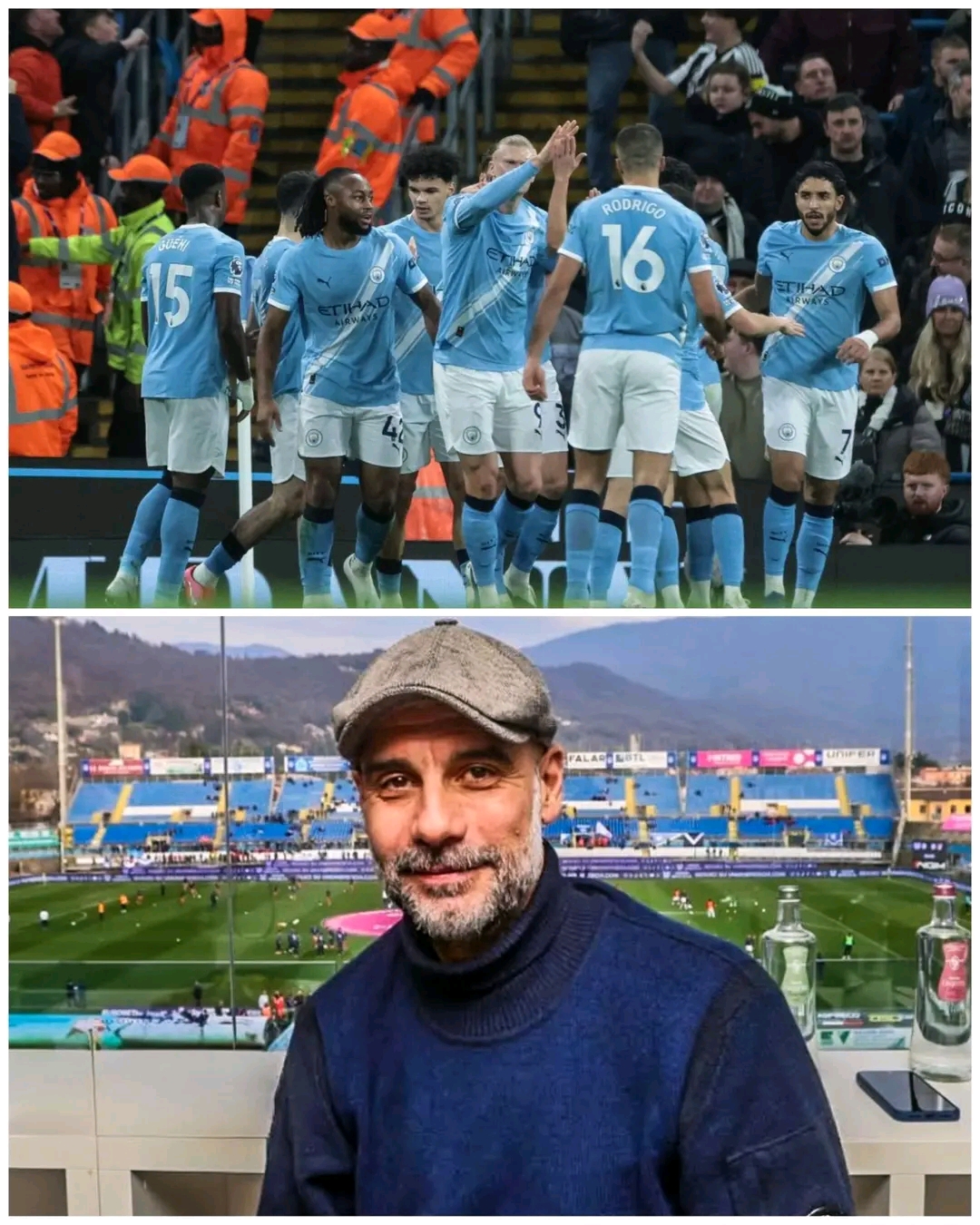
When the numbers first came out, many people were shocked. Pep Guardiola’s Manchester City have attempted 1,088 long balls in just 27 Premier League games this season. That is an average of 40 long passes per match. For some managers, that number would not mean much. But for Pep Guardiola, it feels like a small revolution happening quietly in front of us.
This is the same Pep Guardiola who built his reputation on short passing, patient build-up, and total control of the ball. The same coach who made the football world fall in love with triangles, quick combinations, and playing out from the back no matter the pressure. For years, long balls under Pep were almost forbidden. If a defender launched it forward without reason, it felt like breaking a rule. Possession was king. Control was everything.
Now the data shows something different. Manchester City are going long more often. Not randomly. Not desperately. But deliberately.
To understand why this is important, we have to remember who Pep is and what he represents in modern football. At FC Barcelona, he built one of the greatest teams in history. That side dominated Europe with short passes and constant movement. The ball moved faster than the opponents. Players like Xavi and Andres Iniesta controlled games with intelligence and calmness. Pep’s philosophy became famous worldwide.
Later at Bayern Munich, he continued the same idea but added more structure, more positional discipline, more tactical detail. Then he arrived at Manchester City in 2016 and English football changed.
The Premier League was known for speed, power, and chaos. Pep introduced control. He signed ball-playing defenders. He wanted a goalkeeper comfortable with the ball at his feet. He demanded that his centre-backs split wide. He insisted that midfielders drop deep to receive. He wanted full-backs to move inside. Every movement had a reason.
For years, Manchester City dominated the league with this approach. They broke records for points. They scored over 100 goals in a season. They suffocated opponents by keeping the ball for long periods. If the opponent did not have the ball, they could not score. It was simple but brilliant.
Long balls were not the main plan. If City went long, it was usually rare or situational. The focus was always to build from the back, attract pressure, and break lines with quick passing.
But football does not stay the same. The Premier League has evolved.
Today, almost every team presses high. Forwards chase defenders aggressively. Midfielders mark man-to-man. The intensity is higher than ever. The physical demands are extreme. Teams study City carefully. They try to block short passing lanes. They try to trap defenders near their own goal.
If you press Manchester City high and aggressively, you create space behind your defence. But if City insist on always playing short, they risk losing the ball in dangerous areas.
Pep Guardiola is many things, but stubborn is not one of them when it comes to winning. He believes in his principles, yes. But he also studies the game deeply. He adapts.
That is why the 1,088 long passes matter.
This season, Manchester City have shown they can mix their game. They still build patiently when the situation allows. They still create beautiful passing sequences. But now they also have the option to go over the press.
If an opponent pushes too high, City can send a direct ball forward. Not a hopeful clearance. A calculated pass. A targeted ball into space.
One of the biggest reasons this shift works is Erling Haaland.
Haaland changed the physical profile of Manchester City’s attack. Before him, City often played with a false nine or smaller forwards who relied on movement between the lines. Now they have a powerful striker who can win headers, hold up the ball, and stretch defences vertically.
When City play a long ball towards Haaland, it is not panic. It is strategy. He can outmuscle defenders. He can run into space behind them. He can bring others into play. His presence makes defenders hesitate. If they press high, they know one accurate long pass can send Haaland through on goal.
This vertical threat forces opponents to think twice. It creates balance in City’s attack.
The evolution is not about abandoning philosophy. It is about expanding it.
Pep still values control. He still demands technical quality. But now his team can switch styles within seconds. They can dominate possession when needed. They can attack directly when the space is there.
In modern football, flexibility is power.
Look at how the Premier League has changed. Teams like Liverpool FC under Jurgen Klopp made high pressing popular. Other teams followed. Now almost every side presses aggressively. Sitting deep against City is still common, but pressing them high has become another weapon.
If Pep refused to adapt, City could become predictable. Opponents would trap them. They would force mistakes. But instead, Pep has added another layer.
Goalkeepers and defenders now look long more often. Midfielders position themselves to win second balls. Wingers run beyond the defensive line. The team prepares for both outcomes. It is controlled directness.
Critics sometimes say long balls are simple football. But that is not true. A well-timed long pass requires vision, technique, and coordination. The runner must move at the right moment. The passer must judge distance and angle perfectly. It is not chaos. It is calculated risk.
Manchester City’s 40 long passes per game do not mean they have become a long-ball team. They still rank among the highest in possession. They still control tempo. The difference is choice.
When opponents press aggressively, City can bypass them. When opponents sit deep, City can patiently circulate the ball and wait for gaps.
Pep Guardiola once said football is about solving problems. Every match presents a new puzzle. The best managers find solutions. The 1,088 long balls are part of that solution.
This evolution makes City more dangerous because it removes predictability. Before, teams knew City would always try to build short. Now defenders cannot be sure. If they step forward, the ball can fly over their heads. If they drop deep, City will dominate possession.
It is a nightmare to defend.
Some fans may feel emotional about the change. They fell in love with the beauty of short passing. They enjoyed watching opponents chase shadows. But beauty in football is not only about one style. It is about intelligence.
Pep is not changing his identity. He is protecting it.
By adding direct options, he ensures his team can survive in a league that becomes faster and more aggressive every year. He is staying ahead of the curve.
Look at the bigger picture. The Premier League is now full of athletic defenders. Full-backs are quicker. Centre-backs are stronger. Midfielders run nonstop. Tactical analysis is deeper. Every weakness is studied.
To stay at the top, evolution is necessary.
Pep Guardiola understands that better than anyone. That is why he remains one of the best managers in the world.
This tactical shift shows maturity. It shows confidence. Only a secure manager can adjust without fear of criticism. Pep is not trying to prove he is right about short passes. He is trying to win.
And winning is what matters.
The statistics from StatMuse and Premier League data are not just numbers. They tell a story of adaptation. They show a coach responding to the environment.
Manchester City are still Manchester City. They still dominate games. They still create beautiful moments. But now they have another weapon.
When you combine technical build-up, positional play, and direct vertical threat, you create unpredictability. You create fear in opponents.
The best teams in history evolved. They did not freeze in time. Football changes. Tactics change. Players change. Managers must change too.
Pep Guardiola’s Manchester City attempting 1,088 long balls in 27 games is not betrayal of philosophy. It is proof of growth.
The question now is simple.
Does this make City even more dangerous?
Many signs suggest yes.
Because a team that can control possession and also attack directly is harder to stop. A team that can adapt during a match is more likely to survive tough moments. A team that studies trends and responds intelligently stays at the top longer.
Pep once revolutionized football with short passing and playing out from the back. Now he is quietly evolving that revolution. Not destroying it. Expanding it.
And we are watching it happen in real time.
Football never stands still. Neither does Pep Guardiola.