Everton’s season has felt like a long and painful story that never seems to reach a happy chapter. Every time hope begins to rise, something happens to drag it back down again. Injuries, uncertainty, frustration, and financial pressure have followed the club everywhere this season, and now another major blow has landed on Merseyside. This time, the problem surrounds Jack Grealish, a player who arrived with excitement, expectation, and belief, but whose future now feels more uncertain than ever.
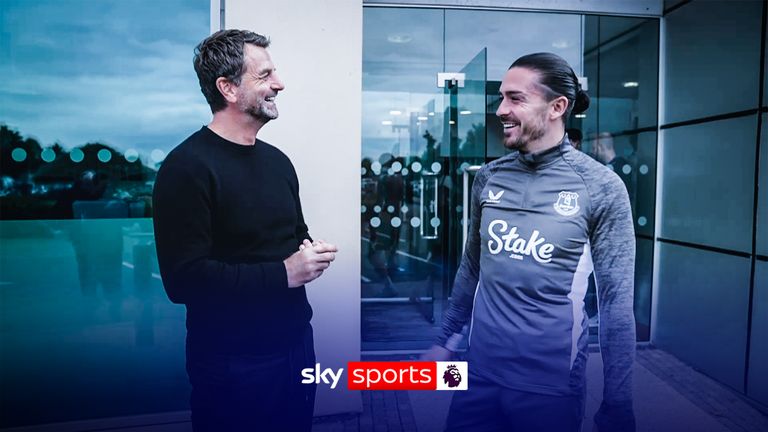
When Everton managed to secure Jack Grealish on loan from Manchester City, many fans felt the club had pulled off something special. It was not just about his talent, but about what he represented. A proven Premier League winner. A Champions League winner. A player who had played under Pep Guardiola and shone on the biggest stages. For a club desperate to feel relevant again, Grealish’s arrival felt like a statement. It felt like Everton were finally daring to think bigger.
From the very start, Grealish looked ready to make his mark. He played with freedom, confidence, and flair. He demanded the ball, carried it forward, and tried to lift the entire team around him. In his opening weeks, the impact was immediate. Four assists in his first three Premier League games showed exactly why David Moyes pushed so hard to bring him in. Everton suddenly had creativity. They suddenly had a player who could unlock defences, slow the game down, draw fouls, and give the team breathing space.
But football seasons are rarely kind, and Everton’s campaign quickly returned to its familiar pattern of setbacks. Injuries began to pile up everywhere across the squad. Key players dropped one by one. Training sessions became quieter as more names appeared on the medical list. David Moyes found himself patching line-ups together, changing systems, and asking players to fill roles they were never meant to play. Through it all, Grealish continued to feature, though his influence gradually faded as the team around him struggled.
Over the last two months, Everton’s injury crisis became almost unbelievable. Every week brought another setback, another update, another sigh from supporters who could barely remember what it felt like to see a fully fit squad. It reached the point where injuries no longer felt like bad luck, but like a cruel theme that defined the season. And then came the news no one wanted to hear.
At first, the club tried to stay calm. Minor issues had come and gone throughout the season, and there was hope this would be the same. But as assessments continued, the mood changed. Fears grew inside the club that the injury was far more serious than first believed. Reports suggested a possible fracture, an issue that could rule Grealish out not just for weeks, but potentially for the rest of the campaign.
For Everton, it felt like the final twist of the knife.
With Grealish sidelined, the club immediately entered discussions with Manchester City. Since the winger is only on loan, questions had to be asked. Could he return to the Etihad early? Would City take responsibility? Was there any flexibility in the agreement? A private meeting was held between the two clubs, hoping for clarity, perhaps even relief.
Instead, Everton were hit with another hard truth.
There is no option to send Grealish back.
The terms of the loan deal are clear. Everton must continue to pay the remainder of his wages for the season, regardless of whether he plays again. For a club already watching every pound, this is another heavy burden. Grealish earns significant wages, and paying them without receiving performances on the pitch feels like a painful reminder of how fragile Everton’s finances remain.
Still, despite the injury setback, talks did not stop. Everton and Manchester City discussed what happens next, not just for this season, but for the future. Behind closed doors, serious conversations were held. Everton’s ownership, led by Dan Friedkin, had to decide whether this loan was the end of the story, or just the beginning.
There is a belief inside the club that Everton remain interested in signing Grealish permanently. But only under very specific conditions.
The figure being mentioned is around £25 million.
In today’s market, that fee might sound reasonable for a player of Grealish’s profile. But context matters. Grealish is approaching 31 years of age. He has suffered multiple injuries this season. His output, while respectable, has not been spectacular. Six assists and two goals in the Premier League are solid numbers, but not extraordinary, especially when compared to his wages and reputation.
For some fans, the numbers tell one story. For others, they tell a different one.
Supporters are divided. Some argue that Grealish brought leadership, experience, and personality to a squad that desperately needed it. They point to his early performances, his ability to draw defenders, and his influence in tight matches. They believe injuries robbed Everton of seeing the best of him, and that with a full pre-season and better support, Grealish could still be a key player.
Others are less convinced. They question whether Everton should invest heavily in a player nearing his thirties, especially one who has struggled with fitness. They argue that Everton could find younger, hungrier players for less money, players who could deliver similar output without the financial risk.
Even within the fanbase, debates rage on. Some fans laugh off the idea of paying £50 million, calling it unrealistic. Others say £20 million might be fair. A few believe Everton should walk away entirely and focus on rebuilding with fresh energy.
David Moyes, however, remains a huge admirer of Grealish. He values not just his talent, but his character. Moyes believes Grealish brings confidence to the dressing room, belief to the pitch, and a sense of identity that Everton have lacked. From Moyes’ perspective, players like Grealish are rare, especially at clubs fighting to re-establish themselves.
But admiration alone is not enough.
Everton must make a decision based on logic, not emotion. This is a club that has made costly mistakes in the past. Expensive contracts, poor recruitment, and short-term thinking have all played a part in Everton’s struggles. The Friedkin ownership is determined not to repeat those errors.
As Grealish recovers from injury, Everton are already planning for life without him, at least in the short term. Reports suggest that Tyrique George has been identified as a possible replacement before the transfer window closes. Younger, cheaper, and full of potential, George represents a very different approach.
Replacing Grealish’s six assists and two goals will not be easy, but Everton have no choice. The season must continue, with or without him.
Looking back, Grealish’s Everton journey feels like a story of what might have been. His electric start raised hopes. His early assists hinted at a partnership that could grow. But injuries, team struggles, and inconsistency slowed everything down. By the time he found rhythm again, the season had already become a battle for survival rather than ambition.
Now, with his campaign likely over, the focus shifts entirely to the future.
Should Everton sign Jack Grealish permanently?
On one hand, he remains a fan favourite. His passion, personality, and connection with supporters cannot be ignored. He brought joy in moments where little else did. On the other hand, football is ruthless. Sentiment does not pay wages. Emotion does not balance books.
Everton must ask themselves hard questions. Is Grealish worth the financial commitment? Can he stay fit? Will his output improve? Does he fit into the long-term vision of the club?
There are no easy answers.
What is clear is that this situation perfectly sums up Everton’s season. Promise followed by pain. Hope followed by doubt. A feeling that every positive moment comes with a cost.
As talks continue behind the scenes, fans wait anxiously. Some want Grealish to stay. Some want the club to move on. All want stability. All want progress.
For now, Jack Grealish remains an Everton player, sidelined, watching from the outside, his future hanging in the balance. Whether this chapter ends with a permanent move or a quiet return to Manchester City remains to be seen.
But one thing is certain.
Everton’s decision on Jack Grealish will say a lot about who they are trying to become.