Real Madrid are once again standing at a familiar crossroads, where planning for the future clashes with the urgent demands of the present. The club has always prided itself on thinking several steps ahead, but the current season has forced decision-makers at the Santiago Bernabeu to confront a harsh reality. Injuries, lack of depth, and physical problems have combined to put enormous pressure on a squad that was supposed to be strong enough to compete on all fronts. As a result, the defensive department has become the main focus of concern, and with key players sidelined, Real Madrid are now being pushed into exploring solutions that would have seemed unlikely just a few months ago.
One of those solutions has emerged quietly but has already generated serious discussion behind the scenes. Reports suggest that Real Madrid have made contact to understand the situation of Abdukodir Khusanov, a centre-back currently contracted to Manchester City. On the surface, the idea sounds surprising. Manchester City are one of the strongest teams in Europe, and Real Madrid rarely look to them for defensive reinforcements, especially not in the middle of a season. But football is shaped by circumstances, and right now, circumstances are forcing Real Madrid to consider every possible option.
The interest in Khusanov fits perfectly into the type of strategy Real Madrid are following at this moment. The club does not want to make rushed long-term decisions. They do not want to block future signings or compromise their carefully planned roadmap. Instead, they are looking for temporary reinforcements who can deliver immediate help, players who can step in, perform at the highest level, and ease the pressure without creating problems down the line. In that sense, a loan move makes far more sense than a permanent transfer.
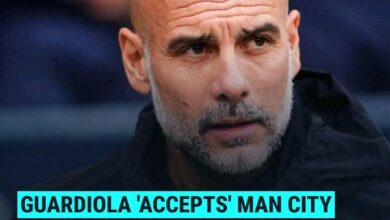
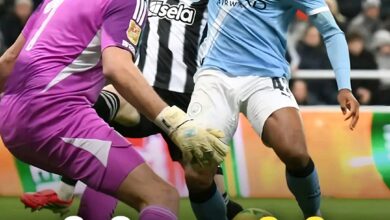
Khusanov’s situation at Manchester City explains why his name has appeared on Real Madrid’s radar. Despite his talent and reputation, he has found opportunities extremely limited under Pep Guardiola. City’s squad is packed with world-class defenders, and competition for minutes is fierce. Guardiola’s tactical demands are also incredibly complex, requiring defenders not only to defend but to play multiple roles during a match. For a young centre-back trying to establish himself, this environment can be both a blessing and a curse.
At City, Khusanov has struggled to find consistent game time. Matches have passed him by, and training sessions alone cannot replace the experience gained on the pitch in competitive games. Manchester City are fully aware of this situation. They understand that keeping a player inactive for too long can slow development and damage confidence. That is why the idea of a loan has started to make sense, especially if the destination is a club that plays at the very highest level.
From City’s perspective, Real Madrid represent an ideal environment for such a move. The intensity, the pressure, and the exposure would be enormous. If Khusanov can handle the demands of playing for Real Madrid during a difficult period, his growth as a player would accelerate rapidly. City would benefit in the long term by seeing their defender tested in one of the toughest settings in world football.
Real Madrid, however, are approaching the situation with caution. Their inquiry is exactly that, an inquiry. There is no rush, no panic signing, and no intention to commit to a permanent deal at this stage. A loan would allow the club to assess Khusanov closely, see how he adapts to their system, and judge whether he could have a future role beyond the short term. Crucially, there is no talk of a mandatory purchase clause. This is about solving a problem now, not creating a new one later.
The urgency behind this exploration is impossible to ignore. Real Madrid’s defence has been stretched to its limits. Eder Militao is out injured. David Alaba is also sidelined. With those two unavailable, Xabi Alonso has been left with only three senior defensive options, a situation that would worry any manager, let alone one navigating his first major season in charge of a club with such enormous expectations.
Every match has become a balancing act. Rotation is limited. Fatigue is increasing. The margin for error is shrinking. With decisive fixtures approaching in both domestic and European competitions, the lack of defensive depth has become a genuine concern inside the club. It is not just about surviving games, but about maintaining performance levels and avoiding further injuries that could turn a difficult situation into a crisis.
At the same time, there is another layer to Real Madrid’s story this season, and it revolves around Xabi Alonso’s belief in recovery and stability. A separate report has highlighted how strongly the manager feels about the importance of getting key players back fit. Alonso is convinced that the return of Eder Militao, along with either Dani Carvajal or Trent Alexander-Arnold, could completely change the team’s outlook in the coming weeks.
Inside Valdebebas, Alonso’s message has been clear. These players are not just squad members. They are pillars. Their presence brings balance, confidence, and structure. Militao’s qualities at centre-back are particularly difficult to replace. His pace allows Real Madrid to play a higher defensive line. His strength helps in physical battles. His recovery speed covers mistakes and provides security against fast attackers. Without him, the defence feels exposed.
On the right side, the situation has been equally challenging. Dani Carvajal has been a symbol of reliability for years, offering experience, leadership, and tactical discipline. Trent Alexander-Arnold, meanwhile, represents a different but equally valuable profile, bringing creativity, vision, and exceptional ball distribution. Both players give Real Madrid options in build-up play that are currently missing.
In their absence, Alonso has been forced to improvise. Federico Valverde has been deployed at right-back, a role he can perform but one that does not fully suit his natural strengths. Valverde’s energy, intelligence, and physical output help maintain balance, but he is not a specialist defender. His presence in defence also means losing his influence in midfield, where his box-to-box qualities are often crucial.
Raul Asensio has also been used to fill gaps, another example of how Alonso has had to stretch his resources. These solutions have worked to a degree, but the drop in quality is evident. Real Madrid can compete, but they are not functioning at their maximum level. Alonso knows this, and he is honest about it internally.
Despite these challenges, the manager remains calm. He feels more secure when players like Valverde are available, even out of position, because they bring reliability and commitment. But he also knows that these are temporary fixes. Long-term success requires players in their natural roles, fully fit and physically prepared to handle the demands of a long season.
Beyond tactics and selection, there is a growing concern at Real Madrid that goes deeper than any single injury. The club is increasingly worried about the overall physical condition of the squad. Injuries have piled up one after another. Several players are playing through discomfort. Recovery times feel longer. Fitness has become the dominant issue, overshadowing even results in importance.
When Xabi Alonso arrived, he was given permission to bring in his own coaching staff. This was seen as a sign of trust and a way to support his ideas fully. However, questions are now being asked internally about why the squad’s physical condition has reached this point. Antonio Pintus remains at Valdebebas, but in a different role, and the current situation has raised eyebrows.
These concerns do not automatically point to blame, but they do highlight the complexity of managing a squad at the highest level. Modern football demands intensity, speed, and constant pressing. The physical toll is enormous, especially when injuries force players to log heavy minutes without proper rotation. Real Madrid are now feeling the consequences of that reality.
This context explains why a player like Abdukodir Khusanov has suddenly become relevant. He is not being viewed as a long-term saviour or a future cornerstone of the defence. Instead, he represents a possible stabilising force, someone who could step in, provide fresh legs, and reduce the burden on an already stretched back line. In a season where survival through difficult periods can define success, even a short-term solution can be decisive.
The coming weeks will be crucial. If Militao returns as expected, and if Carvajal or Alexander-Arnold can regain fitness, Real Madrid’s situation could improve dramatically. Alonso truly believes that those returns would address two of the biggest weaknesses currently affecting the team. His confidence is based on experience, not optimism. He understands how quickly a squad’s balance can change when key pieces fall back into place.
Until then, the club must navigate carefully. Every decision matters. Every injury setback could have serious consequences. Exploring the loan market is not a sign of weakness, but a recognition of reality. Even the biggest clubs in the world must adapt when circumstances demand it.
Real Madrid’s story this season is one of resilience, improvisation, and careful planning under pressure. The interest in Khusanov, the hope surrounding returning stars, and the concerns about fitness all form part of a bigger picture. This is a club trying to protect its identity while surviving a difficult phase.
Whether or not the Khusanov move materialises, the message is clear. Real Madrid are alert, aware, and willing to act if necessary. They are not panicking, but they are not ignoring the warning signs either. In elite football, success often depends not just on talent, but on timing, health, and the ability to make the right decision at the right moment.
As the season ccontinues the balance between short-term fixes and long-term vision will define Real Madrid’s path. For now, all eyes remain on the treatment room, the training pitches at Valdebebas, and the quiet conversations taking place behind closed doors. In those spaces, the future of Real Madrid’s season is being shaped, one careful decision at a time.