Real Madrid vs Man City Dud Proved He is ‘Finished’ at Champions League Level

When Real Madrid fell to a 2–1 defeat against Manchester City in their latest Champions League outing, the result itself was disappointing, but the larger talking point emerging from the night centered around a single player whose performance has sparked urgent discussions within the club. As the January transfer window approaches, the Spanish giants are increasingly being forced to confront an uncomfortable reality: one of their most experienced defenders no longer appears capable of performing consistently at the highest European level.
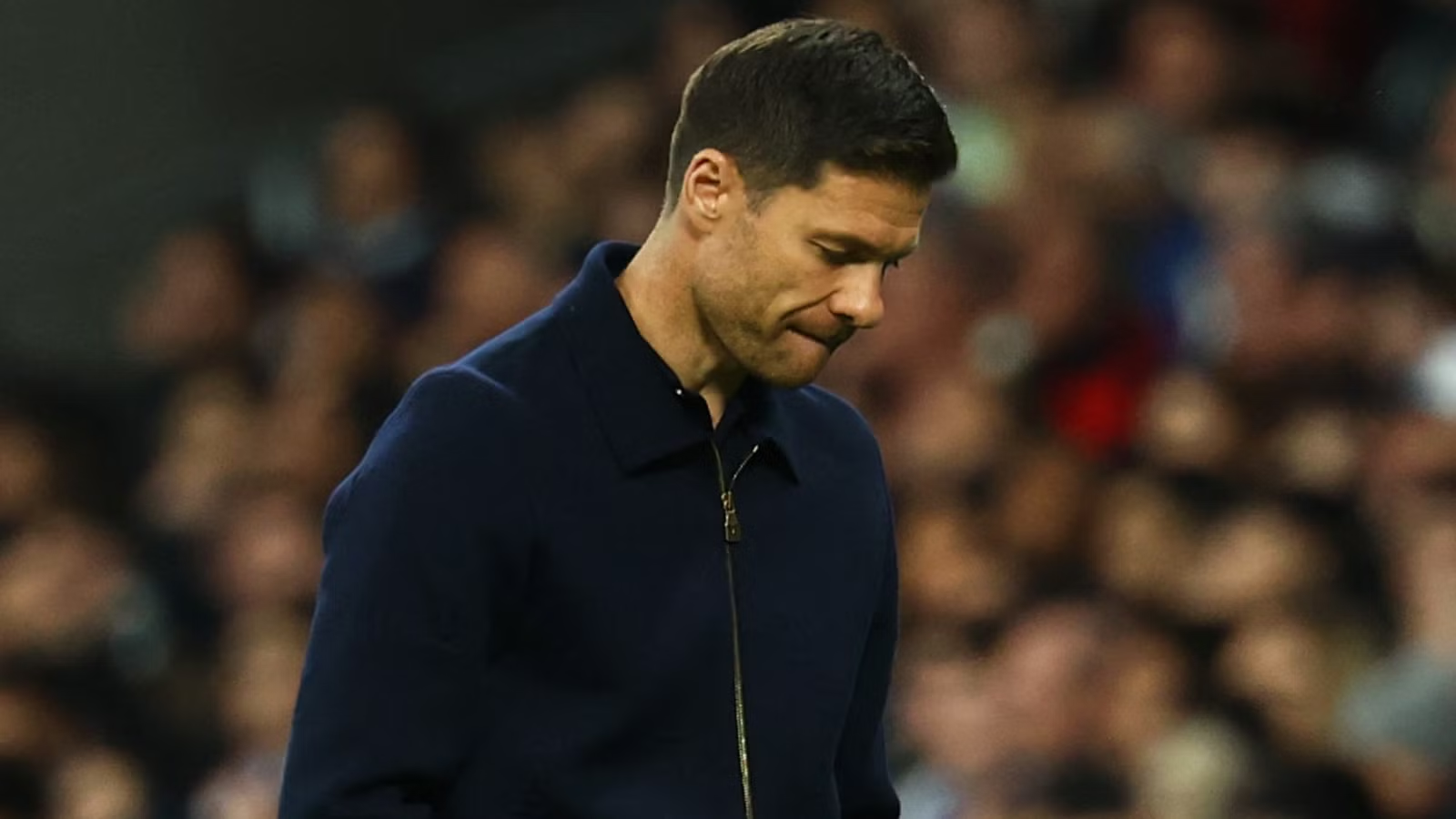
The match, played at the Santiago Bernabéu, carried enormous pressure for both sides. Real Madrid, under Xabi Alonso, were in desperate need of a strong statement performance after a string of erratic results had left supporters anxious and the media openly speculating about the manager’s future. Manchester City, meanwhile, arrived confident and composed, knowing that Pep Guardiola’s system has historically posed significant problems for Madrid’s defense.
Despite the eventual loss, Madrid did not enter the match passively. In the opening stages, Alonso’s side pressed with intensity, trying to force City into mistakes during the build-up phase. That approach initially paid off. City, typically calm in possession, looked uncharacteristically unsettled as Madrid chased aggressively and closed passing lanes. For around 20 minutes, Madrid dictated the rhythm and kept Guardiola’s midfield trio from asserting control.
Their early pressure finally resulted in a breakthrough in the 28th minute, when Rodrygo displayed the explosiveness and precision that have become hallmarks of his playing style. Receiving the ball on the edge of the penalty area, he burst forward with quick, decisive touches before firing a driven strike beyond the outstretched arms of Gianluigi Donnarumma. The strike lifted the atmosphere inside the Bernabéu and momentarily eased the tension surrounding Alonso’s tenure.
However, Madrid’s defensive frailties quickly re-emerged. Manchester City, though struggling to impose their usual dominance in open play, turned to a set piece to restore parity. Just eight minutes after Rodrygo’s opener, a corner delivery found Josko Gvardiol, whose powerful header created chaos in the penalty area. Thibaut Courtois failed to claim the ball cleanly, allowing City youngster Nico O’Reilly to react quickest and bundle in the equaliser from close range. It was a moment that exposed Madrid’s ongoing issues with defending dead-ball situations—issues that have persisted since the earliest months of the season.
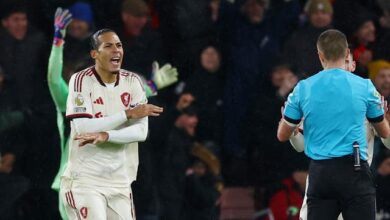
Worse was still to come for Los Blancos. Minutes after conceding the equaliser, Madrid found themselves punished again, this time through a costly lapse in judgment by Antonio Rüdiger. The German centre-back, known for his aggressive and physically dominant approach, mistimed his challenge on Erling Haaland inside the box. Though Rüdiger attempted to recover his position, he collided clumsily with the Norwegian striker, leaving the referee with little choice but to award the penalty. Haaland made no mistake, sending Courtois the wrong way and turning the match in City’s favour.
Related Posts:






That moment became the defining symbol of Rüdiger’s night—an evening in which nearly everything that could go wrong for him did. Since returning from injury earlier in the season, Rüdiger has struggled with timing, positional awareness, and overall composure, and City exploited those weaknesses relentlessly. Guardiola’s attackers frequently targeted the space around him, aware that his form had been inconsistent and that he could be drawn into rash challenges. Madrid supporters, watching nervously from the stands and following online, grew increasingly frustrated as the match progressed.
When the second half began, Madrid attempted to regain the intensity they had shown early on. Jude Bellingham came close to restoring parity when he attempted an audacious chip from close range, only to send the ball just over the crossbar. Despite creating several openings, Madrid never fully regained the fluidity they needed, and Donnarumma repeatedly denied them with smart saves and assertive positioning.
The final whistle confirmed their second Champions League defeat of the season, prompting renewed scrutiny over the squad’s defensive structure—and Rüdiger’s role in particular. While Madrid looked dangerous in attack, their defensive organisation was far from convincing, and Courtois’ interventions prevented the scoreline from becoming even more damaging.
Rüdiger’s Declining Reliability
Rüdiger has long been respected for his fearless style of defending, a trait that made him a fan favourite at Chelsea and helped him establish a strong reputation upon his arrival in Madrid. However, the current season has brought more questions than answers. His decision-making has been erratic; his positional play has lacked the sharpness expected of a top-tier centre-back; and his recovery pace—which once compensated for his aggressive tendencies—seems diminished.
His decline has not been limited to club football. Earlier in the season, during Germany’s match against Slovakia, he was culpable for a defensive lapse that led to a goal, reinforcing concerns that his issues are not simply tactical misunderstandings but signs of a broader regression.
Against Manchester City, these vulnerabilities were placed under a magnifying glass. Beyond the penalty he conceded, Rüdiger struggled to cope with City’s fluid attacking rotations. On several occasions, he was dragged out of position or beaten by quicker, more agile attackers. Were it not for Courtois’ awareness, Madrid could easily have conceded more than two goals.
Statistics from the match paint a stark picture of his struggles. He won only one of his four ground duels and one of his four aerial duels—remarkably low numbers for a defender whose game is built around physical confrontation. He lost possession six times, committed two fouls (one of which nearly earned him a second yellow card), and made minimal impact in preventing City’s progression into dangerous areas.
GIVEMESPORT’s post-match player ratings reflected this decline, awarding Rüdiger a disappointing 3/10—a grade that succinctly summarised a performance riddled with errors.
The Injury Crisis That Complicates Madrid’s Decisions
Madrid’s defensive selection dilemma has been exacerbated by injuries to several key players. New signing Dean Huijsen, who was brought in this season with the intention of easing long-term defensive concerns, is sidelined. Eder Militao and David Alaba—two of the club’s most reliable defenders in past seasons—are also unavailable, leaving Madrid with limited options.
In an ideal scenario, Rüdiger might have been rested or rotated out of the starting eleven temporarily to recover form and confidence. But under the current circumstances, Madrid cannot afford to bench him. That lack of depth forces Alonso to deploy him despite his downturn in performance, and matches like the one against City highlight how problematic this dependence has become.
At 32 years old and entering the final months of his contract, Rüdiger’s long-term future must be evaluated with pragmatism. Madrid have historically been reluctant to offer lengthy contract renewals to players in their thirties, particularly when performances begin to dip. The club’s hierarchy is already planning its next era of defensive leaders, and the defeat to City intensified the belief that a major upgrade is no longer optional—it is necessary.
Fan Reactions Intensify the Pressure
Supporters did not hold back in their assessment of Rüdiger’s display. Social media platforms were flooded with criticism, with many fans highlighting the penalty incident as emblematic of his decline. Comments ranged from frustration to outright disappointment.
One supporter, reacting immediately after the foul on Haaland, wrote:
“Madrid having an absolute shocker at the back. Rüdiger continues his poor form and gives away an atrocious penalty which Haaland buries.”
Another pointed to the clear nature of the foul:
“That has to be a penalty on Haaland. Rüdiger shocker.”
A third fan, offering a broader critique of Madrid’s defensive setup, singled out Rüdiger with forceful wording:
“Horrendous.”
Such reactions highlight a growing belief among fans that Rüdiger’s time as a defensive mainstay may be coming to an end. While Madrid have plenty of issues to address across the pitch, the centre-back position is quickly becoming a priority area for reinforcement.
A Wider Issue Reflecting Madrid’s Transitional Phase
Real Madrid find themselves in a complex transition period. Alonso was appointed with the expectation that he would usher in a new era built around the club’s impressive collection of young talent—players like Jude Bellingham, Eduardo Camavinga, Arda Güler, and Vinícius Júnior. The team’s attacking identity is evolving, but the defensive foundation has not kept pace.
The injury-plagued defensive line has forced constant reshuffling, preventing any consistency or stability. Rüdiger’s drop in form, combined with the absences of Militao and Alaba, has left Madrid vulnerable against Europe’s elite. Each setback increases the pressure on Alonso, whose tactical ideas require a solid defensive base to function properly.
If Madrid are to compete with the likes of City, Bayern Munich, and Paris Saint-Germain in the Champions League, the defence must be reconstructed—not partially, but significantly. Rüdiger’s decline is one symptom of a broader structural problem.
Looking Ahead: What Madrid Must Do
The upcoming transfer window provides an opportunity for course correction. Whether Madrid pursue an immediate signing in January or wait until the summer to bring in a marquee centre-back, the need for reinforcements is unmistakable.
Top-level clubs build their success on strong, consistent defensive partnerships, and right now Madrid do not have that. Rüdiger may still offer valuable experience and depth, but he no longer appears capable of anchoring a back line through the Champions League knockout stages.
Allowing him to leave on a free transfer next summer—rather than extending his contract—would reflect both realism and ambition. Madrid cannot afford to rely on sentiment when constructing a squad meant to challenge for European titles.