Scottish Premiership leaders have been hit with a 6‑point deduction after being found guilty of breaching SPFL rules. ⚽ Fans are in shock — this could change everything!

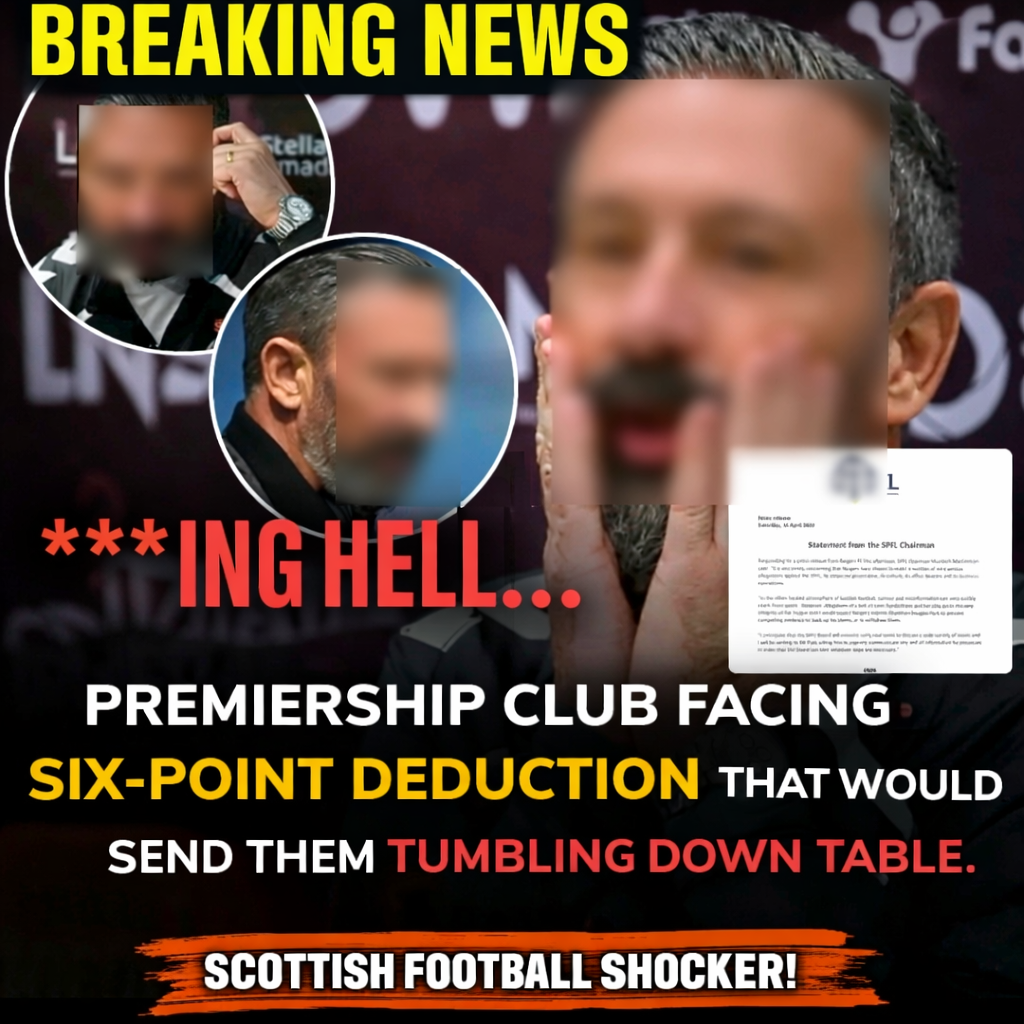
Scottish football has always thrived on drama, passion, and rivalry, but the recent announcement of a six‑point deduction for the Premiership leaders has created one of the most seismic shocks in recent memory. The ruling, handed down by an independent SPFL tribunal, has not only altered the league table but also reshaped the entire narrative of the season. Fans woke up to the news with disbelief, rival supporters celebrated, and pundits immediately began dissecting what this means for the future of the game in Scotland. The story is not just about points lost; it is about governance, integrity, and the fragile balance of power in a league where every decision carries enormous weight.
The breach itself stemmed from irregularities in player registration and violations of embargo conditions. These may sound like administrative oversights, but in football they are fundamental to fairness. Registration rules ensure that every player on the pitch is eligible, and embargo conditions are designed to prevent clubs from gaining unfair advantages during restricted periods. When rival clubs raised concerns about inconsistencies in squad lists, the SPFL launched a formal investigation. Evidence mounted, and the tribunal concluded that rules had indeed been broken. The punishment was swift and severe: six points deducted immediately, plus a financial penalty of £22,000. For a club sitting at the top of the table, this was devastating.
Before the ruling, the leaders held a narrow advantage over Rangers and Celtic. After the deduction, Rangers leapfrogged into first place, Celtic remained close behind, and the former leaders tumbled down the standings. The impact on the title race is enormous. What was once a tight contest has now become an uphill battle for the penalized club. Champions League qualification, which brings millions in revenue and prestige, is now at risk. The deduction has transformed the season from a story of dominance into one of survival.
Fans reacted instantly. Supporters of the penalized club expressed outrage, calling the punishment excessive and accusing the SPFL of bias. Rival fans celebrated gleefully, seeing the ruling as justice served and a chance to reclaim the title. Neutral observers debated whether the punishment fit the crime, with some arguing that a financial fine alone would have sufficed, while others insisted that points deductions are the only way to enforce compliance. Social media exploded with memes, hashtags, and heated debates. The divide reflects the intensity of Scottish football culture, where every decision is scrutinized through the lens of rivalry.
Pundits described the ruling as a watershed moment. For years, critics have argued that the SPFL lacked teeth in enforcing compliance. This decision demonstrates a willingness to impose severe sanctions, even at the expense of the league’s marquee storyline. Some analysts believe the ruling will deter future breaches, while others worry it could destabilize the league by alienating major clubs. Either way, the precedent has been set, and Scottish football governance will never be viewed the same again.
The financial and reputational fallout is significant. The fine itself may be modest compared to the financial muscle of Premiership sides, but the reputational damage is far greater. Sponsors may reconsider their partnerships, and the club’s image as a professional, well‑run organization has been tarnished. Appeals are possible, but historically rare. The club’s legal team is expected to challenge the ruling, though overturning such decisions is notoriously difficult. The appeal process will be closely watched, but few expect the outcome to change.
This is not the first time Scottish clubs have faced point deductions. In October 2025, Hamilton Academical suffered a similar penalty for breaching embargo rules. Going further back, Dundee and Livingston have also faced sanctions for financial mismanagement. These precedents show that the SPFL has long struggled with governance issues, and the latest ruling fits into a broader pattern of disciplinary enforcement. The recurrence of such cases suggests systemic problems within club management structures across the league.
The penalized club now faces a daunting schedule. Upcoming matches against Rangers and Celtic will be decisive. Dropping points in these fixtures could end their title hopes entirely. The pressure on players and management is immense. Every game is now a must‑win, and the psychological toll is heavy. Players are frustrated, feeling punished for mistakes that were not their fault. The manager is under fire, with critics questioning his leadership and competence. The board faces scrutiny, and fans demand accountability. The atmosphere around the club is tense, and the road ahead is fraught with challenges.
Rival clubs, meanwhile, see opportunity. Rangers benefit from the deduction, gaining momentum and confidence. Celtic remain in contention, energized by the chance to close the gap. The title race has become a three‑way battle, and the atmosphere in stadiums is electric. Rival fans are energized, chants and songs reflect both joy and anger, and the intensity of Scottish football culture is on full display. Media coverage is nonstop, with headlines dominating newspapers and TV debates filling airtime. International outlets have picked up the story, highlighting the governance crisis and its impact on Scottish football’s global reputation.
Sponsors are uneasy. Corporate partners value stability and professionalism, and the scandal undermines both. Some may withdraw, others may renegotiate deals, and the financial strain could be long‑lasting. The local economy, which relies on matchday income, may also feel the impact. Businesses around the stadium depend on fans, and uncertainty about the club’s future creates concern. The economic ripple effects extend beyond the pitch, affecting communities and livelihoods.
Supporters have organized protests, demanding justice and transparency. Social media campaigns trend worldwide, with hashtags like #SPFLBias and #JusticeForLeaders gaining traction. The fanbase is divided, loyalty tested, and emotions running high. The appeal process offers a glimmer of hope, but history suggests it is unlikely to succeed. The legal team will argue procedural inconsistencies, but overturning such decisions is rare. The club must prepare for the reality that the deduction will stand.
The broader implications for Scottish football are profound. Governance reform is now unavoidable. The SPFL must implement stricter rules, enhance transparency, and strengthen monitoring mechanisms. Independent oversight may be necessary, and technology solutions like digital registration systems could help prevent future breaches. The credibility of the league is at stake, and fans demand accountability. Government officials have even commented, suggesting oversight may be required. The future of Scottish football depends on reform, transparency, and accountability.
The European impact is also significant. The deduction risks Champions League qualification, which brings millions in revenue and global exposure. Failure to qualify would be a financial disaster and a reputational blow. Scottish football’s image on the European stage would suffer, and the penalized club would face long‑term consequences. The manager has promised to fight, to appeal, and to motivate players, but critics question his credibility. Senior players have expressed disappointment but pledged unity, promising to fight for the fans. Rival managers have responded cautiously, emphasizing fairness and professionalism, avoiding gloating, and respecting the process.
Analysts predict that the season outcome is now unpredictable. Rangers are favorites, Celtic contenders, and the penalized club outsiders. The title race is the most dramatic in a decade, and fans are captivated. The passion of Scottish football culture is unmatched, and the deduction has fueled the fire. Stadiums are electric, chants and songs reflect anger and joy, and the atmosphere is unforgettable. Social media amplifies the story, memes and debates spread globally, and Scottish football is in the spotlight.
The economic impact is severe. Revenue from ticket sales, merchandise, and sponsorship may decline. The local economy suffers, businesses reliant on matchday income face uncertainty, and communities feel the strain. The psychological impact is also heavy. Players, staff, and fans experience stress and anxiety. The future is uncertain, morale is low, and resilience is needed. Support and recovery will be essential, but the scars will remain.
In conclusion, the six‑point deduction has transformed the 2025–26 Scottish Premiership season. It has reshaped the title race, challenged the integrity of club management, and reinforced the SPFL’s commitment to fair play. Fans, pundits, and players alike will never forget this moment. Scottish football stands at a crossroads, and its future depends on reform, transparency, and accountability. The ruling is more than a punishment; it is a statement that integrity matters, governance matters, and no club is above the rules. The season will continue, the battles will rage, and history will remember this as one of the most dramatic chapters in Scottish football.