Sean Dyche is not the biggest moaner, but these managers need to look at themselves.” 🗣️ “They manage these players, and what we see is the nonsense going off in the penalty area – grappling, pulling, blocking, it is no longer football. It’s rugby.” 🗣️ “Until the PGMOL and the authorities, and the managers, accept that it’s got to stop, we’ll continue to have questions asked about these decisions.
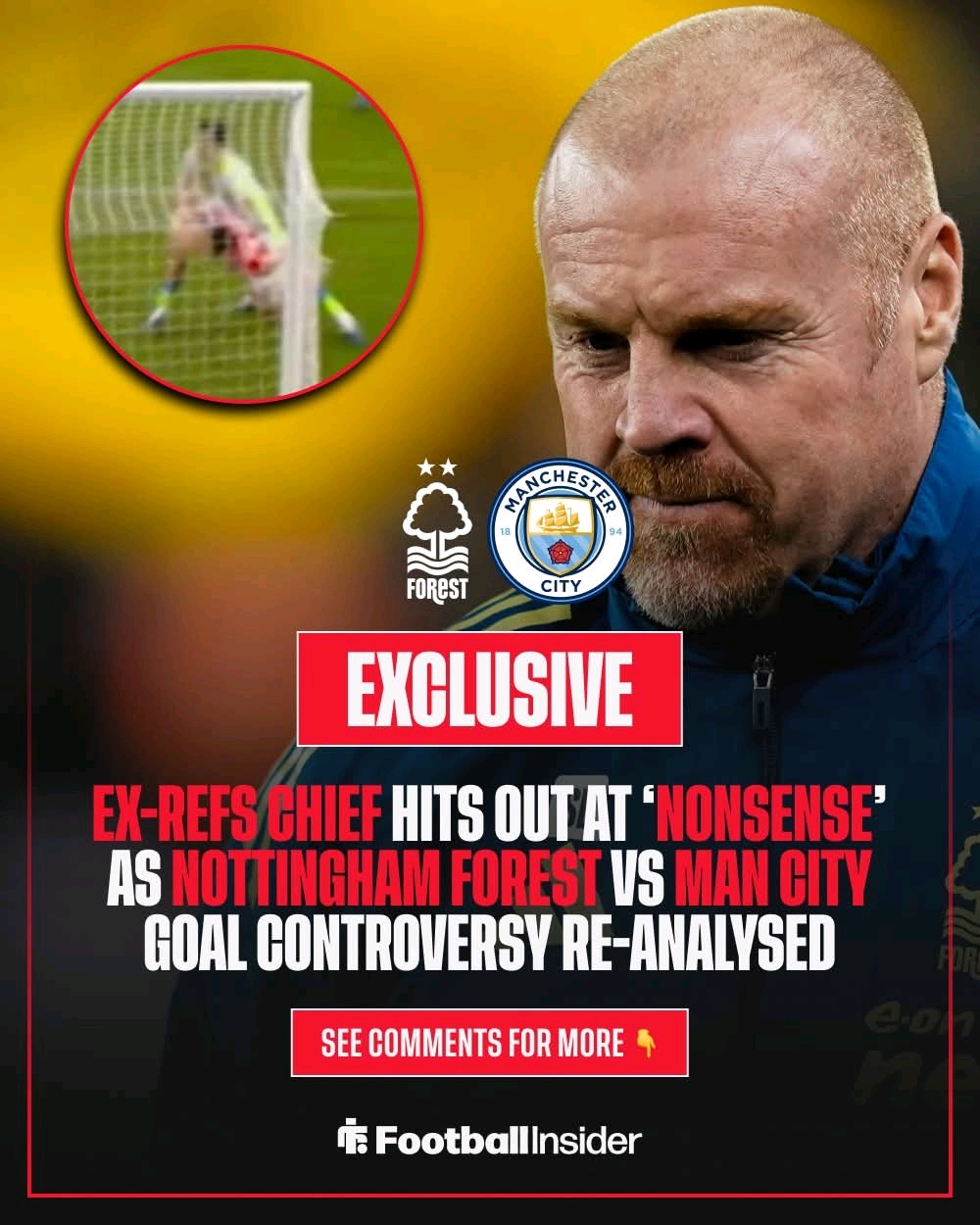
The dramatic Premier League clash between Nottingham Forest and Manchester City at the City Ground did not end with the final whistle. Instead, it sparked days of heated debate, anger, accusations, and strong reactions from managers, fans, pundits, and former referees. At the heart of it all was Manchester City’s late winning goal, scored in spectacular fashion by Rayan Cherki, and the controversial build-up that left Nottingham Forest furious and Sean Dyche exploding on the touchline.
Now, a respected voice from inside football’s refereeing world has stepped forward to give a clear verdict. Former PGMOL chief and ex-FIFA referee Keith Hackett has hit back hard at what he described as “nonsense”, insisting Nottingham Forest were wrong to complain and that the referee made the correct decision. According to Hackett, Morgan Gibbs-White has no right to feel aggrieved, and the wider problem lies with modern football itself.
The match, played on Saturday, 27 December, was already full of drama long before Cherki’s decisive moment. Forest and City were locked in a tense battle, with both teams trading blows and neither side willing to give an inch. Goals from Tijjani Reijnders and Omari Hutchinson had kept the score level heading into the final ten minutes, and the atmosphere inside the City Ground was electric. Forest sensed a famous result. City sensed an opportunity to strike late, as they have done so many times before.
When Cherki finally delivered the winner, lashing the ball home with quality and confidence, half the stadium erupted in celebration while the other half exploded in anger. Forest players immediately turned towards the referee, pointing back towards the six-yard box, where moments earlier Morgan Gibbs-White and Nico O’Reilly had been locked in a physical tussle. Sean Dyche was already out of his technical area, shouting furiously, convinced his side had been robbed.
For Forest fans, the frustration had been building throughout the match. They believed Manchester City had been treated leniently by referee Rob Jones. The biggest flashpoint came earlier, when Ruben Dias brought down Igor Jesus while already on a yellow card. Many inside the ground felt the City defender should have been sent off, and when he stayed on the pitch, the mood turned hostile.
As the game went on, more decisions appeared to go City’s way. Forest supporters felt several away players escaped punishment for fouls that would have resulted in yellow cards for home players. When Elliot Anderson eventually went into the referee’s book, the feeling of injustice deepened. By the time Cherki scored, the crowd was ready to explode.
Sean Dyche’s reaction after full-time summed up the mood. The Forest manager erupted on the touchline, confronting officials and venting his anger. His outburst was so strong that he now faces possible punishment from the authorities. For Dyche, the build-up to the winning goal was clear. He believed Nico O’Reilly had fouled Morgan Gibbs-White in the six-yard box and that the goal should never have stood.
The incident was quickly picked apart on television. On Match of the Day, opinions were divided. Sean Dyche’s view was shown, but Wayne Rooney, watching as a pundit, completely disagreed. The Manchester United legend insisted it was actually Gibbs-White who initiated the contact and that no foul should have been given. According to Rooney, this was simply part of the physical battle that now exists inside penalty areas.
That difference of opinion reflected the wider debate across English football. Fans argued online. Pundits debated on television. Some said Forest had been cheated. Others said City were simply stronger and braver in the key moment.
Into this storm stepped Keith Hackett, a man with decades of refereeing experience at the very highest level. Hackett is a former FIFA referee and once led PGMOL, the body responsible for referees in English football. When he speaks, people listen, because he understands the laws of the game and how they are applied better than most.
Speaking exclusively to Football Insider on The Final Whistle, Hackett delivered a blunt assessment. In his view, Nottingham Forest were wrong to fume, Sean Dyche went too far, and the referee was right to allow the goal.
Hackett did not sit on the fence. He made it clear that, in his opinion, it was Morgan Gibbs-White who committed the foul, not Nico O’Reilly. He suggested that Dyche, despite not usually being a big complainer, needed to look at the bigger picture and accept responsibility.
According to Hackett, the real problem is not one single decision, but the way football has changed inside the penalty area. He described what happens during set-pieces and crowded moments as “nonsense”, arguing that grappling, pulling, blocking, and wrestling have become normal. In his words, it is no longer football. It is rugby.
Hackett explained that until the authorities, PGMOL, and managers themselves accept that this behaviour must stop, controversies like this will continue. He pointed out that managers coach their players to grapple and block, then complain loudly when decisions go against them. In his view, that is hypocrisy.
He also defended referee Rob Jones, saying the official did well to stay out of the incident. By allowing play to continue, Hackett felt Jones made the correct call. He praised the referee for not being influenced by the crowd, the pressure, or the moment, and for applying the laws consistently.
Hackett acknowledged that managers will sometimes be on the wrong end of decisions. That is part of football. But he insisted that in this case, Forest’s anger was misplaced. The referee, he said, got it right.
This verdict will not calm the anger among Forest supporters, many of whom still believe their team was denied a crucial point or even a famous win. From their perspective, the Ruben Dias incident alone was enough to change the entire match. Playing against ten men for a large part of the game would have given Forest a huge advantage, and they feel that moment was ignored.
However, Hackett’s comments highlight an uncomfortable truth about modern football. Physical battles inside the box have become routine. Shirts are pulled. Arms are wrapped around opponents. Players push, block, and lean into each other constantly. Referees are forced to make split-second decisions while surrounded by noise, pressure, and expectation.
The Premier League, in particular, has allowed a high level of physicality. What might be a foul in one league is waved away in England. This inconsistency creates confusion and anger, especially when goals are involved.
Hackett believes that unless football cleans this up, debates like the one following Forest vs City will never end. Managers complain. Fans shout. Referees are blamed. But the cycle continues.
The Cherki goal itself was a moment of pure quality. In the chaos, City found calm. The young attacker struck the ball with confidence and precision, showing exactly why Pep Guardiola trusted him in such a high-pressure moment. For City, it was another example of their ability to deliver when it matters most.
For Forest, it felt like heartbreak. A late goal conceded at home, surrounded by controversy, always hurts more. The sense of injustice can linger for weeks, especially when the result affects league position and momentum.
Sean Dyche’s reaction showed how deeply he felt about it. Known as a passionate but usually controlled manager, his outburst underlined how strongly he believed his side had been wronged. Whether he will be punished remains to be seen, but the incident has already added another chapter to the ongoing debate about refereeing standards.
Wayne Rooney’s involvement also added weight to the discussion. As a former player who spent years battling defenders in the box, his view that Gibbs-White was at fault carries significance. Rooney understands how players use their bodies and how far they push the limits.
Hackett siding with Rooney strengthens that argument. From their perspective, Gibbs-White engaged in the tussle, and once players accept that level of contact, they cannot complain when it goes against them.7
Manchester City, meanwhile, move on with another important victory. Title races are often shaped by moments like this. Fine margins. Big decisions. Late goals. Guardiola’s side have made a habit of surviving controversy and coming out stronger.
Nottingham Forest, however, are left to reflect. They must channel their frustration into future performances rather than letting anger consume them. Dyche will need to refocus his players quickly, because dwelling on refereeing decisions rarely brings points back.
This match will be remembered not just for Cherki’s strike, but for the arguments that followed. It is another reminder that in modern football, the drama does not stop when the game ends.
Keith Hackett’s words may not satisfy everyone, but they provide clarity from someone who has seen it all. In his eyes, the goal was legal, the referee was correct, and the real issue lies deeper within the game itself.
Until football decides whether it wants physical battles in the box or strict enforcement of the laws, scenes like those at the City Ground will continue. Managers will shout. Fans will rage. Social media will explode. And referees will remain at the centre of the storm.
For now, Manchester City celebrate, Nottingham Forest hurt, and the Premier League rolls on, carrying yet another controversy with it into the next round of fixtures.