Liverpool against Manchester City is never just a football match. It is always tension, noise, pressure, pride, and drama mixed together. On this night at Anfield, everything came together in a way that left fans confused, angry, emotional, and talking long after the final whistle. What should have been remembered as a hard-fought Premier League battle instead became one of the most controversial endings of the season, with VAR once again taking centre stage and leaving everyone asking the same question: was common sense forgotten?
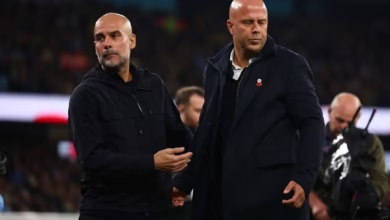
The atmosphere before kickoff already felt heavy. Liverpool needed a big result to prove their strength under Arne Slot, while Manchester City arrived knowing that any dropped points could hurt their title push. The crowd was loud, the lights were bright, and the tension was visible in every tackle from the opening minutes. Both teams played with intensity, pressing high and refusing to give each other space. It felt like one of those nights where one small moment could change everything.
The first half passed without goals but not without drama. Manchester City controlled possession in their usual calm and patient way, moving the ball from side to side, waiting for gaps to appear. Liverpool responded with aggression and speed, trying to hit City on the break and feed off the energy of the home crowd. Alisson made important saves, Ederson stayed alert, and tackles flew in across the pitch. It was physical, fast, and emotional.
The breakthrough finally came in the second half, and it was Liverpool who struck first. Dominik Szoboszlai stepped up to take a free kick, and what followed was pure quality. He hit the ball with confidence and precision, sending it past the City wall and beyond the goalkeeper. Anfield exploded. The noise was deafening. Players ran toward the corner, fists pumping, believing this was the moment that could define their night.
For Szoboszlai, it was a moment of pride. For Liverpool, it felt like control. They defended with heart, fought for every ball, and tried to slow the game down. Manchester City pushed harder, increasing the tempo and committing more players forward. Pep Guardiola stood on the touchline, waving his arms, demanding movement and urgency. He knew his team had to respond.
That response came through Bernardo Silva. With just six minutes of normal time left, City finally found their way through Liverpool’s defence. The ball moved quickly, a small pocket of space opened up, and Silva took his chance with calm confidence. The ball hit the net, and suddenly the game was level again. City’s bench erupted. Liverpool’s crowd fell into nervous silence. Momentum had shifted.
Then came the moment that would change everything. Manchester City won a penalty after Alisson brought down Matheus Nunes in the box. It was a split-second decision, but the referee pointed to the spot. Erling Haaland stepped forward, calm as ever, staring down the goalkeeper. He sent Alisson the wrong way and scored. City were now leading 2-1, and it felt like the match was slipping away from Liverpool.
But the drama was not finished. Not even close.
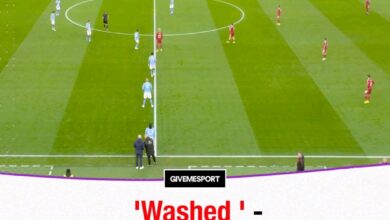
In stoppage time, Liverpool threw everything forward. Even Alisson left his goal to join the attack, hoping for one last miracle moment. City cleared the ball and broke forward at speed. Rayan Cherki pushed the ball toward the empty net, and Haaland sprinted after it to make sure it crossed the line. As he ran, Szoboszlai chased back desperately.
What happened next shocked everyone.
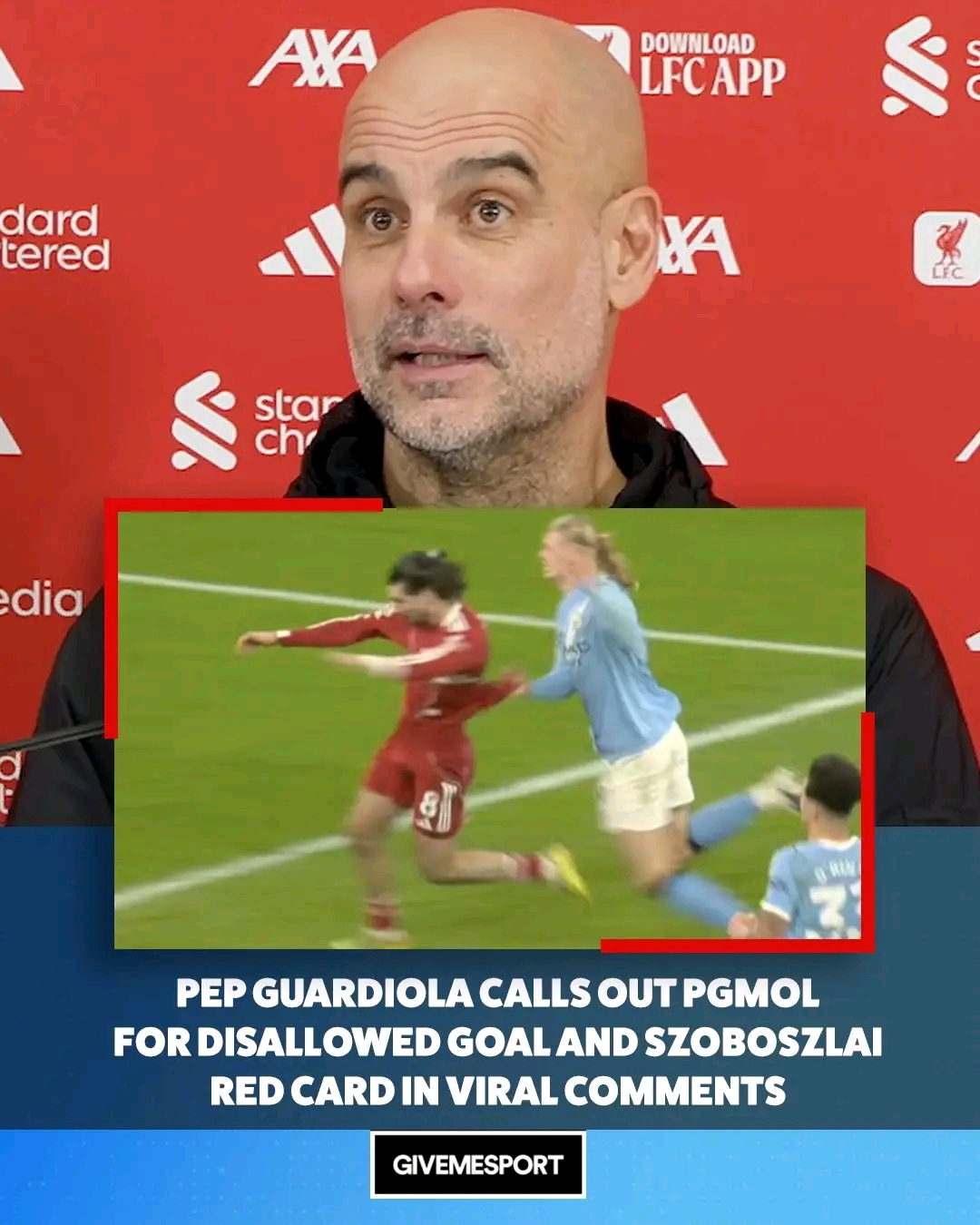
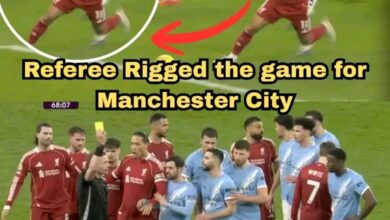
Szoboszlai pulled Haaland back outside the box, trying to stop the attack. Haaland then grabbed back, both players lost balance, and they tumbled to the ground as the ball slowly rolled into the net. City fans celebrated what they thought was the third goal. Liverpool players protested. The referee initially allowed play to continue.
Then VAR stepped in.
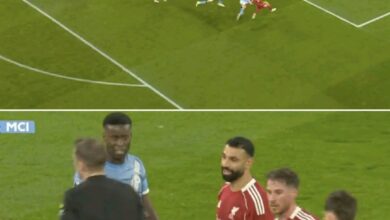
The referee was sent to the screen. The stadium waited. Minutes passed. Confusion spread. Finally, the decision came. The goal was disallowed. A free kick was given to Manchester City. And Dominik Szoboszlai was shown a red card for denying a goalscoring opportunity.
The reaction was instant and explosive.
Liverpool fans were furious. City players looked confused. Even neutral viewers struggled to understand how the game had ended this way. The Premier League later explained that Szoboszlai’s foul happened outside the box before Haaland’s actions, and that the advantage was lost when Haaland pulled back. According to the rulebook, the red card was correct.
But football is not played only in rulebooks. It is played by people, emotions, and moments.
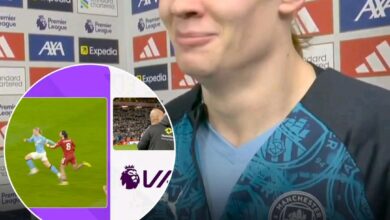
After the match, Erling Haaland spoke to Sky Sports, and his words surprised many. Instead of celebrating the decision, he showed sympathy for his opponent. He admitted that while the referee followed the rules, the outcome did not feel right.
He said that Szoboszlai would now miss three games, and that made him feel bad. Haaland explained that he would have preferred the goal to stand and for Szoboszlai to stay on the pitch. In his view, the simplest solution was also the fairest one. Give the goal, no red card, and end the game.
Those words carried weight. Coming from a striker who benefits from such decisions, it showed honesty. It also highlighted the growing frustration players feel toward VAR decisions that feel technically correct but emotionally wrong.
Pep Guardiola did not hide his anger either. In his usual passionate style, he made it clear that he wanted the goal to stand. He joked that the referee should have just given the goal and gone home. But behind the joke was real frustration.
Guardiola questioned why such pulls are often ignored during matches, with referees shouting “play on” repeatedly. He argued that common sense should have been applied. City had won the game anyway. Disallowing the goal and sending off Szoboszlai only added unnecessary punishment.
He said that in English football, referees often allow physical contact. So why, in this moment, was the rule applied so strictly? Guardiola’s words reflected a wider debate in football today. Is the game becoming too controlled by technology and interpretation, losing the human feel that made it great?
For Liverpool, the pain went deeper. Not only did they lose a crucial match, but they also lost one of their key midfielders for three games. Szoboszlai went from hero to villain in the space of minutes, though many fans felt he was simply unlucky. His free kick deserved to be remembered as a moment of brilliance, but instead it was overshadowed by controversy.
Arne Slot tried to remain calm, but it was clear the decision hurt. His team had fought hard, shown character, and come close to a big result. Instead, they were left with questions, frustration, and punishment.
The match will be remembered not for the quality of football, but for the ending. It will be replayed on television, debated on radio shows, argued about online, and used as another example in the long list of VAR controversies.
Football fans want fairness. They want clarity. But above all, they want common sense. This match raised serious questions about how the rules are applied and whether the spirit of the game is being protected.
Erling Haaland’s reaction said it all. When even the player who benefits says it feels wrong, maybe it is time for football to listen.
This was not just Liverpool versus Manchester City. It was football versus itself. And once again, VAR stood in the middle, leaving everyone wondering whether the game is better or worse because of it.
One thing is certain. This match will not be forgotten anytime soon.