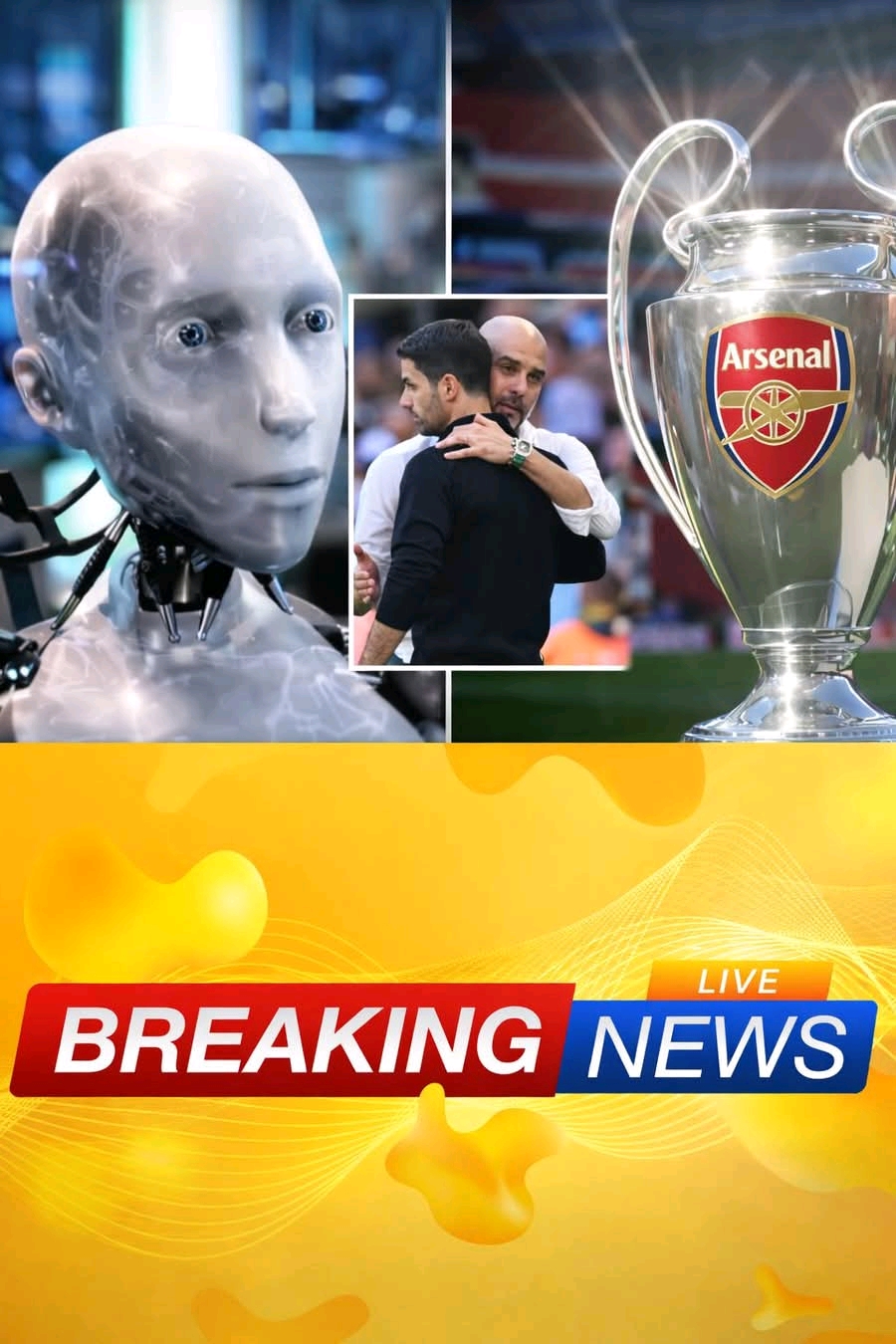
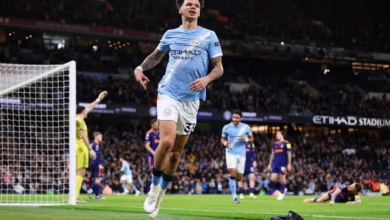
The supercomputer who has been correctly predicting the Champions League winners since 2005 has predicted where Arsenal will finish in Champions League this season
The night felt different in North London. The air around the Emirates was heavy with belief, tension, and something Arsenal fans have not felt in many years — real expectation. Not hope built on dreams. Not hype built on emotion. But belief built on numbers. Cold, calculated, emotionless numbers.
A powerful data supercomputer, one that has correctly predicted Champions League winners since 2005, has made its latest projection. And this time, the name at the top is Arsenal.
For many supporters, it sounded almost unreal. Arsenal. Champions of Europe. The same competition that has brought them so much pain. The same trophy that slipped away in 2006. The same stage where dreams have been broken time and time again. But now, the simulations say something different.
The machine ran thousands upon thousands of simulations. It studied current form. It measured expected goals. It calculated defensive structure. It evaluated injury records. It examined tactical flexibility. It even projected possible knockout paths. And after all those runs, after all the data, after all the probability patterns — Arsenal came out on top more times than any other club.
Not Real Madrid. Not Manchester City. Not Bayern Munich.
This prediction did not come from emotion. It did not come from fan excitement. It came from raw performance trends across the season. Arsenal’s consistency has been one of the strongest indicators in Europe. They do not just win. They control games. They do not just attack. They defend with intelligence. They do not just rely on one player. They function as a collective machine.
Under Mikel Arteta, everything has changed.
When Arteta first arrived, Arsenal were unstable. They lacked identity. They lacked leadership. They lacked belief. But slowly, season after season, he built something structured. He demanded discipline. He demanded courage. He demanded intensity. Now, that work is paying off.
The supercomputer heavily valued Arsenal’s defensive numbers. Clean sheets. Pressing efficiency. Recovery speed. The partnership at the back has been calm and commanding. The full-backs invert intelligently. The defensive line holds shape under pressure. These patterns repeat every week. And probability models love consistency.
In midfield, Declan Rice has become the foundation. He breaks attacks. He carries the ball forward. He wins duels. He protects the back line. But more than that, he gives the team balance. Alongside him, Martin Ødegaard controls rhythm. His vision, his calmness, his decision-making in tight spaces — they give Arsenal creative authority in Europe’s toughest matches.
On the wings, Bukayo Saka continues to grow into a world-class force. Defenders double up on him. They try to close angles. But he finds solutions. Gabriel Martinelli stretches defensive lines. His speed creates fear. His movement creates space. And in Europe, space is everything.
The data model also examined squad depth. In past years, injuries destroyed Arsenal’s rhythm. One key player missing would change everything. But not this season. Rotation has been smarter. Substitutes have delivered. Players coming off the bench maintain intensity. The drop in performance between starters and backups is minimal. That matters deeply in knockout tournaments.
Experience was once considered Arsenal’s weakness. A young squad. Limited European medals. But that narrative is changing. This group has fought in Premier League title races. They have handled high-pressure Champions League nights. They have come from behind. They have protected narrow leads. Psychological resilience has become part of their identity.
The supercomputer tracked comeback victories. It tracked performance in tight matches. It tracked goal difference trends in high-stakes fixtures. Arsenal scored high across these metrics. The model increased their probability because mental strength is measurable through patterns.
Another key factor was projected knockout pathways. Simulations suggested Arsenal are statistically less likely to face multiple elite giants back-to-back compared to some rivals. That does not mean easy matches. There are no easy matches at this stage. But probability margins matter.
Of course, football is not mathematics alone. A single red card can change destiny. A controversial refereeing decision can rewrite a season. A moment of magic from an opponent can silence numbers. Arsenal fans understand this better than most.
They remember Paris 2006. They remember near misses. They remember collapses. They remember exits that hurt for years.
But this team feels different.
The Emirates Stadium now feels alive on European nights. The crowd is louder. The players are braver. The manager speaks with conviction. Arteta does not talk about participation. He talks about winning. That shift in mentality is powerful.
When asked about ambitions, Arteta made it clear: Arsenal are in the competition to win it. Not to gain experience. Not to build for the future. To win now.
That mindset feeds into performance. Players respond to belief. Confidence increases precision. Precision increases results.
Across Europe, rival fans reacted quickly. Some dismissed the prediction. Some laughed. Some warned against overconfidence. But others quietly admitted the truth — Arsenal have become one of the most complete teams in Europe this season.
Real Madrid still carry history. Manchester City still carry dominance. Bayern Munich still carry power. But Arsenal carry balance. And balance often wins tournaments.
The squad chemistry is visible. Celebrations look united. Defensive blocks are synchronized. Midfield rotations are rehearsed. Attacking transitions are sharp. These are not accidents. They are signs of a mature system.
The supercomputer’s track record gives weight to its projection. Since 2005, it has successfully predicted Champions League winners multiple times. It analyzes form curves rather than reputation. It values trends rather than headlines. And right now, Arsenal’s trend line is strong.
For fans in North London, this prediction is more than statistics. It feels like validation after years of rebuilding. It feels like patience rewarded. It feels like destiny aligning with preparation.
But nothing has been won yet.
The knockout rounds demand perfection. Away goals may no longer count differently, but away performances still decide futures. Defensive concentration must remain sharp. Finishing must be clinical. Injuries must be managed carefully.
One slip, and the dream ends.
Still, belief is rising. Supporters speak about European glory with confidence rather than nostalgia. Younger fans who never witnessed the 2006 final now imagine something even bigger — lifting the trophy at last.
If Arsenal complete the journey, it would define an era. It would cement Arteta’s legacy. It would justify every transfer decision. It would confirm that the project is complete.
It would also change how Europe sees Arsenal.
For years, Arsenal were viewed as talented but fragile. Attractive but vulnerable. Competitive but not elite. That image is fading. This team is disciplined. This team is ruthless. This team is resilient.