The night at St James’ Park was already tense before the controversy arrived. Manchester City were in control, Newcastle were fighting for survival, and the Carabao Cup semi-final atmosphere was thick with noise, pressure, and expectation. These are the nights where margins matter, where every decision can swing emotion, momentum, and belief. And when Antoine Semenyo thought he had scored his second goal of the night, the moment felt decisive. It felt like the kind of goal that kills a tie. Instead, it became the centre of a storm that once again dragged VAR, referees, and the rules of football into the spotlight.
City had struggled to break Newcastle down in the first half. Possession was there, patience was there, but the breakthrough was not. Newcastle defended deep, bodies everywhere, fighting for every second. Pep Guardiola paced the touchline, calm on the surface but burning inside, waiting for the moment his team would finally find space. That moment came early in the second half when Semenyo reacted quickest inside the box, stabbing the ball home from close range. Relief washed over the City players. Control was restored. The tie tilted their way.
Then came the corner. A moment that should have been routine. The ball was swung in, chaos followed, and Antoine Semenyo, sharp and alert again, flicked a brilliant backheel past Nick Pope. It was instinctive. Clever. The kind of finish that separates confidence from panic. City celebrated. Semenyo wheeled away. The goal was given. Newcastle players dropped their heads. The tie felt over. But football in the modern era rarely allows joy to last.
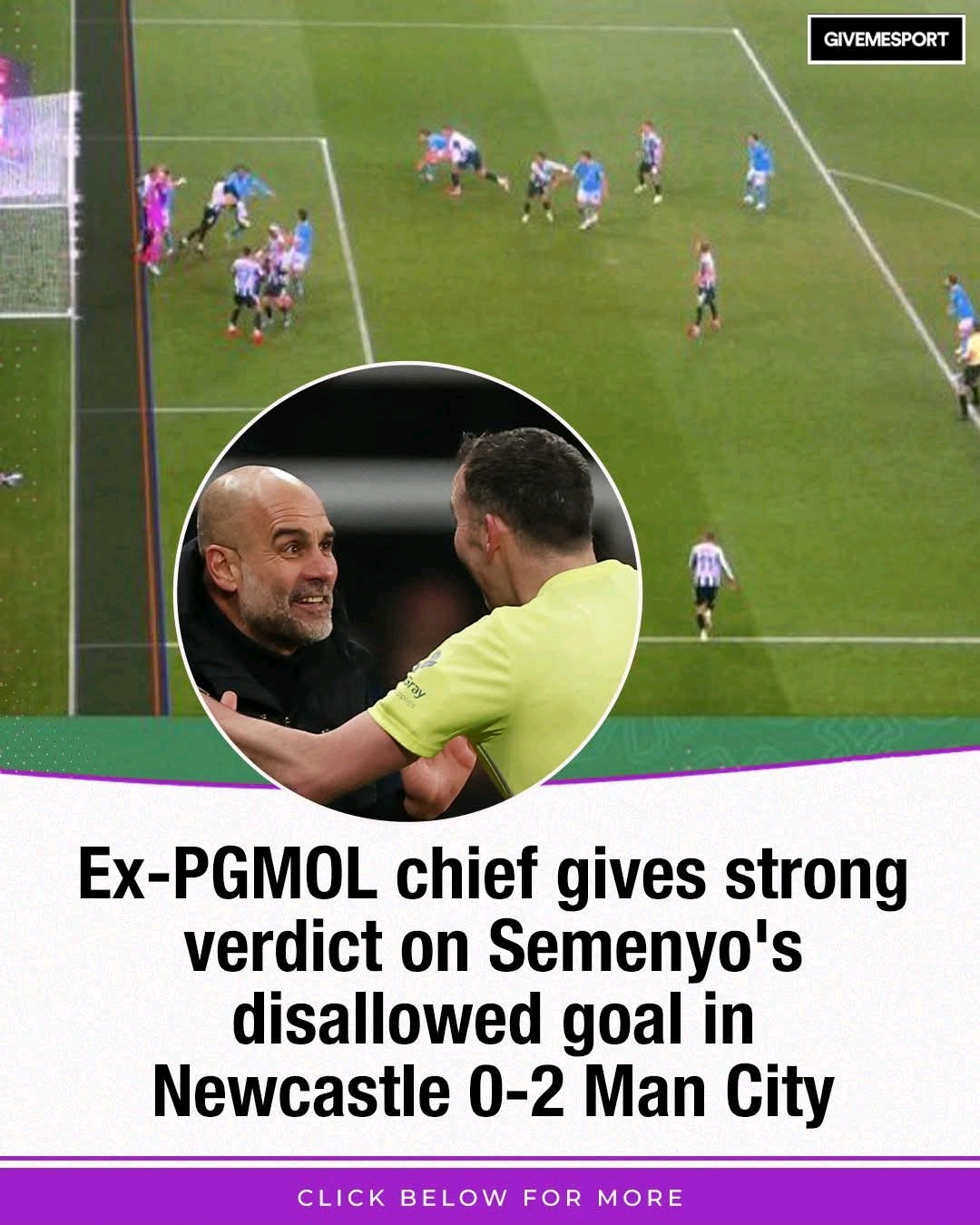
The referee, Chris Kavanagh, paused. The VAR room went to work. Screens lit up. Lines were drawn. Replays rolled again and again. And suddenly, a familiar feeling crept in. That uncomfortable pause where everyone knows something is coming, but no one knows exactly what.
The check was for offside. Specifically, Erling Haaland. The Norwegian striker was standing close to Newcastle defender Malick Thiaw. He was in an offside position. That much was clear. But the key question was one that has haunted football for years. Was he interfering with play?
From most angles, it did not look like it. Haaland did not touch the ball. He did not block the goalkeeper’s view. He did not make a movement toward the ball. He was there, yes, but football has always said that being in an offside position alone is not an offence.
Still, the delay dragged on. Seconds felt like minutes. Minutes felt like an eternity. Fans inside the stadium grew restless. Players stood frozen, unsure whether to celebrate or prepare for disappointment. Guardiola stared into the distance, arms folded, expression unreadable. Then the decision came. No goal.
A subjective offside. Two words that have come to define modern frustration in football. The goal was ruled out. Semenyo’s celebration was erased. City’s comfort was reduced. Newcastle were given life. The reaction was immediate and fierce.
Manchester City players surrounded the referee. Erling Haaland threw his arms into the air in disbelief. Semenyo stood still, hands on hips, trying to understand how a moment of brilliance had vanished. The Newcastle crowd roared, not necessarily in agreement, but in relief.
The goal did not end up changing the final result. Rayan Cherki later scored to give City a strong 2-0 lead anyway. But that did not matter. The damage was already done. Another VAR controversy had entered the football conversation, and this one refused to go quietly.
Former PGMOL chief and FIFA referee Keith Hackett did not hold back. His verdict was clear, blunt, and damning. In his view, the decision was simply wrong. He explained it in the most basic terms possible. Being in an offside position is not an offence. Haaland did not interfere with an opponent. He did not interfere with the goalkeeper. He was behind him. There was no block. No distraction. No attempt to play the ball.
Hackett called the decision ludicrous. Strong language from a man who understands the laws of the game better than most. For him, this was not a grey area. This was not a debate. The goal should have stood.
What angered him even more was the time it took. Semi-automated offside technology is supposed to make decisions quicker and clearer. Instead, Stuart Attwell took an age to communicate with Kavanagh. The pause drained the game of emotion. It sucked the life out of the moment. For Hackett, this was technology failing referees instead of helping them.
This view was shared by many watching at home. The longer VAR checks go on, the more confidence drains away. Fans do not want perfection if it kills the game. They want clarity. They want consistency. They want common sense.
Not everyone agreed with Hackett. Rules experts pointed out that modern interpretations allow goals to be disallowed if an offside player impacts an opponent, even subtly. But that is exactly where the frustration lies. Subtly. Subjectively. Football decisions are now being made on interpretations so fine that even experts cannot agree.
Micah Richards added his voice to the debate. Watching as a pundit, he could see why the goal was ruled out on a technical level. But that did not mean he supported it. For Richards, VAR crossed a line. It went from correcting clear errors to re-refereeing the game. That, in his eyes, was never the intention.
He pointed out that Thiaw and Haaland were grappling with each other. Both had hands on one another. Both were competing for space. This is football. This happens in every corner. If that kind of contact becomes grounds to disallow goals, then where does it end?
Richards described the decision as anti-goal. A phrase that perfectly captures the mood of many fans. Football is supposed to reward attacking play, creativity, and moments of instinct. Semenyo’s finish was all of that. Yet it was wiped out by a decision that felt disconnected from the spirit of the game.
For Newcastle, the disallowed goal was a lifeline. Eddie Howe reacted with visible emotion, hand to face, a mix of relief and disbelief. His side had been struggling. The tie was slipping away. VAR gave them a moment to breathe.
But even from a Newcastle perspective, the decision felt uncomfortable. No one wants to be rescued by controversy. No manager wants questions hanging over a result.
For Manchester City, it was another reminder that VAR does not always feel like an ally, even when it is supposed to deliver fairness. Guardiola has spoken many times about accepting decisions, about not making excuses. But moments like this test even the calmest minds.
Antoine Semenyo was the forgotten man in the debate. His goal. His moment. His confidence. For a player still settling into life at City, moments like that matter. Confidence is fragile. Goals build belief. Having one taken away in such fashion hurts.
Yet Semenyo responded the right way. He kept working. He kept pressing. He kept believing. That mentality is why City wanted him in the first place.
The wider issue goes beyond one match or one goal. This is about what football is becoming. Fans no longer celebrate goals fully. They wait. They glance at the referee. They look at the screen. They hold their breath. Joy is delayed. Sometimes cancelled.
Subjective offside decisions are at the heart of this problem. The rules were designed to prevent unfair advantages, not to punish attackers for existing. When a player does not touch the ball, does not block the goalkeeper, and does not attempt to play it, should his presence alone be enough?
Keith Hackett believes the answer is no. Many fans agree. Others argue that consistency matters more than emotion. That if the rule exists, it must be applied.
But consistency without clarity is meaningless. When two experts watch the same clip and reach different conclusions, something is wrong.
Technology was meant to remove controversy. Instead, it has simply changed its shape. The arguments are louder. The anger is deeper. The trust is thinner.
Football thrives on moments. On instinct. On chaos. On goals that make people jump out of their seats. When those moments are placed under a microscope for minutes at a time, the soul of the game is tested.
Manchester City will move on. They often do. They won the match. They took control of the tie. But this incident will be remembered. It will be replayed. It will be added to the growing list of decisions that fuel debates late into the night.
For referees, the pressure grows heavier. Every decision is scrutinised. Every pause questioned. They are asked to apply rules that are increasingly complex in a sport that is fundamentally simple.
For fans, patience is wearing thin. They want to trust the system. They want to believe VAR is making the game fairer. But nights like this make that belief harder to hold onto.
Antoine Semenyo’s disallowed goal did not change the scoreboard in the end. But it changed the conversation. It reminded everyone that football is still struggling to balance technology with humanity.
And until that balance is found, moments like this will keep happening. Goals will keep being taken away. Debates will keep raging. And football will keep searching for a version of fairness that does not cost it its joy.